
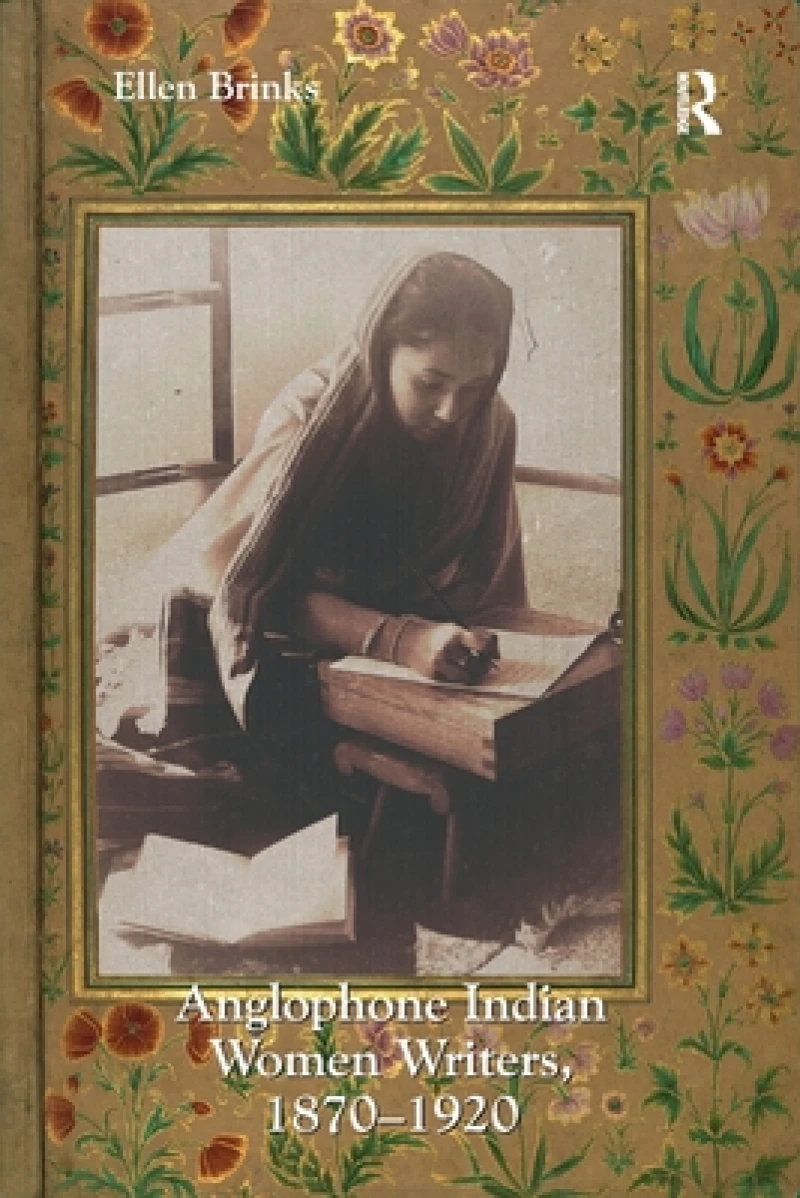
Anglophone Indian Women Writers, 1870–1920
by
Ellen Brinks
Book Details
Format
Paperback / Softback
ISBN-10
1138255440
ISBN-13
9781138255449
Publisher
Taylor & Francis Ltd
Imprint
Routledge
Country of Manufacture
GB
Country of Publication
GB
Publication Date
Nov 11th, 2016
Print length
256 Pages
Weight
453 grams
Product Classification:
Literature: history & criticismLiterary studies: general
Ksh 9,900.00
Werezi Extended Catalogue
0 in stock
Delivery Location
Delivery fee: Select location
Secure
Quality
Fast
Brinks examines the work of Toru Dutt, Krupabai Satthianadhan, Pandita Ramabai, Cornelia Sorabji and Sarojini Naidu. These women are deeply rooted and connected to both South Asian and Western cultures and found large audiences in their public roles as writers, reformers, activists and cultural translators. Informed by extensive archival work, Brinks''s close readings of their literary writings suggest new ways of understanding a range of issues central to feminist postcolonial studies.
The result of extensive archival recovery work, Ellen Brinks''s study fills a significant gap in our understanding of women''s literary history of the South Asian subcontinent under colonialism and of Indian women''s contributions and responses to developing cultural and political nationalism. As Brinks shows, the invisibility of Anglophone Indian women writers cannot be explained simply as a matter of colonial marginalization or as a function of dominant theoretical approaches that reduce Indian women to the status of figures or tropes. The received narrative that British imperialism in India was perpetuated with little cultural contact between the colonizers and the colonized population is complicated by writers such as Toru Dutt, Krupabai Satthianadhan, Pandita Ramabai, Cornelia Sorabji, and Sarojini Naidu. All five women found large audiences for their literary works in India and in Great Britain, and all five were also deeply rooted in and connected to both South Asian and Western cultures. Their works created new zones of cultural contact and exchange that challenge postcolonial theory''s tendencies towards abstract notions of the colonized women as passive and of English as a de-facto instrument of cultural domination. Brinks''s close readings of these texts suggest new ways of reading a range of issues central to postcolonial studies: the relationship of colonized women to the metropolitan (literary) culture; Indian and English women''s separate and joint engagements in reformist and nationalist struggles; the ''translatability'' of culture; the articulation strategies and complex negotiations of self-identification of Anglophone Indian women writers; and the significance and place of cultural difference.
Get Anglophone Indian Women Writers, 1870–1920 by at the best price and quality guaranteed only at Werezi Africa's largest book ecommerce store. The book was published by Taylor & Francis Ltd and it has pages.

