
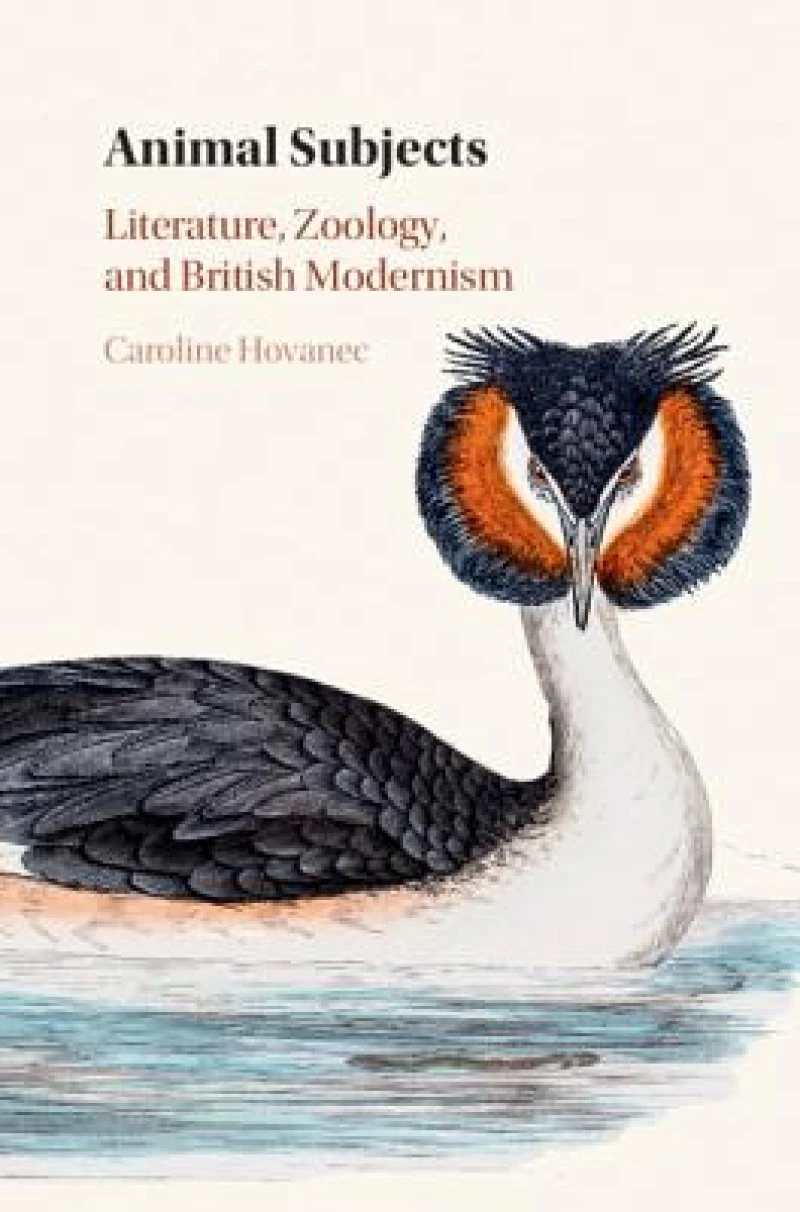
Animal Subjects: Volume 1 : Literature, Zoology, and British Modernism
Book Details
Format
Hardback or Cased Book
ISBN-10
1108428398
ISBN-13
9781108428392
Publisher
Cambridge University Press
Imprint
Cambridge University Press
Country of Manufacture
GB
Country of Publication
GB
Publication Date
Sep 6th, 2018
Print length
232 Pages
Weight
47 grams
Dimensions
22.90 x 16.00 x 1.80 cms
Product Classification:
Literature: history & criticismLiterature: history and criticism
Ksh 17,800.00
Manufactured on Demand
0 in stock
Delivery Location
Delivery fee: Select location
Secure
Quality
Fast
Animal Subjects identifies a new understanding of animals in modernist literature and science. Drawing on Darwin's evolutionary theory, British writers and scientists of the late nineteenth and early twentieth centuries began to think of animals not as mere specimens, but as subjects, like us, with emotions, perceptions, and intentions.
Animal Subjects identifies a new understanding of animals in modernist literature and science. Drawing on Darwin''s evolutionary theory, British writers and scientists of the late nineteenth and early twentieth centuries began to think of animals as subjects dwelling in their own animal worlds. Both science and literature aimed to capture the complexity of animal life, and their shared attention to animals pulled the two disciplines closer together. It led scientists to borrow the literary techniques of fiction and poetry, and writers to borrow the observational methods of zoology. Animal Subjects tracks the coevolution of literature and zoology in works by H. G. Wells, Aldous Huxley, D. H. Lawrence, Virginia Woolf, and modern scientists including Julian Huxley, Charles Elton, and J. B. S. Haldane. Examining the rise of ecology, ethology, and animal psychology, this book shows how new, subject-centered approaches to the study of animals transformed literature and science in the modernist period.
Get Animal Subjects: Volume 1 by at the best price and quality guaranteed only at Werezi Africa's largest book ecommerce store. The book was published by Cambridge University Press and it has pages.

