
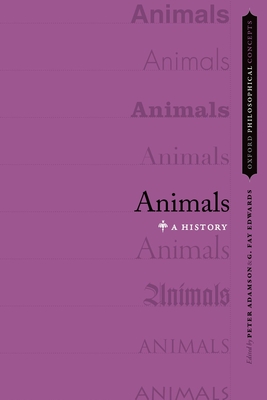
Animals : A History
Book Details
Format
Hardback
Book Series
Oxford Philosophical Concepts
ISBN-10
0199375968
ISBN-13
9780199375967
Publisher
Oxford University Press Inc
Imprint
Oxford University Press Inc
Country of Manufacture
US
Country of Publication
GB
Publication Date
Jun 28th, 2018
Print length
472 Pages
Weight
668 grams
Dimensions
21.90 x 14.70 x 3.10 cms
Product Classification:
PhilosophyEthics & moral philosophyHistory of ideasAnimals & society
KSh 23,250.00
Temporarily out of stock, due soon
0 in stock
Delivery Location
Delivery fee: Select location
Secure
Quality
Fast
This volume traces the history of animals in philosophy, from antiquity down to contemporary times. Negative attitudes towards animals, as found in Aristotle and Descartes, turn out to be more nuanced than usually supposed, while remarkable discussions of animal welfare appear in late antiquity, India, the Islamic world, and Kant.
Philosophical controversy over non-human animals extends further back than many realize -- before Utilitarianism and Darwinism to the very genesis of philosophy. This volume examines the richness and complexity of that long history. Twelve essays trace the significance of animals from Greek and Indian antiquity through the Islamic and Latin medieval traditions, to Renaissance and early modern thought, ending with contemporary notions about animals. Two main questions emerge throughout the volume: what capacities can be ascribed to animals, and how should we treat them? Notoriously ungenerous attitudes towards animals'' mental lives and ethics status, found for instance in Aristotle and Descartes, are shown to have been more nuanced than often supposed, while remarkable defenses of benevolence towards animals are unearthed in late antiquity, India, the Islamic world, and Kant. Other chapters examine cannibalism and vegetarianism in Renaissance thought, and the scientific testing of animals. A series of interdisciplinary reflections sheds further light on human attitudes towards animals, looking at their depiction in visual artworks from China, Africa, and Europe, as well as the rich tradition of animal fables beginning with Aesop.
Get Animals by G. Fay Edwards at the best price and quality guaranteed only at Werezi Africa's largest book ecommerce store. The book was published by Oxford University Press Inc and it has 472 pages.
Customers Who Bought This Also Bought

Decolonizing Language and Other Revolutionary Ideas
KSh 2,350.00

How to Read a Book
KSh 2,000.00

Decolonizing Language and Other Revolutionary Ideas
KSh 3,600.00

Creative Act
KSh 3,250.00
Groundwork for the Metaphysics of Morals
KSh 2,000.00

Things in Nature Merely
KSh 2,000.00

Meditations – The Philosophy Classic
KSh 2,150.00

Great Ideas Social Contract
KSh 1,450.00
How to Be a Leader – An Ancient Guide to Wise Leadership
KSh 2,800.00

The Daily Laws
KSh 2,350.00

Three Critiques, 3-volume Set
KSh 14,000.00

Philosophical Dictionary
KSh 2,700.00
