
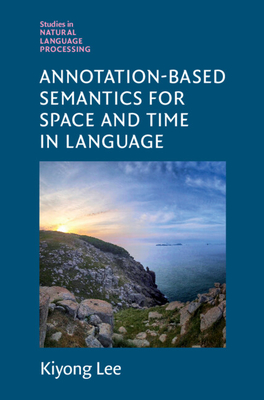
Annotation-Based Semantics for Space and Time in Language
by
Kiyong Lee
Book Details
Format
Hardback
Book Series
Studies in Natural Language Processing
ISBN-10
1108839592
ISBN-13
9781108839594
Publisher
Cambridge University Press
Imprint
Cambridge University Press
Country of Manufacture
GB
Country of Publication
GB
Publication Date
Jun 29th, 2023
Print length
494 Pages
Weight
88 grams
Dimensions
15.80 x 23.70 x 3.40 cms
KSh 24,650.00
Currently unavailable
0 in stock
Delivery Location
Delivery fee: Select location
Secure
Quality
Fast
Aimed at linguists and computer scientists working on natural language processing, this is the first book that shows, at a large scale, how to do semantics for spatio-temporal information based on annotation structures that conform to ISO international standards such as ISO-TimeML or ISO-Space.
Space and time representation in language is important in linguistics and cognitive science research, as well as artificial intelligence applications like conversational robots and navigation systems. This book is the first for linguists and computer scientists that shows how to do model-theoretic semantics for temporal or spatial information in natural language, based on annotation structures. The book covers the entire cycle of developing a specification for annotation and the implementation of the model over the appropriate corpus for linguistic annotation. Its representation language is a type-theoretic, first-order logic in shallow semantics. Each interpretation model is delimited by a set of definitions of logical predicates used in semantic representations (e.g., past) or measuring expressions (e.g., counts or k). The counting function is then defined as a set and its cardinality, involving a universal quantification in a model. This definition then delineates a set of admissible models for interpretation.
Get Annotation-Based Semantics for Space and Time in Language by Kiyong Lee at the best price and quality guaranteed only at Werezi Africa's largest book ecommerce store. The book was published by Cambridge University Press and it has 494 pages.
Customers Who Bought This Also Bought

On Great Writing (On the Sublime)
KSh 2,000.00

Look Again: Empire
KSh 1,800.00
The Art of Rhetoric
KSh 2,000.00
The Role of the Reader
KSh 3,400.00

Six Walks in the Fictional Woods
KSh 4,850.00
The Language of Literature
KSh 3,450.00
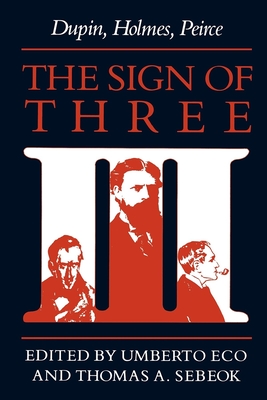
The Sign of Three
KSh 3,250.00
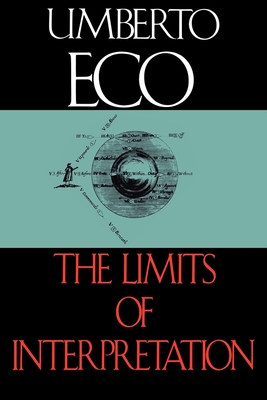
The Limits of Interpretation
KSh 12,200.00

Die philippischen Reden
KSh 22,250.00
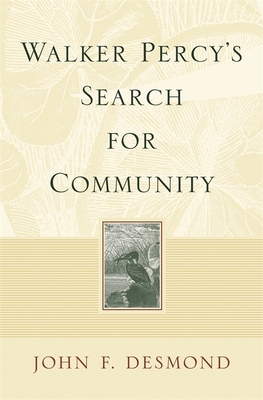
Walker Percy''s Search for Community
KSh 5,950.00
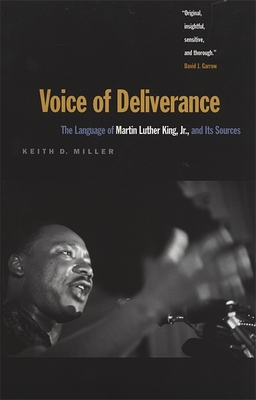
Voice of Deliverance
KSh 6,450.00

Community and Critique
KSh 10,800.00
