
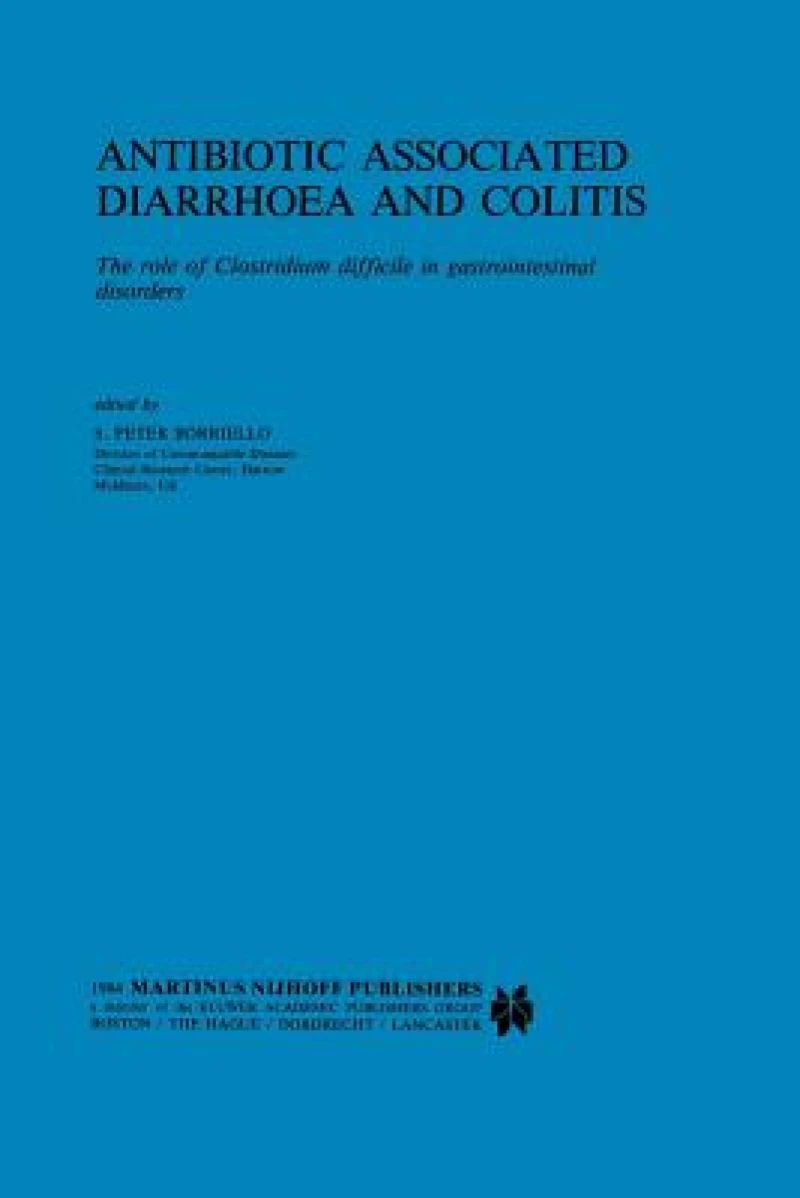
Antibiotic Associated Diarrhoea and Colitis : The role of Clostridium difficile in gastrointestinal disorders
Softcover reprint of the original 1st ed. 1984
Book Details
Format
Paperback / Softback
Book Series
Developments in Gastroenterology
ISBN-10
940108999X
ISBN-13
9789401089999
Edition
Softcover reprint of the original 1st ed. 1984
Publisher
Springer
Imprint
Springer
Country of Manufacture
NL
Country of Publication
GB
Publication Date
Sep 20th, 2011
Print length
180 Pages
Product Classification:
Medical microbiology & virologyGastrointestinal & colorectal surgery
Ksh 23,400.00
Temporarily out of stock, due soon
0 in stock
Delivery Location
Delivery fee: Select location
Secure
Quality
Fast
Antimicrobial-associated diarrhea is often caused by Clostridium difficile; this disease can best be diagnosed by detection of fecal cytotoxin in a tissue culture assay and, when therapy is indicated, can be effectively treated with orally administered vancomycin. The cause of disease in most cases of antimicrobial-associated diarrhea that do not involve C. difficile is not known; fortunately, this form of diarrhea 1S usually mild. Antimicrobial-associated diarrhea may also rarely involve s. aureus and certain enteric pathogens. 37 QHAPTER 4 Qf. TECTlON. ISOLATION Al:iQ...IQENTlFICATlON OF CLOSTRIDIUM PIFFICILE S. P. BORRIELLO and PAULINE HONOUR Introduction 38 Detection of Co dlfflcile in stools 38 Direct methods 38 Indirect methods 39 Isolation of Co djfficjle 40 Identification of Co difflcile 44 38 DETECTION ISOLATION AND IDENTIFICATION OF CLOSTRIDIUM DIFFICILE S. P. Borriello and Pauline Honour Introduction In view of the mounting evidence generated world wide in the last few years that firmly implicates GBP. difficile as the aetiological agent in both antibiotic and non-antibiotic associated pseudomembranous colitis (Larson ~ al. , 1978, Bartlett ~ al. , 1978a, George ~ al. , 1978a), and also recent recognition of the fact that there may be a spectrum of gastrointestinal diseases associated with GBP. difficile infections (Borriello and Larson, 1981, Bolton ~ al. , 1980, Brettle ~ al. , 1982), an increasing number of laboratories are seeking to detect, isolate and identify GBP. difficile from clinical samples.
Antimicrobial-associated diarrhea is often caused by Clostridium difficile; this disease can best be diagnosed by detection of fecal cytotoxin in a tissue culture assay and, when therapy is indicated, can be effectively treated with orally administered vancomycin. The cause of disease in most cases of antimicrobial-associated diarrhea that do not involve C. difficile is not known; fortunately, this form of diarrhea 1S usually mild. Antimicrobial-associated diarrhea may also rarely involve s. aureus and certain enteric pathogens. 37 QHAPTER 4 Qf. TECTlON. ISOLATION Al:iQ. . . IQENTlFICATlON OF CLOSTRIDIUM PIFFICILE S. P. BORRIELLO and PAULINE HONOUR Introduction 38 Detection of Co dlfflcile in stools 38 Direct methods 38 Indirect methods 39 Isolation of Co djfficjle 40 Identification of Co difflcile 44 38 DETECTION ISOLATION AND IDENTIFICATION OF CLOSTRIDIUM DIFFICILE S. P. Borriello and Pauline Honour Introduction In view of the mounting evidence generated world wide in the last few years that firmly implicates £. difficile as the aetiological agent in both antibiotic and non-antibiotic associated pseudomembranous colitis (Larson ~ al. , 1978, Bartlett ~ al. , 1978a, George ~ al. , 1978a), and also recent recognition of the fact that there may be a spectrum of gastrointestinal diseases associated with £. difficile infections (Borriello and Larson, 1981, Bolton ~ al. , 1980, Brettle ~ al. , 1982), an increasing number of laboratories are seeking to detect, isolate and identify £. difficile from clinical samples.
Get Antibiotic Associated Diarrhoea and Colitis by at the best price and quality guaranteed only at Werezi Africa's largest book ecommerce store. The book was published by Springer and it has pages.

