

Aphrodite's Kephali : An Early Minoan I Defensive Site in Eastern Crete
Book Details
Format
Hardback
Book Series
Prehistory Monographs
ISBN-10
1931534713
ISBN-13
9781931534710
Publisher
INSTAP Academic Press
Imprint
INSTAP Academic Press
Country of Manufacture
US
Country of Publication
GB
Publication Date
Oct 15th, 2013
Print length
270 Pages
Weight
1,156 grams
Dimensions
22.30 x 28.70 x 2.20 cms
Product Classification:
Archaeology by period / regionArchaeology by period / region
KSh 13,500.00
Currently unavailable
0 in stock
Delivery Location
Delivery fee: Select location
Secure
Quality
Fast
This book provides a discussion of the architecture, artifacts, and ecofacts from the excavation of the Early Minoan I watchtower at the small site of Aphrodite's Kephali in the Isthmus of Ierapetra in eastern Crete. The site gave easy access to the natural trade route between the Aegean and the Libyan Seas.
The small site of Aphrodite's Kephali, among several other Minoan and later sites, took advantage of the valley topography in the Isthmus of Ierapetra in eastern Crete by establishing themselves along the nearby hills, resulting in easy access to the natural trade route between the Aegean and the Libyan Seas. A discussion of the architecture, artifacts, and ecofacts are presented from the excavation of this Early Minoan I watchtower. The conclusions challenge some of the commonly held views about Crete in the third millennium B.C. It is suggested that rather than being a precursor to a socially complex state that would arise later, early polities involving several communities probably already existed in the isthmus during the EM I period. Social and economic differentiation existed on a regional, not just a local level, and decisions for mutual defense could involve collaboration by groups of workers, including the building of the watchtower that is the focus of this volume.
Get Aphrodite's Kephali by Philip P. Betancourt at the best price and quality guaranteed only at Werezi Africa's largest book ecommerce store. The book was published by INSTAP Academic Press and it has 270 pages.
Customers Who Bought This Also Bought
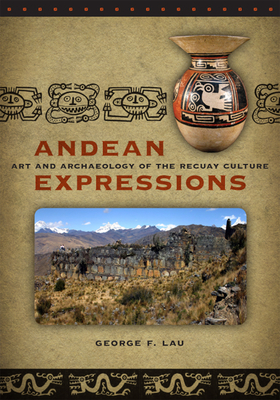
Andean Expressions
KSh 6,350.00

Forgotten
KSh 2,000.00

Ocmulgee Archaeology, 1936-1986
KSh 6,700.00
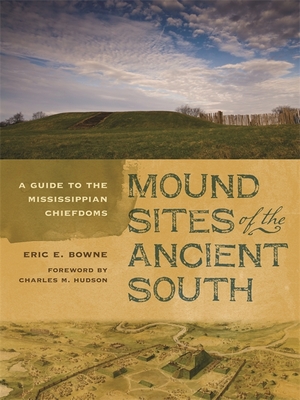
Mound Sites of the Ancient South
KSh 7,950.00

The Limits of Tyranny
KSh 11,500.00

Conquistador’s Wake
KSh 22,600.00
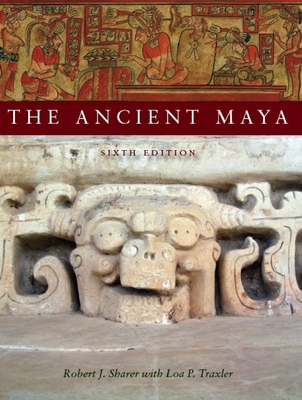
The Ancient Maya, 6th Edition
KSh 7,400.00

The Punic Mediterranean
KSh 21,600.00

The Palace of Minos
KSh 14,250.00

The Penetration of Arabia
KSh 8,300.00
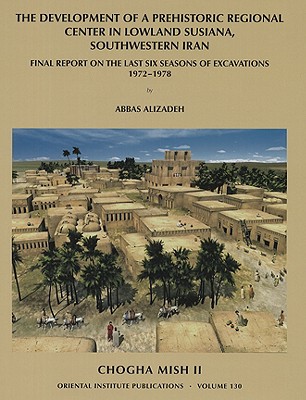
Chogha Mish, Volume 2
KSh 15,300.00

A Primer of Assyriology
KSh 3,800.00
More by Philip P. Betancourt

5,000 Years of Fine Cretan Wines
KSh 5,450.00

East Cretan White-on-Dark Ware
KSh 11,050.00

Pseira I
KSh 11,350.00

Introduction to Aegean Art
KSh 5,300.00

Pseira X
KSh 13,500.00

Richard Berry Seager – Archaeologist and Proper Gentleman
KSh 5,900.00

Pseira II
KSh 11,200.00

The Dams and Water Management Systems of Minoan Pseira
KSh 3,150.00

The Cretan Collection in the University Museum, University of Pennsylvania II
KSh 11,050.00

The Hagia Photia Cemetery II
KSh 13,500.00

The Chrysokamino Metallurgy Workshop and its Territory
KSh 12,850.00

The Cretan Collection in the University Museum, University of Pennsylvania I
KSh 10,750.00