
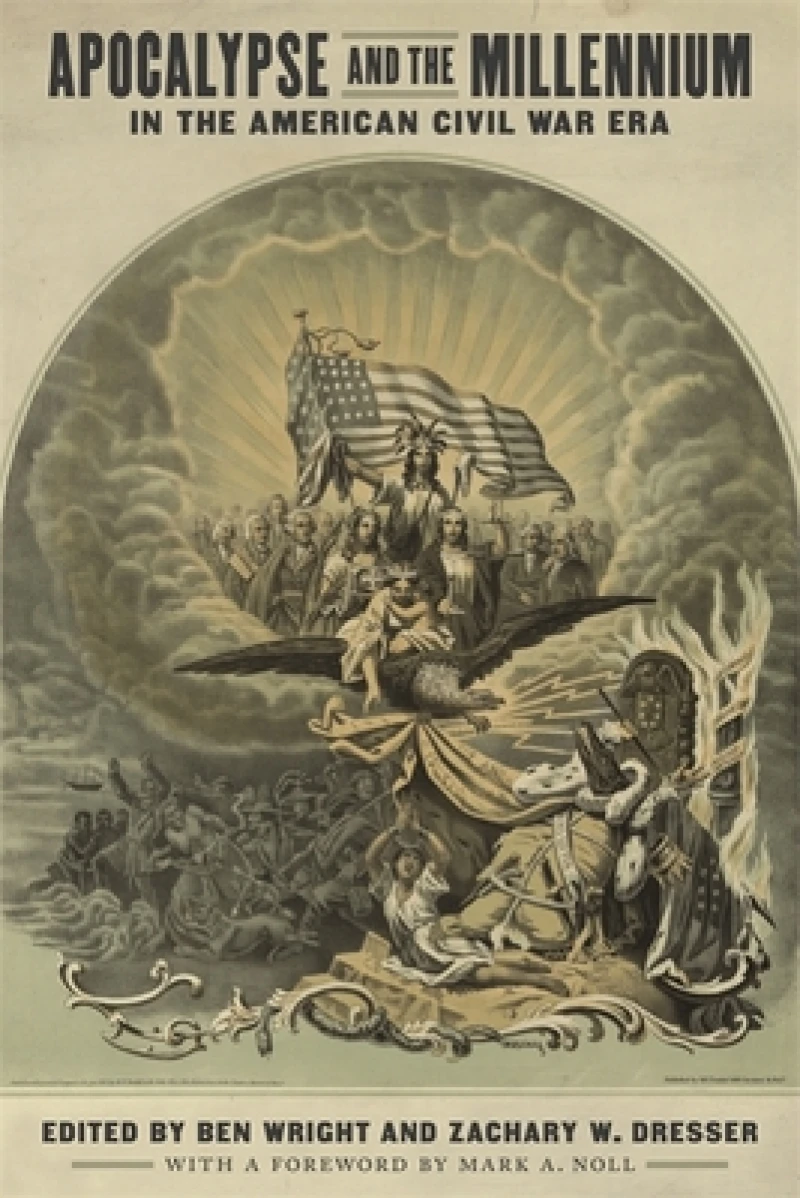
Apocalypse and the Millennium in the American Civil War Era
Book Details
Format
Hardback or Cased Book
ISBN-10
0807151920
ISBN-13
9780807151921
Publisher
Louisiana State University Press
Imprint
Louisiana State University Press
Country of Manufacture
US
Country of Publication
GB
Publication Date
Nov 4th, 2013
Print length
272 Pages
Weight
333 grams
Dimensions
22.80 x 15.20 x 2.70 cms
Product Classification:
History of religionChristianityHistory of religionChristianity
Ksh 6,500.00
Publisher Out of Stock
0 in stock
Delivery Location
Delivery fee: Select location
Secure
Quality
Fast
Highlights the diverse ways in which beliefs about the end times influenced nineteenth-century American lives, including reform culture, the search for meaning amid the trials of war, and the social transformation wrought by emancipation.
In the Civil War era, Americans nearly unanimously accepted that humans battled in a cosmic contest between good and evil and that God was directing history toward its end. The concept of God's Providence and of millennialism, Christian anticipations of the end of the world, dominated religious thought in the nineteenth century. During the tumultuous years immediately prior to, during, and after the war, these ideas took on a greater importance as Americans struggled with the unprecedented destruction and promise of the period.
Scholars of religion, literary critics, and especially historians have acknowledged the presence of apocalyptic thought in the era, but until now, few studies have taken the topic as their central focus or examined it from the antebellum period through Reconstruction. By doing so, the essays in Apocalypse and the Millennium in the American Civil War Era highlight the diverse ways in which beliefs about the end times influenced nineteenth-century American lives, including reform culture, the search for meaning amid the trials of war, and the social transformation wrought by emancipation. Millennial zeal infused the labor of reformers and explained their successes and failures as progress toward an imminent Kingdom of God. Men and women in the North and South looked to Providence to explain the causes and consequences of both victory and defeat, and Americans, black and white, experienced the shock waves of emancipation as either a long-prophesied jubilee or a vengeful punishment. Religion fostered division as well as union, the essays suggest, but while the nation tore itself apart and tentatively stitched itself back together, Americans continued looking to divine intervention to make meaning of the national apocalypse.
Scholars of religion, literary critics, and especially historians have acknowledged the presence of apocalyptic thought in the era, but until now, few studies have taken the topic as their central focus or examined it from the antebellum period through Reconstruction. By doing so, the essays in Apocalypse and the Millennium in the American Civil War Era highlight the diverse ways in which beliefs about the end times influenced nineteenth-century American lives, including reform culture, the search for meaning amid the trials of war, and the social transformation wrought by emancipation. Millennial zeal infused the labor of reformers and explained their successes and failures as progress toward an imminent Kingdom of God. Men and women in the North and South looked to Providence to explain the causes and consequences of both victory and defeat, and Americans, black and white, experienced the shock waves of emancipation as either a long-prophesied jubilee or a vengeful punishment. Religion fostered division as well as union, the essays suggest, but while the nation tore itself apart and tentatively stitched itself back together, Americans continued looking to divine intervention to make meaning of the national apocalypse.
Get Apocalypse and the Millennium in the American Civil War Era by at the best price and quality guaranteed only at Werezi Africa's largest book ecommerce store. The book was published by Louisiana State University Press and it has pages.

