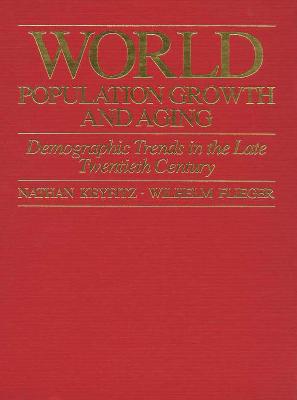
Book Details
Format
Hardback
Book Series
Statistics for Biology and Health
ISBN-10
0387225374
ISBN-13
9780387225371
Edition
Third Edition 2005
Publisher
Springer-Verlag New York Inc.
Imprint
Springer-Verlag New York Inc.
Country of Manufacture
US
Country of Publication
GB
Publication Date
Jan 14th, 2005
Print length
558 Pages
Weight
1,030 grams
Dimensions
16.80 x 24.20 x 3.80 cms
KSh 21,600.00
Temporarily out of stock, due soon
0 in stock
Delivery Location
Delivery fee: Select location
Secure
Quality
Fast
This third edtion contains new chapters on Matrix Population Models.
ButIacceptedtheinvitation.Key?tz''ssuggestionthatweincorporatesome of my earlier work on matrix population models seemed like a good way to complement the methods presented in the book, and to expand the range of their applications. I am a demographer of plants and nonhuman animals. Some would call this an oxymoron, since the Greek rootdemos refers to people, and that''s us. But there are precedents for taking more inclusive de?nitions of the Greek.Ecologyandeconomics,forexample,bothcomefromtherootoikos, referring to the household. Interpretingdemos as referring to individuals, whether they are persons or not, lets demography apply across species. There is a long tradition of such crossover. Alfred J. Lotka is acknowledged as a founding father of both demography and ecology. Raymond Pearl used demographic methods to analyze the e?ects of toxic substances and cro- ing on fruit ?ies. Lee (1987) compared the density-dependence of the vital rates of human and non-human animals. Today, in studies of senescence, reproduction, and individual heterogeneity, the boundaries between animal and human studies are becoming increasingly blurred (Wachter et al. 1997, Carey 2003, Wachter and Bulatao 2003, Carey and Tuljapurkar 2003).
Get Applied Mathematical Demography by Hal Caswell, Nathan Keyfitz at the best price and quality guaranteed only at Werezi Africa's largest book ecommerce store. The book was published by Springer-Verlag New York Inc. and it has 558 pages.
Customers Who Bought This Also Bought

Risky Behavior among Youths – An Economic Analysis
KSh 18,000.00

Causes and Consequences of Human Migration
KSh 18,200.00

Reproductive Rights and Wrongs
KSh 3,950.00

Global City Futures
KSh 22,600.00

Company Towns in the Americas
KSh 5,400.00

Social Reproduction and the City
KSh 22,600.00

Shadows of a Sunbelt City – The Environment, Racism, and the Knowledge Economy in Austin
KSh 15,050.00

Nuked
KSh 26,700.00

From Roots to Roses – The Autobiography of Tilda Kemplen
KSh 4,600.00

North Mississippi Homeplace
KSh 10,450.00
Almost Dead
KSh 5,450.00

Company Towns in the Americas
KSh 14,800.00