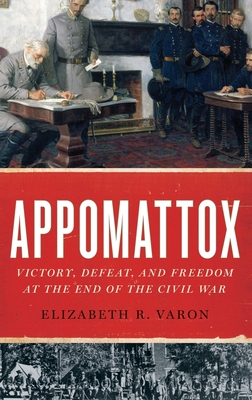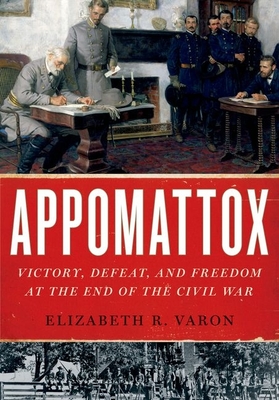
Appomattox : Victory, Defeat, and Freedom at the End of the Civil War
Book Details
Format
Paperback / softback
ISBN-10
0190217863
ISBN-13
9780190217860
Publisher
Oxford University Press Inc
Imprint
Oxford University Press Inc
Country of Manufacture
GB
Country of Publication
GB
Publication Date
May 14th, 2015
Print length
320 Pages
Weight
434 grams
Dimensions
23.70 x 15.60 x 2.40 cms
KSh 4,150.00
Currently unavailable
0 in stock
Delivery Location
Delivery fee: Select location
Secure
Quality
Fast
A revisionist narrative of Appomattox, the surrender of the Confederacy to the Union, published on the 150th anniversary of the event that ended the Civil War.
Winner of the Dan and Marilyn Laney Prize of the Austin Civil War Round TableFinalist, Jefferson Davis Award of the Museum of the ConfederacyFinalist, Library of Virginia Literary Award for NonfictionLee''s surrender to Grant at Appomattox Court House evokes a highly gratifying image in the popular mind -- it was, many believe, a moment that transcended politics, a moment of healing, a moment of patriotism untainted by ideology. But as Elizabeth Varon reveals in this vividly narrated history, this rosy image conceals a seething debate over precisely what the surrender meant and what kind of nation would emerge from war. The combatants in that debate included the iconic Lee and Grant, but they also included a cast of characters previously overlooked, who brought their own understanding of the war''s causes, consequences, and meaning. In Appomattox, Varon deftly captures the events swirling around that well remembered-but not well understood-moment when the Civil War ended. She expertly depicts the final battles in Virginia, when Grant''s troops surrounded Lee''s half-starved army, the meeting of the generals at the McLean House, and the shocked reaction as news of the surrender spread like an electric charge throughout the nation. But as Varon shows, the ink had hardly dried before both sides launched a bitter debate over the meaning of the war. For Grant, and for most in the North, the Union victory was one of right over wrong, a vindication of free society; for many African Americans, the surrender marked the dawn of freedom itself. Lee, in contrast, believed that the Union victory was one of might over right: the vast impersonal Northern war machine had worn down a valorous and unbowed South. Lee was committed to peace, but committed, too, to the restoration of the South''s political power within the Union and the perpetuation of white supremacy. Lee''s vision of the war resonated broadly among Confederates and conservative northerners, and inspired Southern resistance to reconstruction.Did America''s best days lie in the past or in the future? For Lee, it was the past, the era of the founding generation. For Grant, it was the future, represented by Northern moral and material progress. They held, in the end, two opposite views of the direction of the country-and of the meaning of the war that had changed that country forever.
Get Appomattox by Elizabeth R. Varon at the best price and quality guaranteed only at Werezi Africa's largest book ecommerce store. The book was published by Oxford University Press Inc and it has 320 pages.
Customers Who Bought This Also Bought
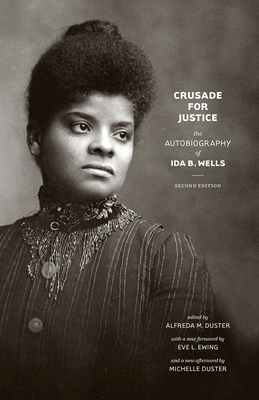
Crusade for Justice – The Autobiography of Ida B. Wells, Second Edition
KSh 4,050.00
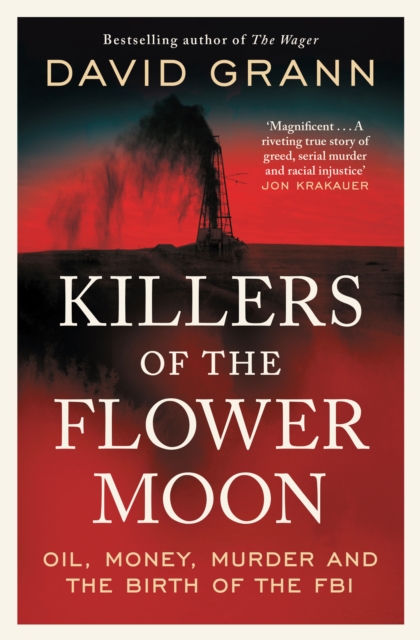
Killers of the Flower Moon
KSh 2,000.00
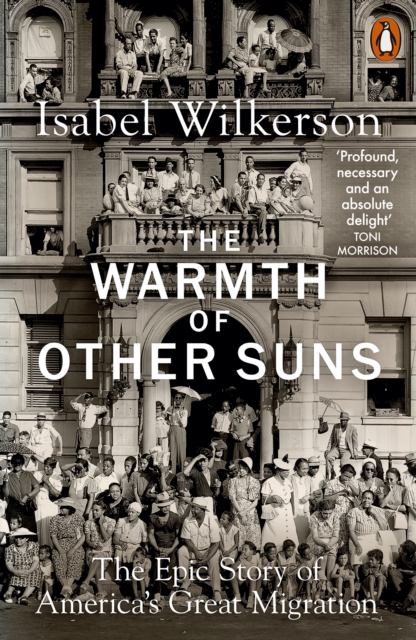
Warmth of Other Suns
KSh 3,050.00
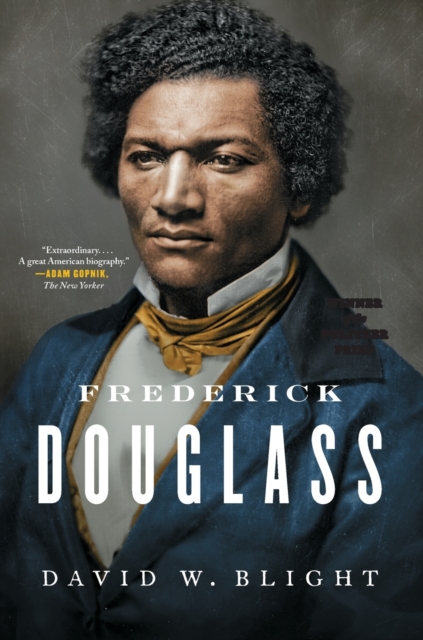
Frederick Douglass
KSh 3,350.00
107 Days
KSh 4,500.00

Second Treatise of Government – Norton Library
KSh 1,600.00
Tuesdays With Morrie
KSh 2,000.00
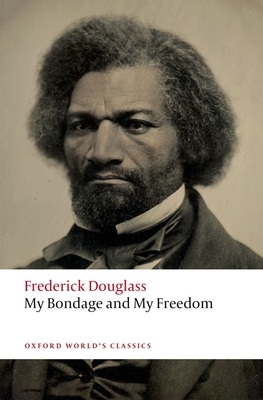
My Bondage and My Freedom
KSh 1,600.00

Hidden Figures
KSh 2,000.00
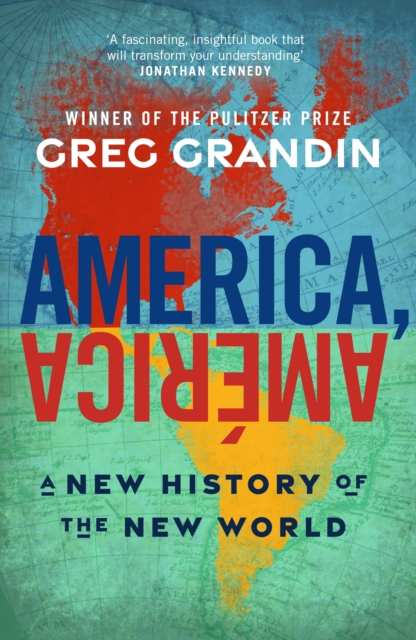
America, América
KSh 3,650.00
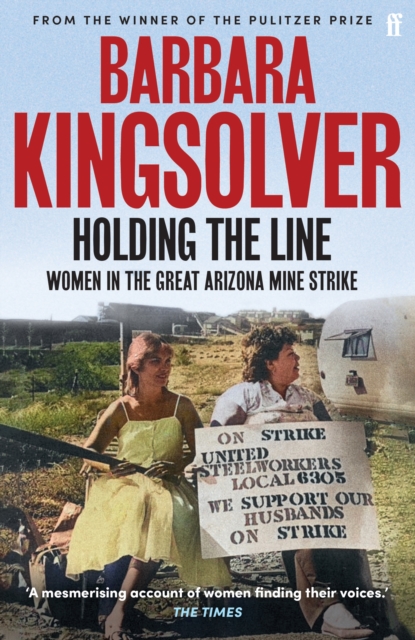
Holding the Line
KSh 2,000.00

Nuclear Folly
KSh 3,050.00