
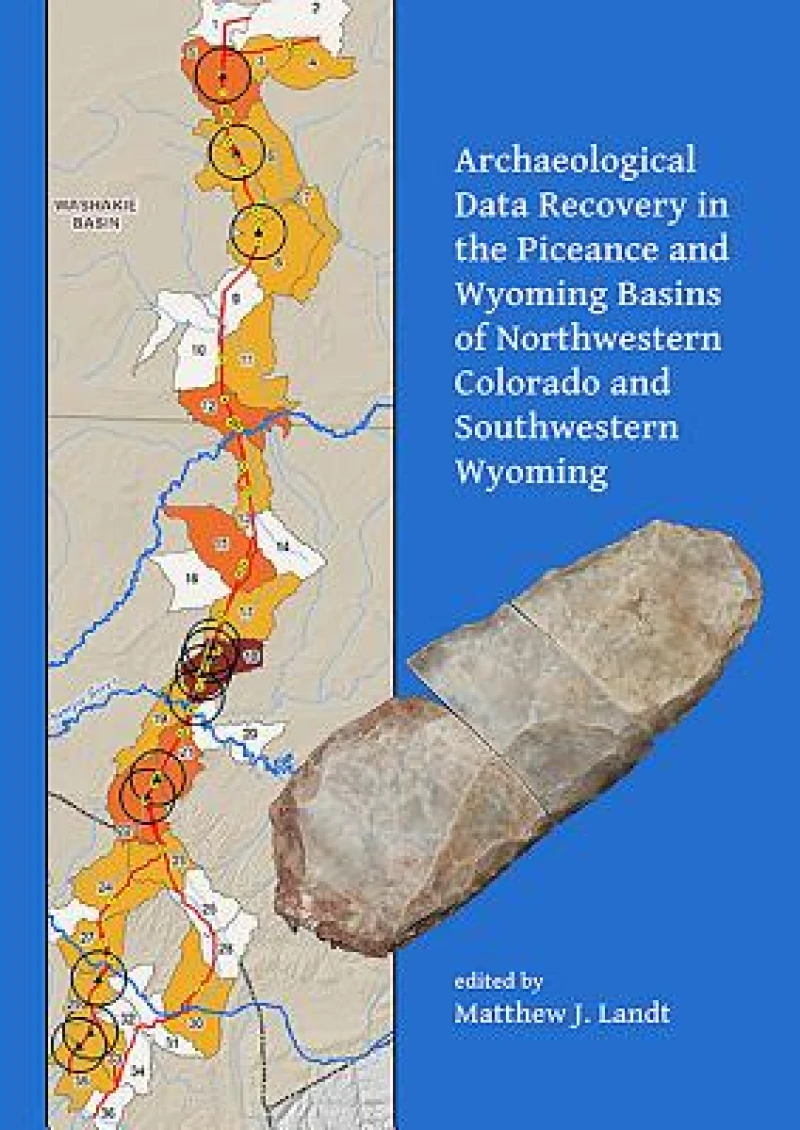
Archaeological Data Recovery in the Piceance and Wyoming Basins of Northwestern Colorado and Southwestern Wyoming
Book Details
Format
Paperback / Softback
ISBN-10
1784917958
ISBN-13
9781784917951
Publisher
Archaeopress
Imprint
Archaeopress Archaeology
Country of Manufacture
GB
Country of Publication
GB
Publication Date
Feb 28th, 2018
Print length
382 Pages
Weight
1,356 grams
Dimensions
20.40 x 29.20 x 2.30 cms
Product Classification:
Prehistoric archaeologyArchaeology by period / region
Ksh 11,600.00
Temporarily out of stock, due soon
0 in stock
Delivery Location
Delivery fee: Select location
Secure
Quality
Fast
In 2008-9, a 14-in. natural gas liquids pipeline was constructed in Colorado and Wyoming. Alpine Archaeological Consultants, Inc. was hired to survey the route; the major research themes presented here synthesize chronometric and spatial information, subsistence, prehistoric technology, small cultural features, and prehistoric architecture.
In the United States of America, Section 106 of the National Historic Preservation Act requires that projects funded, authorized, or permitted by the federal government consider historic properties that may be affected by the development of those projects. To comply with Section 106, an interstate pipeline corridor in southwestern Wyoming and northwestern Colorado was surveyed to identify cultural resources and to evaluate them in terms of significance and potential listing in the National Register of Historic Places. Once sites were identified, a mitigation strategy was developed in coordination with the Bureau of Land Management. That plan prioritized important cultural resources within a regional archaeological context and included substantial excavations at 14 sites. The archaeological excavations were successful in recovering the types of data necessary to address regional research issues that were raised in the project’s alternative mitigation plan. The data recovery effort included site-specific geophysical assessments as well as providing an opportunity to analyze the geology, fauna, flora, and tens of thousands of prehistoric and historical artifacts from the sites. While there is nothing about the number of artifacts that inherently adds to our understandings of past lifeways, the analyses substantially added to regional datasets for the Paleoindian, Archaic, Formative, Protohistoric, and Historical components. Specifically, the analyses addressed prehistoric chronometric and settlement patterns (Chapter 5), subsistence strategies (Chapter 6), lithic reduction strategies (Chapter 7), as well as synthesizing information for prehistoric hearths (Chapter 8) and architecture (Chapter 9). Chapter 10 focuses on the results of remote sensing at two sites. That is followed by regional syntheses of the prehistoric (Chapter 11) and historical data (Chapter 12). When combined with existing datasets, this synthetic work substantially improves the quality of regional archaeological interpretations. Given the results presented herein, it is clear that the mitigation approach within the pipeline corridor was successful in providing important archaeological information that advances local and regional understandings of past lifeways.
Get Archaeological Data Recovery in the Piceance and Wyoming Basins of Northwestern Colorado and Southwestern Wyoming by at the best price and quality guaranteed only at Werezi Africa's largest book ecommerce store. The book was published by Archaeopress and it has pages.

