
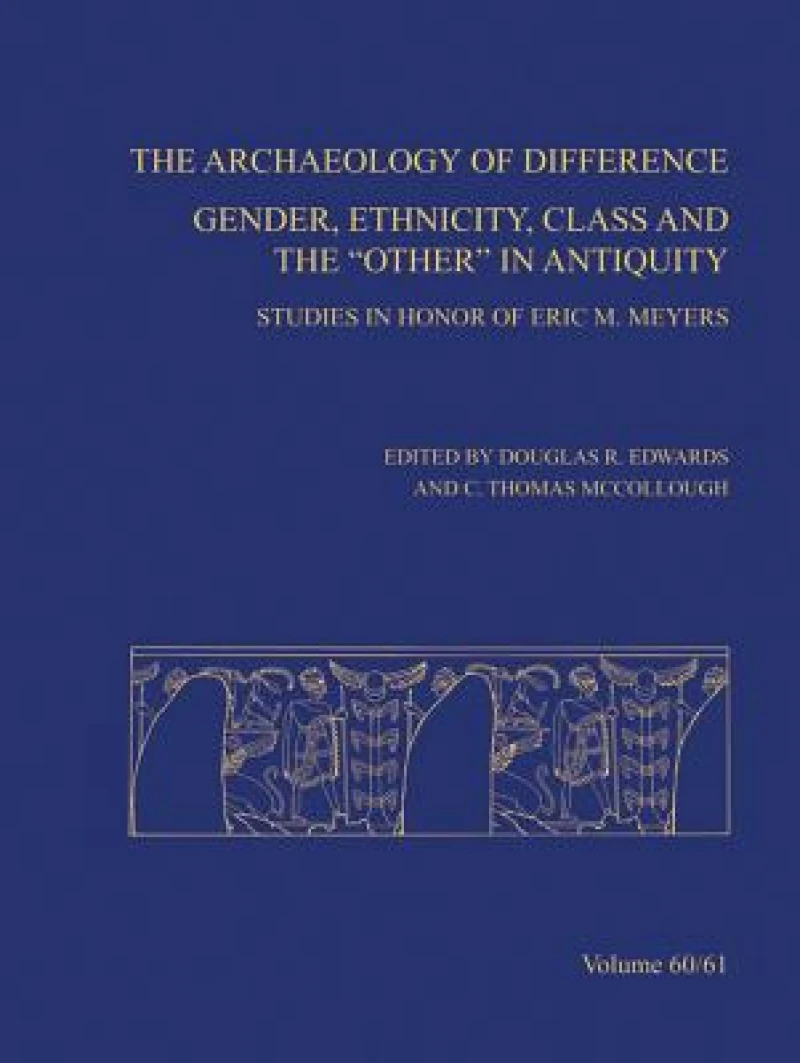
Archaeology of Difference : Gender, Ethnicity, Class and the Other in Antiquity - Studies in Honor of Eric M. Meyers, AASOR 60-61
Book Details
Format
Hardback or Cased Book
Book Series
Annual of ASOR
ISBN-10
0897570707
ISBN-13
9780897570701
Publisher
American Society of Overseas Research
Imprint
American Society of Overseas Research
Country of Manufacture
US
Country of Publication
GB
Publication Date
Dec 15th, 2005
Print length
480 Pages
Weight
1,000 grams
Product Classification:
Archaeology by period / regionAnthropologyPhysical anthropologyArchaeology by period / region
Ksh 18,900.00
Werezi Extended Catalogue
0 in stock
Delivery Location
Delivery fee: Select location
Secure
Quality
Fast
To determine "the archaeology of difference" the studies in this volume draw on textual and material culture. What distinguishes an individual or a group in ancient society? How do issues of gender, ethnicity, social stratification and the view of the 'other' impact individuals, groups, and societal attitudes?
What distinguishes an individual or a group in ancient society? How do issues of gender, ethnicity, social stratification and the view of the 'other' impact individuals, groups, and societal attitudes? Foucault in his classic work, The Archaeology of Knowledge, observes that layers of information embedded in language and society often elucidate the unspoken assumptions that individuals, groups or societies hold most dear. What is perceived to distinguish one group can carry such symbolic power that whole societies structure their laws, gender roles, ethnic identities, and views toward the "other" in the light of perceived differences. The ancient world was dominated by such differences. Clothing, hair, costume, housing, gender, religion, set apart one from the other. Ascertaining the rules governing difference in antiquity is challenging. Such rules were generally assumed, not clearly delineated. To determine "the archaeology of difference" the studies in this volume draw on textual and material culture. How does archaeological data illuminate gender or ethnicity or interactions and views of the "other"? What in the archaeological evidence elucidates the attitude toward women's role in society or Jewish perspectives on the Gentiles or attitudes toward the dead? What in texts illuminates the "other" especially as it relates to the writer's or narrator's perception?
Get Archaeology of Difference by at the best price and quality guaranteed only at Werezi Africa's largest book ecommerce store. The book was published by American Society of Overseas Research and it has pages.

