
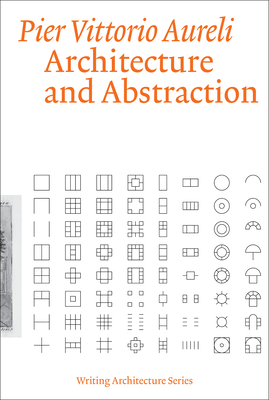
Architecture and Abstraction
Book Details
Format
Paperback / softback
ISBN-10
0262545233
ISBN-13
9780262545235
Publisher
MIT Press Ltd
Imprint
MIT Press
Country of Manufacture
US
Country of Publication
GB
Publication Date
Nov 7th, 2023
Print length
328 Pages
Weight
562 grams
Dimensions
13.60 x 20.30 x 2.60 cms
Product Classification:
Architecture
KSh 5,750.00
Werezi Extended Catalogue
Delivery in 12 days
3 copies in stock
Delivery Location
Delivery fee: Select location
Delivery in 12 days
Secure
Quality
Fast
A landmark study of abstraction in architectural history, theory, and practice that challenges our assumptions about the meaning of abstract forms.
In this theoretical study of abstraction in architecture—the first of its kind—Pier Vittorio Aureli argues for a reconsideration of abstraction, its meanings, and its sources. Although architects have typically interpreted abstraction in formal terms—the purposeful reduction of the complexities of design to its essentials—Aureli shows that abstraction instead arises from the material conditions of building production. In a lively study informed by Walter Benjamin, Karl Marx, Alfred Sohn-Rethel, and other social theorists, this book presents abstraction in architecture not as an aesthetic tendency but as a movement that arises from modern divisions of labor and consequent social asymmetries.
These divisions were anticipated by the architecture of antiquity, which established a distinction between manual and intellectual labor, and placed the former in service to the latter. Further abstractions arose as geometry, used for measuring territories, became the intermediary between land and money and eventually produced the logic of the grid. In our own time, architectural abstraction serves the logic of capitalism and embraces the premise that all things can be exchanged—even experience itself is a commodity. To resist this turn, Aureli seeks a critique of architecture that begins not by scaling philosophical heights, but by standing at the ground level of material practice.
In this theoretical study of abstraction in architecture—the first of its kind—Pier Vittorio Aureli argues for a reconsideration of abstraction, its meanings, and its sources. Although architects have typically interpreted abstraction in formal terms—the purposeful reduction of the complexities of design to its essentials—Aureli shows that abstraction instead arises from the material conditions of building production. In a lively study informed by Walter Benjamin, Karl Marx, Alfred Sohn-Rethel, and other social theorists, this book presents abstraction in architecture not as an aesthetic tendency but as a movement that arises from modern divisions of labor and consequent social asymmetries.
These divisions were anticipated by the architecture of antiquity, which established a distinction between manual and intellectual labor, and placed the former in service to the latter. Further abstractions arose as geometry, used for measuring territories, became the intermediary between land and money and eventually produced the logic of the grid. In our own time, architectural abstraction serves the logic of capitalism and embraces the premise that all things can be exchanged—even experience itself is a commodity. To resist this turn, Aureli seeks a critique of architecture that begins not by scaling philosophical heights, but by standing at the ground level of material practice.
Get Architecture and Abstraction by Pier Vittorio Aureli at the best price and quality guaranteed only at Werezi Africa's largest book ecommerce store. The book was published by MIT Press Ltd and it has 328 pages.
Customers Who Bought This Also Bought

Architecture
KSh 7,550.00

Architecture: The Whole Story
KSh 5,150.00

Architectural Graphics
KSh 8,650.00

The Dorm Room Guide
KSh 2,900.00

The Scandal of the Kingdom Workbook
KSh 2,700.00

The Cairo of Naguib Mahfouz
KSh 4,100.00

Room 606
KSh 10,800.00

Éléments et théorie de l''architecture. Tome 3
KSh 6,050.00
Charles Rennie Mackintosh
KSh 1,950.00
Wren
KSh 1,950.00
Latin American Architecture
KSh 8,650.00

If Buildings Could Speak, What Would They Say?
KSh 3,600.00

