
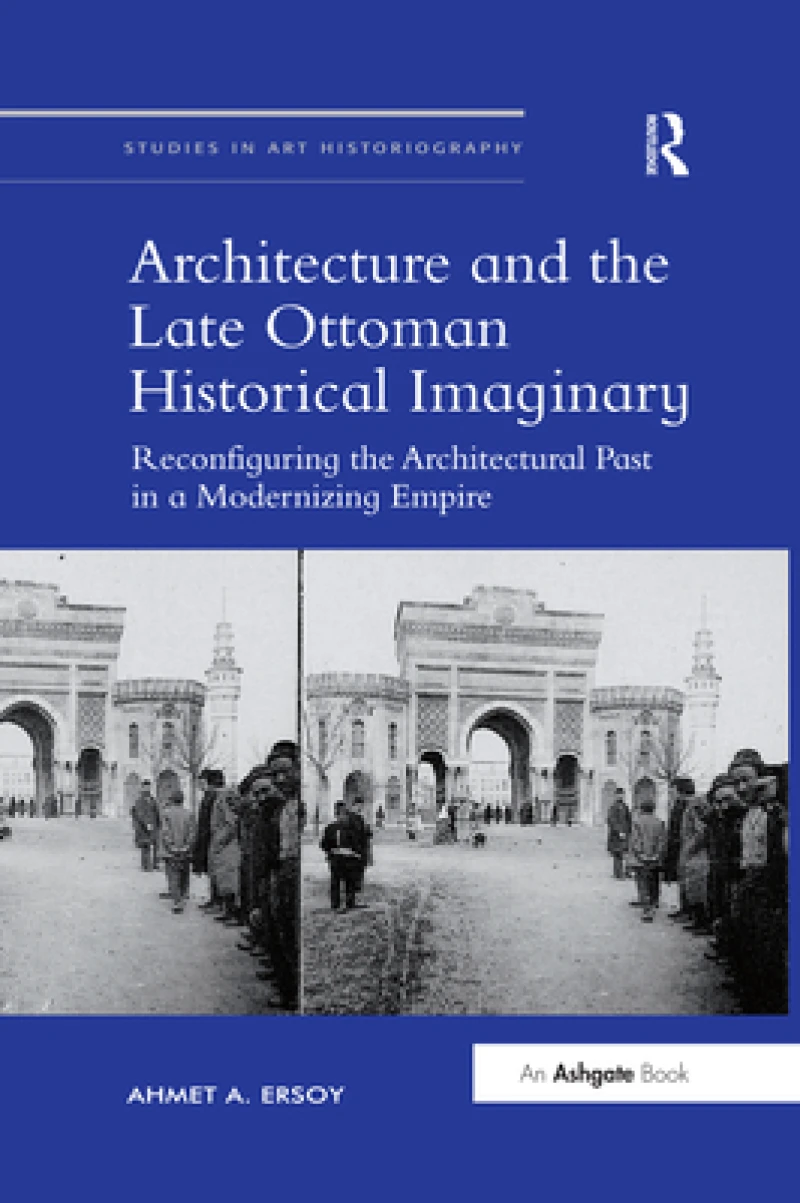
Architecture and the Late Ottoman Historical Imaginary : Reconfiguring the Architectural Past in a Modernizing Empire
Book Details
Format
Paperback / Softback
Book Series
Studies in Art Historiography
ISBN-10
0367432838
ISBN-13
9780367432836
Publisher
Taylor & Francis Ltd
Imprint
Routledge
Country of Manufacture
GB
Country of Publication
GB
Publication Date
Sep 11th, 2019
Print length
336 Pages
Weight
453 grams
Product Classification:
History of architecture
Ksh 8,650.00
Werezi Extended Catalogue
0 in stock
Delivery Location
Delivery fee: Select location
Secure
Quality
Fast
Little research has been conducted in the historicist pursuits of late Ottoman architects as they negotiated the nineteenth century’s vast inventory of styles identified as the ’Ottoman Renaissance.’ Ersoy’s book examines the historicist discourse underlying this ’renaissance’ through a reading of a text conceived as the movement’s manifesto.
While European eclecticism is examined as a critical and experimental moment in western art history, little research has been conducted to provide an intellectual depth of field to the historicist pursuits of late Ottoman architects as they maneuvered through the nineteenth centurys vast inventory of available styles and embarked on a revivalist/Orientalist program they identified as the Ottoman Renaissance. Ahmet A. Ersoys book examines the complex historicist discourse underlying this belated renaissance through a close reading of a text conceived as the movements canonizing manifesto: the Usul-i Mimari-i Osmani [The Fundamentals of Ottoman Architecture] (Istanbul, 1873). In its translocal, cross-disciplinary scope, Ersoys work explores the creative ways in which the Ottoman authors straddled the art-historical mainstream and their new, self-orientalizing aesthetics of locality. The study reveals how Orientalism was embraced by its very objects, the self-styled Orientals of the modern world, as a marker of authenticity, and a strategically located aesthetic tool to project universally recognizable images of cultural difference. Rejecting the lesser, subsidiary status ascribed to non-western Orientalisms, Ersoys work contributes to recent, post-Saidian directions in the study of cultural representation that resituate the field of Orientalism beyond its polaristic core, recognizing its cross-cultural potential as a polyvalent discourse.
Get Architecture and the Late Ottoman Historical Imaginary by at the best price and quality guaranteed only at Werezi Africa's largest book ecommerce store. The book was published by Taylor & Francis Ltd and it has pages.

