

Architectures for Agentic AI : Integrating Multi-Agent Systems, Reinforcement Learning, and LLMs for Autonomous Decision-Making
Book Details
Format
Paperback / softback
Book Series
SpringerBriefs in Intelligent Systems
ISBN-10
3032247802
ISBN-13
9783032247803
Publisher
Springer Nature Switzerland AG
Imprint
Springer Nature Switzerland AG
Country of Manufacture
GB
Country of Publication
GB
Publication Date
May 19th, 2026
Print length
94 Pages
Weight
186 grams
Dimensions
23.30 x 15.60 x 0.80 cms
KSh 8,100.00
Werezi Extended Catalogue
Delivery in 12 days
1 copies in stock
Delivery Location
Delivery fee: Select location
Delivery in 12 days
Secure
Quality
Fast
mso-bidi-font-weight: bold;">In an era of rapidly evolving AI technologies, understanding how Agentic AI systems operate, and how they differ from traditional AI, is essential.
This book explores the emerging paradigm of Agentic AI, where Large Language Models (LLMs) and Reinforcement Learning (RL) converge to create intelligent, autonomous, and adaptive systems. It provides a unified theoretical foundation and connects it to practical implementation, offering readers a clear path from concept to execution. It will also provide an integrative approach of Agentic AI, Large Language Models, and Reinforcement Learning. While these topics are often studied separately, this book provides a coherent framework that unites them, filling a critical gap between AI theory, system design, and real-world application. In an era of rapidly evolving AI technologies, understanding how Agentic AI systems operate, and how they differ from traditional AI, is essential. This book guides researchers, engineers, and AI practitioners through the architectural principles that empower agents to reason, cooperate, and learn from feedback. It further demonstrates how RL can fine-tune LLMs to produce more focused, context-aware outputs, strengthening their role in multi-agent collaboration and autonomous decision-making. The content unfolds from the evolution of AI to Agentic AI, covering architectural design, learning mechanisms, and integration strategies for LLMs and RL. A real-world case study anchors the theory in practice, illustrating how these technologies can be combined to build interpretable systems. Readers will discover adaptive orchestration strategies, methods for enhancing model interpretability, and design templates for developing intelligent agent ecosystems. By the end, readers will not only understand the inner workings of Agentic AI but also gain the tools to design and implement their own agent-based frameworks. A working knowledge of Python is recommended to fully engage with the practical aspects.
Get Architectures for Agentic AI by Joao da Cruz Pereira, Paulo Novais at the best price and quality guaranteed only at Werezi Africa's largest book ecommerce store. The book was published by Springer Nature Switzerland AG and it has 94 pages.
Customers Who Bought This Also Bought

Polynomial Solutions of Linear Differential Equations
KSh 22,950.00

Quantum Optics
KSh 10,800.00

Computational Geometry
KSh 12,050.00
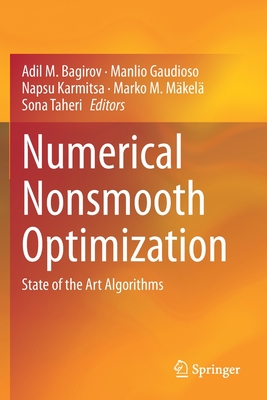
Numerical Nonsmooth Optimization
KSh 28,800.00
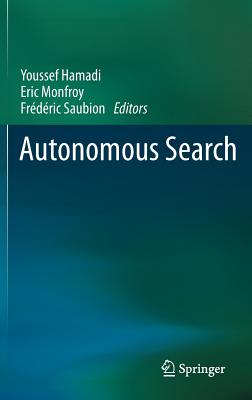
Autonomous Search
KSh 16,200.00
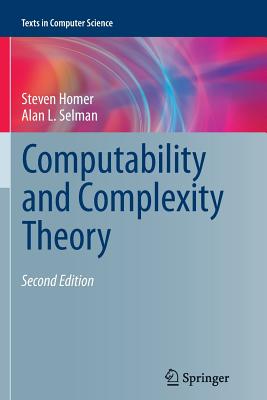
Computability and Complexity Theory
KSh 13,500.00

Spring Cloud Data Flow
KSh 11,700.00
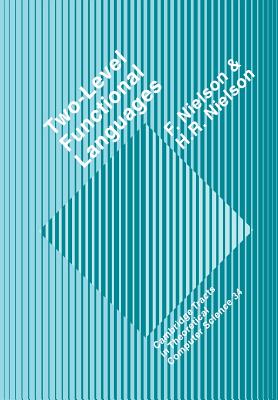
Two-Level Functional Languages
KSh 9,550.00
Foundational and Practical Aspects of Resource Analysis
KSh 8,100.00
Iceberg Semantics for Mass Nouns and Count Nouns
KSh 16,200.00
Well-Quasi Orders in Computation, Logic, Language and Reasoning
KSh 28,800.00

Information Processing and Management of Uncertainty in Knowledge-Based Systems
KSh 19,800.00
