
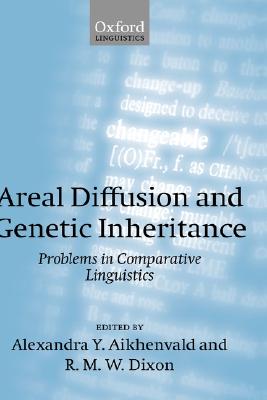
Areal Diffusion and Genetic Inheritance : Problems in Comparative Linguistics
Book Details
Format
Hardback
Book Series
Explorations in Linguistic Typology
ISBN-10
0198299818
ISBN-13
9780198299813
Publisher
Oxford University Press
Imprint
Oxford University Press
Country of Manufacture
GB
Country of Publication
GB
Publication Date
Nov 22nd, 2001
Print length
472 Pages
Weight
819 grams
Dimensions
24.30 x 16.30 x 2.90 cms
Product Classification:
Philosophy of languageHistorical & comparative linguistics
KSh 19,450.00
Temporarily out of stock, due soon
0 in stock
Delivery Location
Delivery fee: Select location
Secure
Quality
Fast
Considers how and why forms and meanings of different languages at different times may resemble each other. This book investigates the relationship between areal diffusion and the genetic development of languages. The chapters cover Ancient Anatolia, Modern Anatolia, Australia, Amazonia, Oceania, Southeast and East Asia, and Sub-Saharan Africa.
Two languages can resemble each other in the categories, constructions, and types of meaning they use, and in the forms they employ to express these. Such resemblances may be the consequence of universal characteristics of language, of chance or coincidence, of the borrowing by one language of another''s words, or of the diffusion of grammatical, phonetic, and phonological characteristics that takes place when languages come into contact. Languages sometimes show likeness because they have borrowed not from each other but from a third language. Languages that come from the same ancestor may have similar grammatical categories and meanings expressed by similar forms: such languages are said to be genetically affiliated.This book considers how and why forms and meanings of different languages at different times may resemble one another. Its editors and authors aim (a) to explain and identify the relationship between areal diffusion and the genetic development of languages, and (b) to discover the means of distinguishing what may cause one language to share the characteristics of another. The introduction outlines the issues that underlie these aims, introduces the chapters which follow, and comments on recurrent conclusions by the contributors. The problems are formidable and the pitfalls numerous: for example, several of the authors draw attention to the inadequacy of the family tree diagram as the main metaphor for language relationship. The authors range over Ancient Anatolia, Modern Anatolia, Australia, Amazonia, Oceania, Southeast and East Asia, and Sub-Saharan Africa. The book includes an archaeologist''s view on what material evidence offers to explain cultural and linguistic change, and a general discussion of which kinds of linguistic feature can and cannot be borrowed. The chapters are accessibly-written and illustrated by twenty maps. The book will interest all students of the causes and consequences of language change and evolution.
Get Areal Diffusion and Genetic Inheritance by Alexandra Y. Aikhenvald at the best price and quality guaranteed only at Werezi Africa's largest book ecommerce store. The book was published by Oxford University Press and it has 472 pages.
Customers Who Bought This Also Bought

Recognising the Stranger
KSh 1,800.00
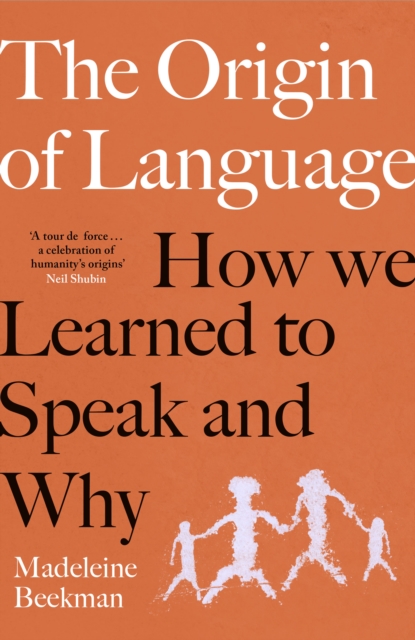
The Origin of Language
KSh 4,500.00

Sharing Thoughts
KSh 17,000.00

An Inquiry Into Meaning and Truth
KSh 3,750.00
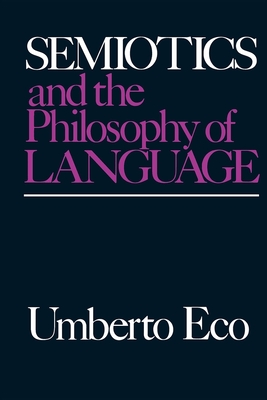
Semiotics and the Philosophy of Language
KSh 3,400.00

An Introduction to Logic
KSh 6,650.00

Walker Percy''s Search for Community
KSh 5,950.00
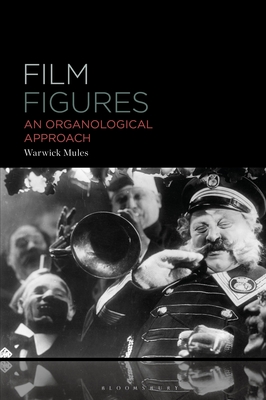
Film Figures
KSh 16,450.00

The Tacit Dimensions of Language and Logic
KSh 15,800.00

Metaphors in Action
KSh 21,600.00
Frontiers in Semiotics
KSh 3,000.00

A Theory of Death
KSh 11,900.00
