
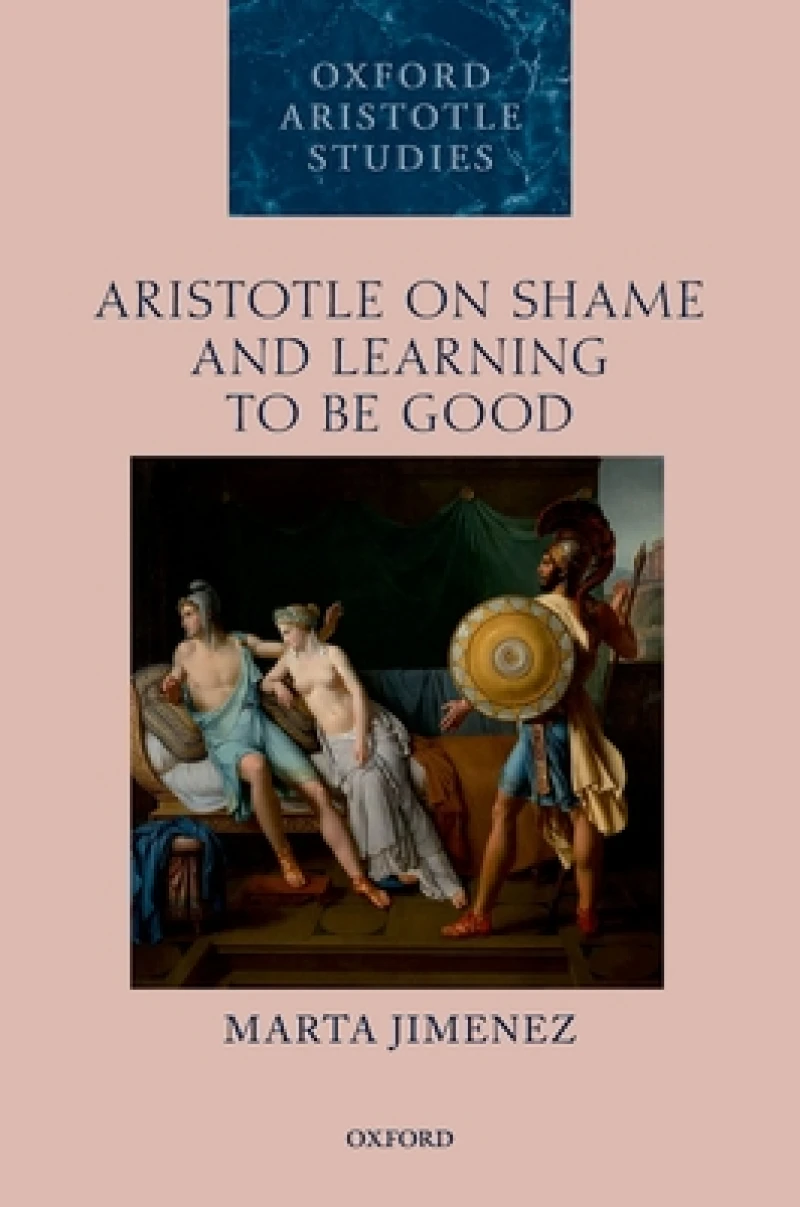
Aristotle on Shame and Learning to Be Good
Book Details
Format
Hardback or Cased Book
Book Series
Oxford Aristotle Studies Series
ISBN-10
019882968X
ISBN-13
9780198829683
Publisher
Oxford University Press
Imprint
Oxford University Press
Country of Manufacture
GB
Country of Publication
GB
Publication Date
Dec 31st, 2020
Print length
226 Pages
Weight
506 grams
Dimensions
24.10 x 16.50 x 1.90 cms
Ksh 16,400.00
Werezi Extended Catalogue
0 in stock
Delivery Location
Delivery fee: Select location
Secure
Quality
Fast
This book presents a novel interpretation of Aristotle's account of how shame instils virtue, and defends its philosophical import. Shame is shown to provide motivational continuity between the actions of the learners and the virtuous dispositions that they will eventually acquire.
Marta Jimenez presents a novel interpretation of Aristotle''s account of the role of shame in moral development. Despite shame''s bad reputation as a potential obstacle to the development of moral autonomy, Jimenez argues that shame is for Aristotle the proto-virtue of those learning to be good, since it is the emotion that equips them with the seeds of virtue. Other emotions such as friendliness, righteous indignation, emulation, hope, and even spiritedness may play important roles on the road to virtue. However, shame is the only one that Aristotle repeatedly associates with moral progress. The reason is that shame can move young agents to perform good actions and avoid bad ones in ways that appropriately resemble not only the external behavior but also the orientation and receptivity to moral value characteristic of virtuous people.Through an analysis of the different cases of pseudo-courage and the passages on shame in Aristotle''s ethical treatises, Jimenez argues that shame places young people on the path to becoming good by turning their attention to considerations about the perceived nobility and praiseworthiness of their own actions and character. Although they are not yet virtuous, learners with a sense of shame can appreciate the value of the noble and guide their actions by a genuine interest in doing the right thing. Shame, thus, enables learners to perform virtuous actions in the right way before they possess practical wisdom or stable dispositions of character. This proposal solves a long-debated problem concerning Aristotle''s notion of habituation by showing that shame provides motivational continuity between the actions of the learners and the virtuous dispositions that they will eventually acquire
Get Aristotle on Shame and Learning to Be Good by at the best price and quality guaranteed only at Werezi Africa's largest book ecommerce store. The book was published by Oxford University Press and it has pages.

