
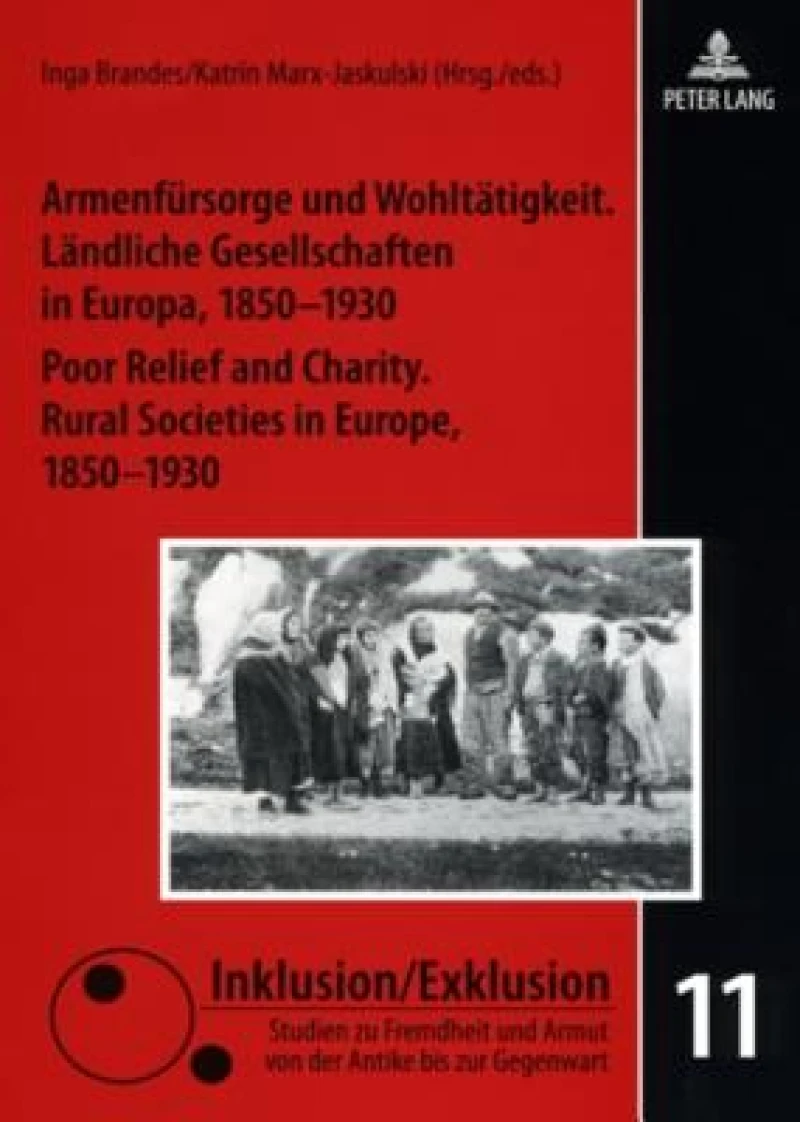
Armenfuersorge und Wohltaetigkeit. Laendliche Gesellschaften in Europa, 1850-1930- Poor Relief and Charity. Rural Societies in Europe, 1850-1930
New
Book Details
Format
Paperback / Softback
Book Series
Inklusion/Exklusion
ISBN-10
3631584253
ISBN-13
9783631584255
Edition
New
Publisher
Peter Lang AG
Imprint
Peter Lang AG
Country of Manufacture
DE
Country of Publication
GB
Publication Date
Sep 29th, 2008
Print length
320 Pages
Weight
456 grams
Dimensions
15.30 x 22.50 x 1.80 cms
Ksh 11,350.00
Manufactured on Demand
0 in stock
Delivery Location
Delivery fee: Select location
Secure
Quality
Fast
Wie sah ländliche Armut in Europa aus? Konnte nicht jeder auf dem Land Tiere halten oder Beeren im Wald sammeln? Nimmt man nicht sogar heute noch an, dass Solidarität unter Landbewohnern sehr verbreitet ist? Historiker und Historikerinnen aus fünf europäischen Ländern skizzieren ein bislang vernachlässigtes Forschungsfeld: Thematisiert werden Kontinuitäten und Brüche in der ländlichen, im Vergleich zur städtischen Armenfürsorge ebenso wie konfessionelle und aristokratische Wohltätigkeit. Ein breites Spektrum an Quellen dient dazu, die Wahrnehmung von Armen und ihre Behandlung durch private und öffentliche Institutionen der Sozialfürsorge zu analysieren. Machtverhältnissen zwischen Männern und Frauen, Adel und Bauern oder Verwaltern und Bedürftigen wird besondere Aufmerksamkeit geschenkt. How did rural poverty look like in the European past? Could not everybody in the countryside keep chickens, or pick berries in the woods? Is not the solidarity of villagers commonly known even today? The volume draws together historians from five European countries to map out a field of research which has long been neglected by welfare as well as agricultural historians. Continuities and changes within rural as compared to urban poor relief, of ecclesiastic and of aristocratic charity are described. A wide range of sources is taken into account to show how the rural poor were perceived and treated by private and public institutions of social assistance. Power relations between men and women, aristocrats and peasantry, or administrators and the needy are especially focussed upon.
Wie sah ländliche Armut in Europa aus? Konnte nicht jeder auf dem Land Tiere halten oder Beeren im Wald sammeln? Nimmt man nicht sogar heute noch an, dass Solidarität unter Landbewohnern sehr verbreitet ist? Historiker und Historikerinnen aus fünf europäischen Ländern skizzieren ein bislang vernachlässigtes Forschungsfeld: Thematisiert werden Kontinuitäten und Brüche in der ländlichen, im Vergleich zur städtischen Armenfürsorge ebenso wie konfessionelle und aristokratische Wohltätigkeit. Ein breites Spektrum an Quellen dient dazu, die Wahrnehmung von Armen und ihre Behandlung durch private und öffentliche Institutionen der Sozialfürsorge zu analysieren. Machtverhältnissen zwischen Männern und Frauen, Adel und Bauern oder Verwaltern und Bedürftigen wird besondere Aufmerksamkeit geschenkt.
How did rural poverty look like in the European past? Could not everybody in the countryside keep chickens, or pick berries in the woods? Is not the solidarity of villagers commonly known even today? The volume draws together historians from five European countries to map out a field of research which has long been neglected by welfare as well as agricultural historians. Continuities and changes within rural as compared to urban poor relief, of ecclesiastic and of aristocratic charity are described. A wide range of sources is taken into account to show how the rural poor were perceived and treated by private and public institutions of social assistance. Power relations between men and women, aristocrats and peasantry, or administrators and the needy are especially focussed upon.
How did rural poverty look like in the European past? Could not everybody in the countryside keep chickens, or pick berries in the woods? Is not the solidarity of villagers commonly known even today? The volume draws together historians from five European countries to map out a field of research which has long been neglected by welfare as well as agricultural historians. Continuities and changes within rural as compared to urban poor relief, of ecclesiastic and of aristocratic charity are described. A wide range of sources is taken into account to show how the rural poor were perceived and treated by private and public institutions of social assistance. Power relations between men and women, aristocrats and peasantry, or administrators and the needy are especially focussed upon.
Get Armenfuersorge und Wohltaetigkeit. Laendliche Gesellschaften in Europa, 1850-1930- Poor Relief and Charity. Rural Societies in Europe, 1850-1930 by at the best price and quality guaranteed only at Werezi Africa's largest book ecommerce store. The book was published by Peter Lang AG and it has pages.

