
Cart 0
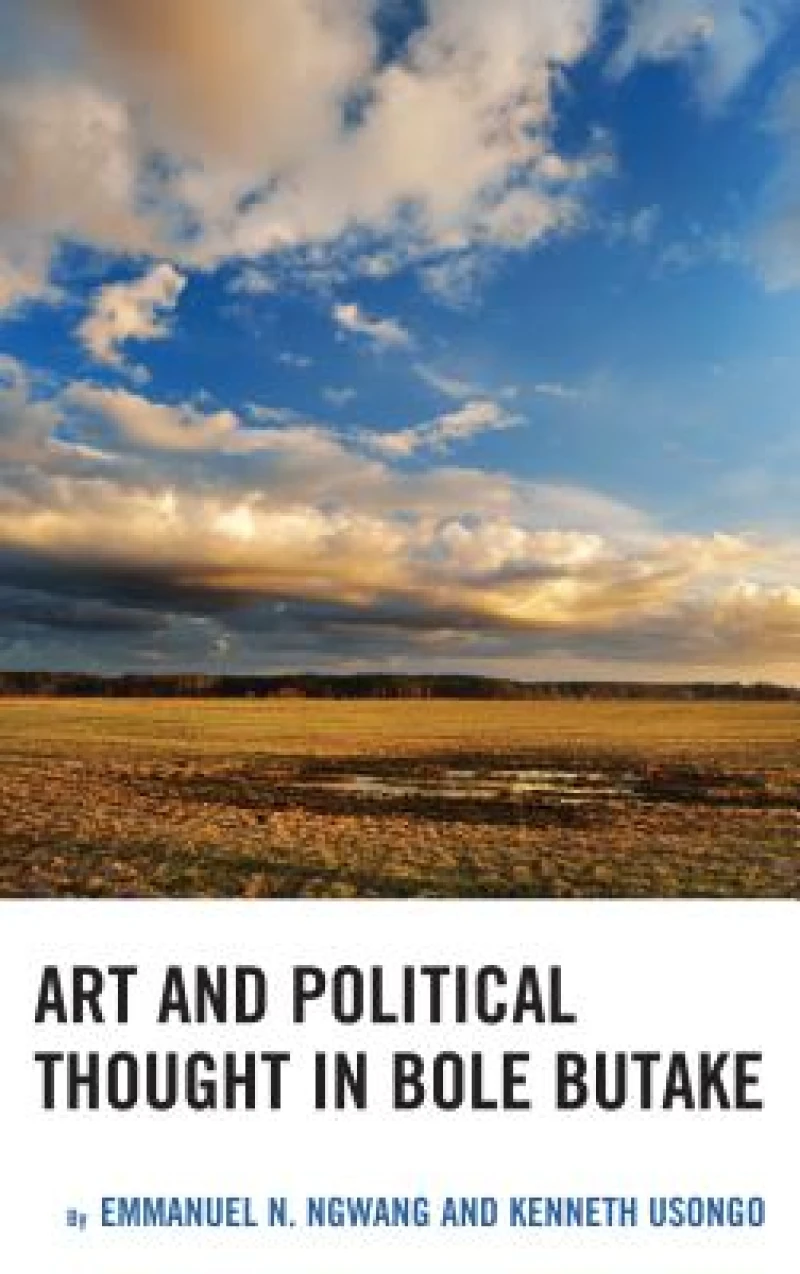
Art and Political Thought in Bole Butake
Click to zoom

Share this book

Art and Political Thought in Bole Butake

Book Details

Format Hardback or Cased Book
ISBN-10 149853810X
ISBN-13 9781498538107
Publisher Bloomsbury Publishing Plc
Imprint Lexington Books
Country of Manufacture GB
Country of Publication GB
Publication Date Sep 30th, 2016
Print length 140 Pages
Weight 370 grams
Dimensions 16.10 x 23.70 x 1.80 cms
Product Classification: Plays, playscripts
Ksh 14,500.00
Manufactured on Demand Delivery in 29 days

Delivery Location

Delivery fee: Select location

Delivery in 29 days

Secure
Quality
Fast
The book Art and Political Thought in Bole Butake, through a pluralist critical approach, interrogates Butake’s major creative works—Lake God, And Palm Wine Will Flow, The Survivors, Shoes and Four Men in Arms, Dance of the Vampires and The Rape of Michelle —mainly in terms of their political underpinnings and cultural signification. The intention is to place his drama within the socio-political matrix of Cameroon and demonstrate the topicality of the issues of governance, marginalization, and corruption in Cameroon or Africa that Butake consistently foregrounds in his creative works. The study opens with an overview of the historical and social milieu that feeds Butake’s imagination and the introduction is followed by an interview of the playwright in which he explains his mission as a writer. The next two chapters appraise the political symbolism of Butake’s plays and chapter five undertakes a comparison of the colonial legacy and the culture of corruption in Butake’s Lake God and The Rape of Michelle. Women in Butake’s imaginative universe play a non-negligible role in change. They are portrayed as political and social activists in their challenge to autocratic rule. This is the leitmotif of chapter six, which highlights the contribution of women towards political change in Cameroon. In chapters seven and eight, the focus is on articulating the cultural signification of Butake’s plays in terms of political change. Concomitantly, these chapters also demonstrate Butake’s seamless incorporation of elements of oral literature in his drama, as he interpolates proverbs, divinations and other elements of orality in his work. Chapter nine of the book points out how Butake foregrounds the character traits of his protagonists against the backdrop of traditional Noni religion as well as Christianity. Thus, the bigotry and belligerence of both the Fon and Father Leo in Lake God, for example, are projected through a supernatural frame.The conclusion appraises the contemporaneity of Butake’s drama. His oeuvre continues to inspire so many people: from disenfranchised groups that see in his drama a path to reclaiming liberties and to critics who are challenged to hone their literary tools in the endeavor to situate his works within the dynamics of politics and culture in Africa.
The book Art and Political Thought in Bole Butake, through a pluralist critical approach, interrogates Butake’s major creative works—Lake God, And Palm Wine Will Flow, The Survivors, Shoes and Four Men in Arms, Dance of the Vampires and The Rape of Michelle —mainly in terms of their political underpinnings and cultural signification. The intention is to place his drama within the socio-political matrix of Cameroon and demonstrate the topicality of the issues of governance, marginalization, and corruption in Cameroon or Africa that Butake consistently foregrounds in his creative works. The study opens with an overview of the historical and social milieu that feeds Butake’s imagination and the introduction is followed by an interview of the playwright in which he explains his mission as a writer. The next two chapters appraise the political symbolism of Butake’s plays and chapter five undertakes a comparison of the colonial legacy and the culture of corruption in Butake’s Lake God and The Rape of Michelle. Women in Butake’s imaginative universe play a non-negligible role in change. They are portrayed as political and social activists in their challenge to autocratic rule. This is the leitmotif of chapter six, which highlights the contribution of women towards political change in Cameroon. In chapters seven and eight, the focus is on articulating the cultural signification of Butake’s plays in terms of political change. Concomitantly, these chapters also demonstrate Butake’s seamless incorporation of elements of oral literature in his drama, as he interpolates proverbs, divinations and other elements of orality in his work. Chapter nine of the book points out how Butake foregrounds the character traits of his protagonists against the backdrop of traditional Noni religion as well as Christianity. Thus, the bigotry and belligerence of both the Fon and Father Leo in Lake God, for example, are projected through a supernatural frame. The conclusion appraises the contemporaneity of Butake’s drama. His oeuvre continues to inspire so many people: from disenfranchised groups that see in his drama a path to reclaiming liberties and to critics who are challenged to hone their literary tools in the endeavor to situate his works within the dynamics of politics and culture in Africa.

Get Art and Political Thought in Bole Butake by at the best price and quality guaranteed only at Werezi Africa's largest book ecommerce store. The book was published by Bloomsbury Publishing Plc and it has pages.


Mind, Body, & Spirit

Price

Ksh 14,500.00

Shopping Cart

Africa largest book store

Sub Total:
Ebooks

Digital Library
Coming Soon

Our digital collection is currently being curated to ensure the best possible reading experience on Werezi. We'll be launching our Ebooks platform shortly.