
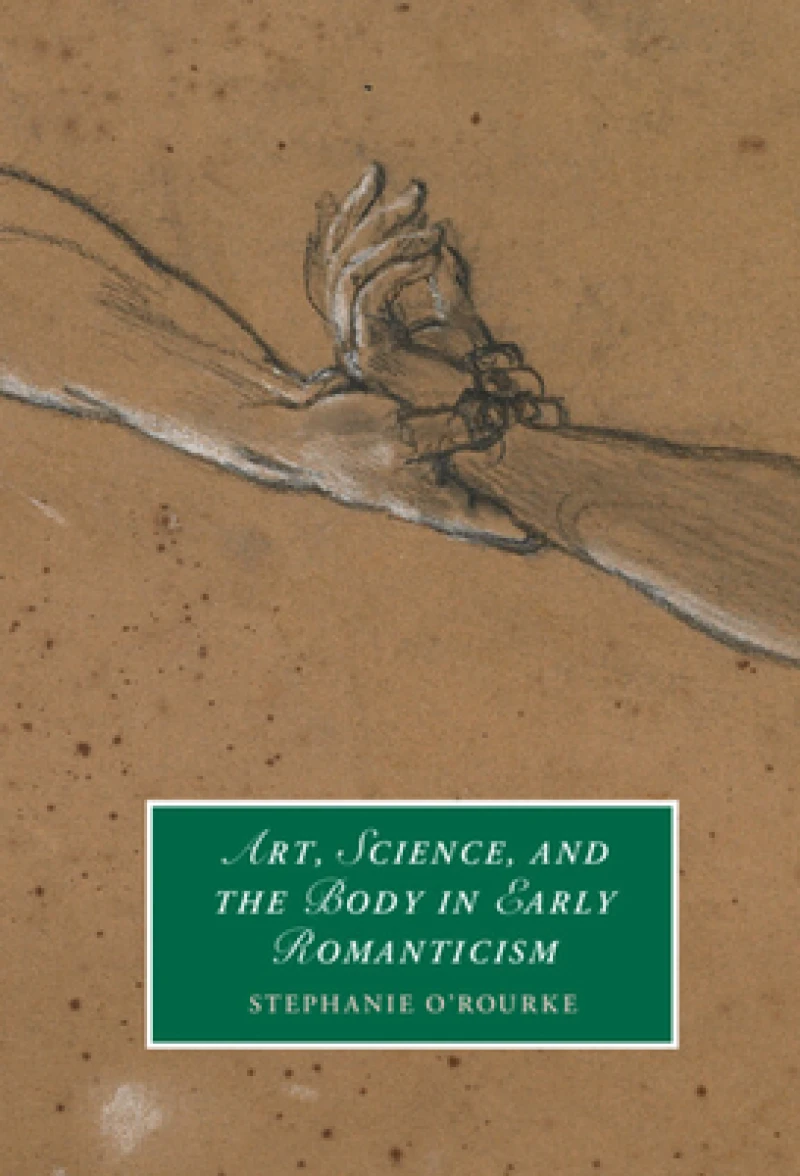
Art, Science, and the Body in Early Romanticism
Book Details
Format
Hardback or Cased Book
Book Series
Cambridge Studies in Romanticism
ISBN-10
1316519023
ISBN-13
9781316519028
Publisher
Cambridge University Press
Imprint
Cambridge University Press
Country of Manufacture
GB
Country of Publication
GB
Publication Date
Nov 4th, 2021
Print length
205 Pages
Weight
548 grams
Dimensions
15.90 x 23.60 x 2.10 cms
Ksh 14,750.00
Manufactured on Demand
0 in stock
Delivery Location
Delivery fee: Select location
Secure
Quality
Fast
This new, interdisciplinary history of romanticism, art and science, reveals how romantic artworks participated in a profound crisis concerning the relationship between knowledge and the human body at the end of European Enlightenment. A multi-national approach focuses on the artists Henry Fuseli, Anne-Louis Girodet and Philippe de Loutherbourg.
Can we really trust the things our bodies tell us about the world? This work reveals how deeply intertwined cultural practices of art and science questioned the authority of the human body in the late eighteenth and early nineteenth centuries. Focusing on Henry Fuseli, Anne-Louis Girodet and Philippe de Loutherbourg, it argues that romantic artworks participated in a widespread crisis concerning the body as a source of reliable scientific knowledge. Rarely discussed sources and new archival material illuminate how artists drew upon contemporary sciences and inverted them, undermining their founding empiricist principles. The result is an alternative history of romantic visual culture that is deeply embroiled in controversies around electricity, mesmerism, physiognomy and other popular sciences. This volume reorients conventional accounts of romanticism and some of its most important artworks, while also putting forward a new model for the kinds of questions that we can ask about them.
Get Art, Science, and the Body in Early Romanticism by at the best price and quality guaranteed only at Werezi Africa's largest book ecommerce store. The book was published by Cambridge University Press and it has pages.

