
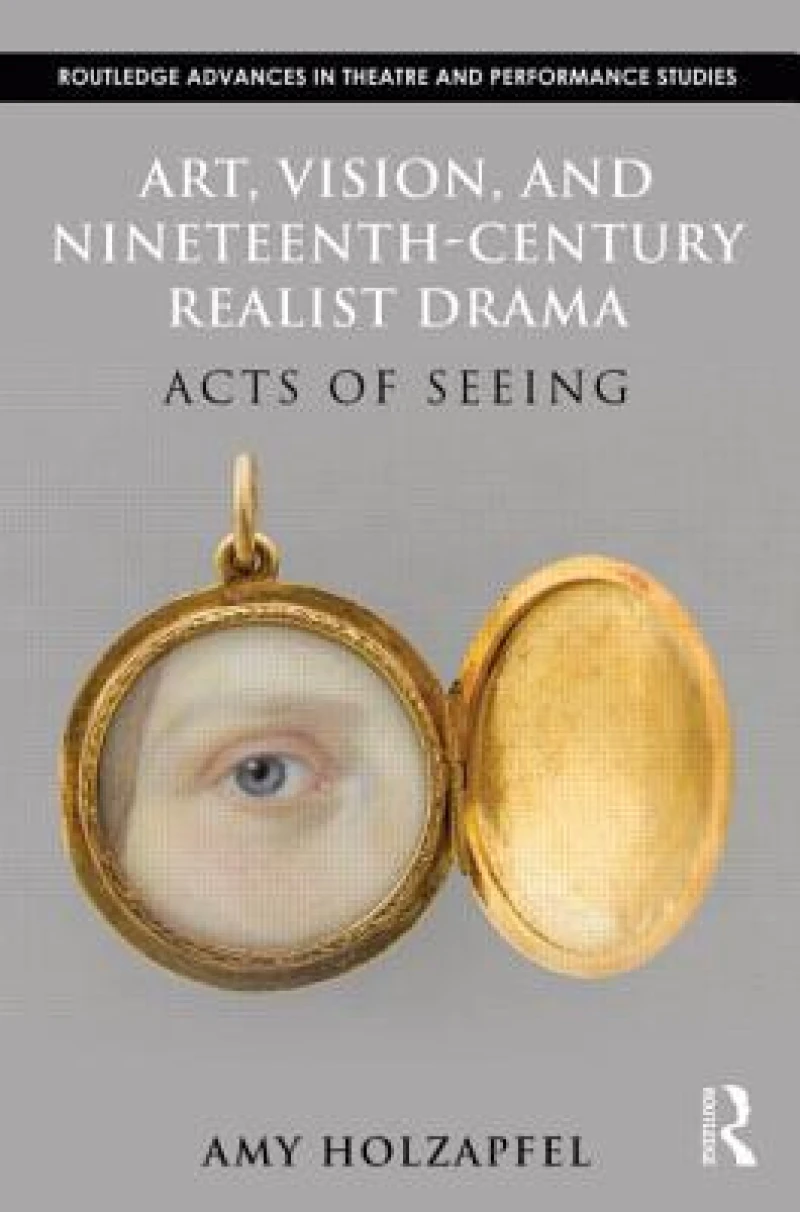
Art, Vision, and Nineteenth-Century Realist Drama : Acts of Seeing
Book Details
Delivery Location
Delivery fee: Select location
Realism in theatre is traditionally defined as a mere seed of modernism, a crude attempt to reproduce an exact copy of reality on stage. Art, Vision & Nineteenth-Century Realist Drama redefines realism as a complex and under-examined form of visual modernism, one that positioned theatre at the crux of the encounter between consciousness and the visible world. Tracing a historical continuum of "acts of seeing" on the realist stage, Holzapfel demonstrates how theatre participated in modernitys aggressive interrogation of visions residence in the human body. New findings by scientists and philosopherssuch as Diderot, Goethe, Müller, Helmholtz, and Galtonexposed how the visible world is experienced and framed by the unstable relativism of the physiological body rather than the fixed idealism of the mind. Realist artists across media paradoxically embraced this paradigm shift by focusing on the embodied observer. Drawing from extensive archival research, Holzapfel conducts close readings of iconic dramas and their productionsincluding Scribes The Glass of Water, Zolas Thérèse Raquin, Ibsens A Doll House, Strindbergs The Father, and Hauptmanns Before Sunrisealongside analyses of artwork by major painters and photographerssuch as Chardin, Nadar, Millais, Rejlander, and Liebermann. In a radical challenge to existing criticism, Holzapfel argues that realism in theatre was never the attempt to reproduce an exact copy of the seen world but rather the struggle to make visible the act of seeing.
Realism in theatre is traditionally defined as a mere "seed" of modernism, a simple or crude attempt to copy objective reality on stage. This book challenges this misconception by redefining realism as an under-examined form of visual modernism that positioned theatre at the crux of the unstable interaction between consciousness and the visible world. Tracing a historical continuum of "acts of seeing" occurring on the realist stage, Holzapfel illustrates how theatre participated in modernitys aggressive interrogation of visions residence in the human body. New findings by scientists and philosophers such as Diderot, Goethe, Müller, Helmholtz, and Galton exposed how the visible world is experienced and framed by the unstable relativism of the physiological body rather than the fixed idealism of the mind. The book illustrates how realist artists across media embraced this paradigm shift, destabilizing the myth of a direct correspondence between reality and representation by giving focus in their art to the subject of the "embodied observer." Drawing from extensive archival research, Holzapfel conducts close readings of iconic dramas and their productions including Scribes The Glass of Water, Zolas Thérèse Raquin, Ibsens A Doll House, Strindbergs The Father, and Hauptmanns Before Sunrise alongside intensive considerations of artwork by painters and photographers like Chardin, Manet, Nadar, Millais, Rejlander, and Liebermann to show how realist drama was influenced by new approaches towards vision arising in science, visual art, and visual culture. In a radical departure from the dominant critical approach to realism, Holzapfel argues that what realist dramatists sought on stage was not a copy of objective reality but greater acknowledgment of the gap that exists between the eye and the world.
Get Art, Vision, and Nineteenth-Century Realist Drama by at the best price and quality guaranteed only at Werezi Africa's largest book ecommerce store. The book was published by Taylor & Francis Ltd and it has pages.

