
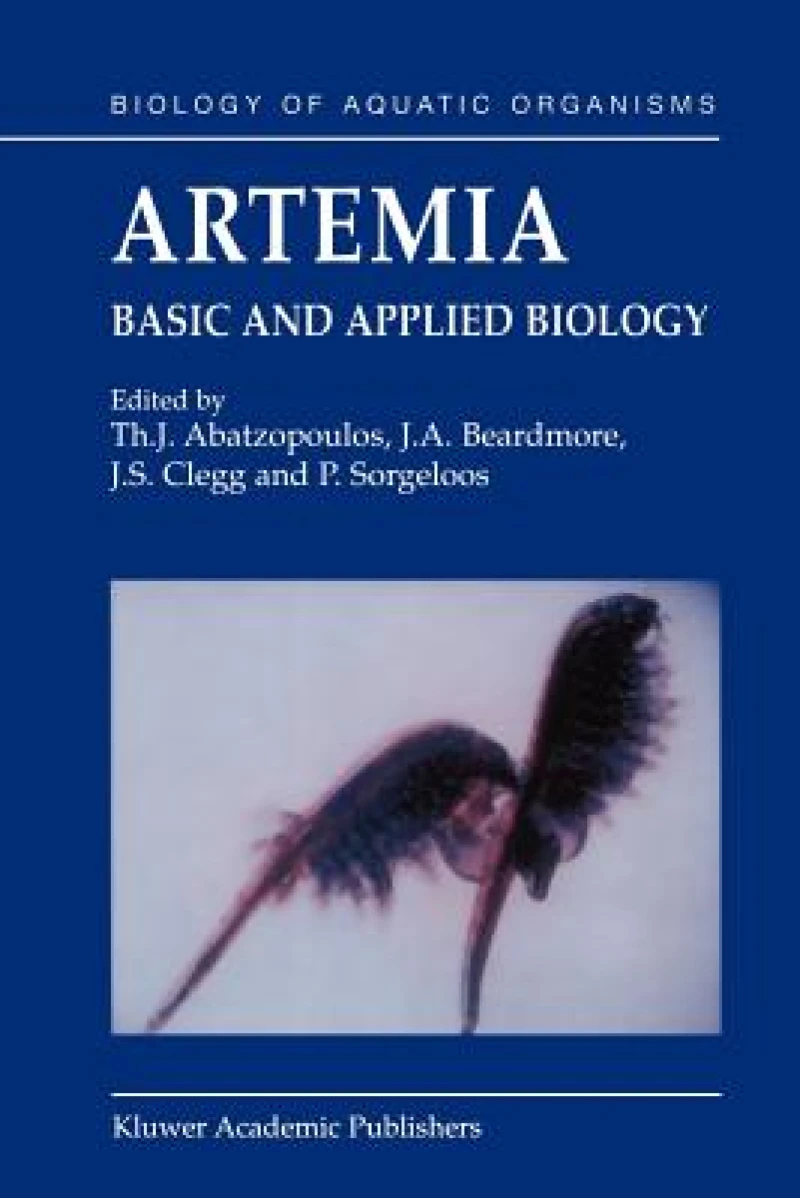
Artemia: Basic and Applied Biology
Softcover reprint of hardcover 1st ed. 2002
Book Details
Format
Paperback / Softback
Book Series
Biology of Aquatic Organisms
ISBN-10
9048160731
ISBN-13
9789048160730
Edition
Softcover reprint of hardcover 1st ed. 2002
Publisher
Springer
Imprint
Springer
Country of Manufacture
GB
Country of Publication
GB
Publication Date
Dec 6th, 2010
Print length
286 Pages
Weight
466 grams
Dimensions
15.70 x 23.50 x 2.20 cms
Product Classification:
Ecological science, the BiosphereEvolutionDevelopmental biologyZoology & animal sciences
Ksh 36,000.00
Werezi Extended Catalogue
0 in stock
Delivery Location
Delivery fee: Select location
Secure
Quality
Fast
The objectives of this volume are to present an up-to-date (literature survey up to 2001) account of the biology of Artemia focusing particularly upon the major advances in knowledge and understanding achieved in the last fifteen or so years and emphasising the operational and functional linkage between the biological phenomena described and the ability of this unusual animal to thrive in extreme environments. Artemia is a genus of anostracan crustaceans, popularly known as brine shrimps. These animals are inhabitants of saline environments which are too extreme for the many species which readily predate them if opportunity offers. They are, thus, effectively inhabitants of extreme (hypersaline) habitats, but at the same time are able to tolerate physiologically large changes in salinity, ionic composition, temperature and oxygen tension. Brine shrimp are gener ally thought of as tropical and subtropical, but are also found in regions where temperatures are very low for substantial periods such as Tibet, Siberia and the Atacama desert. They have, thus, great powers of adaptation and are of interest for this capacity alone. The earliest scientific reference to brine shrimp is in 1756, when Schlosser reported their existence in the saltpans of Lymington, England. These saltpans no longer exist and brine shrimp are not found in Britain today. Later, Linnaeus named the brine shrimp Cancer salinus and later still, Leach used the name Artemia salina. The strong effect which the salinity of the medium exerts on the morphological development of Artemia is now widely recognised.
The objectives of this volume are to present an up-to-date (literature survey up to 2001) account of the biology of Artemia focusing particularly upon the major advances in knowledge and understanding achieved in the last fifteen or so years and emphasising the operational and functional linkage between the biological phenomena described and the ability of this unusual animal to thrive in extreme environments. Artemia is a genus of anostracan crustaceans, popularly known as brine shrimps. These animals are inhabitants of saline environments which are too extreme for the many species which readily predate them if opportunity offers. They are, thus, effectively inhabitants of extreme (hypersaline) habitats, but at the same time are able to tolerate physiologically large changes in salinity, ionic composition, temperature and oxygen tension. Brine shrimp are gener ally thought of as tropical and subtropical, but are also found in regions where temperatures are very low for substantial periods such as Tibet, Siberia and the Atacama desert. They have, thus, great powers of adaptation and are of interest for this capacity alone. The earliest scientific reference to brine shrimp is in 1756, when Schlosser reported their existence in the saltpans of Lymington, England. These saltpans no longer exist and brine shrimp are not found in Britain today. Later, Linnaeus named the brine shrimp Cancer salinus and later still, Leach used the name Artemia salina. The strong effect which the salinity of the medium exerts on the morphological development of Artemia is now widely recognised.
Get Artemia: Basic and Applied Biology by at the best price and quality guaranteed only at Werezi Africa's largest book ecommerce store. The book was published by Springer and it has pages.

