
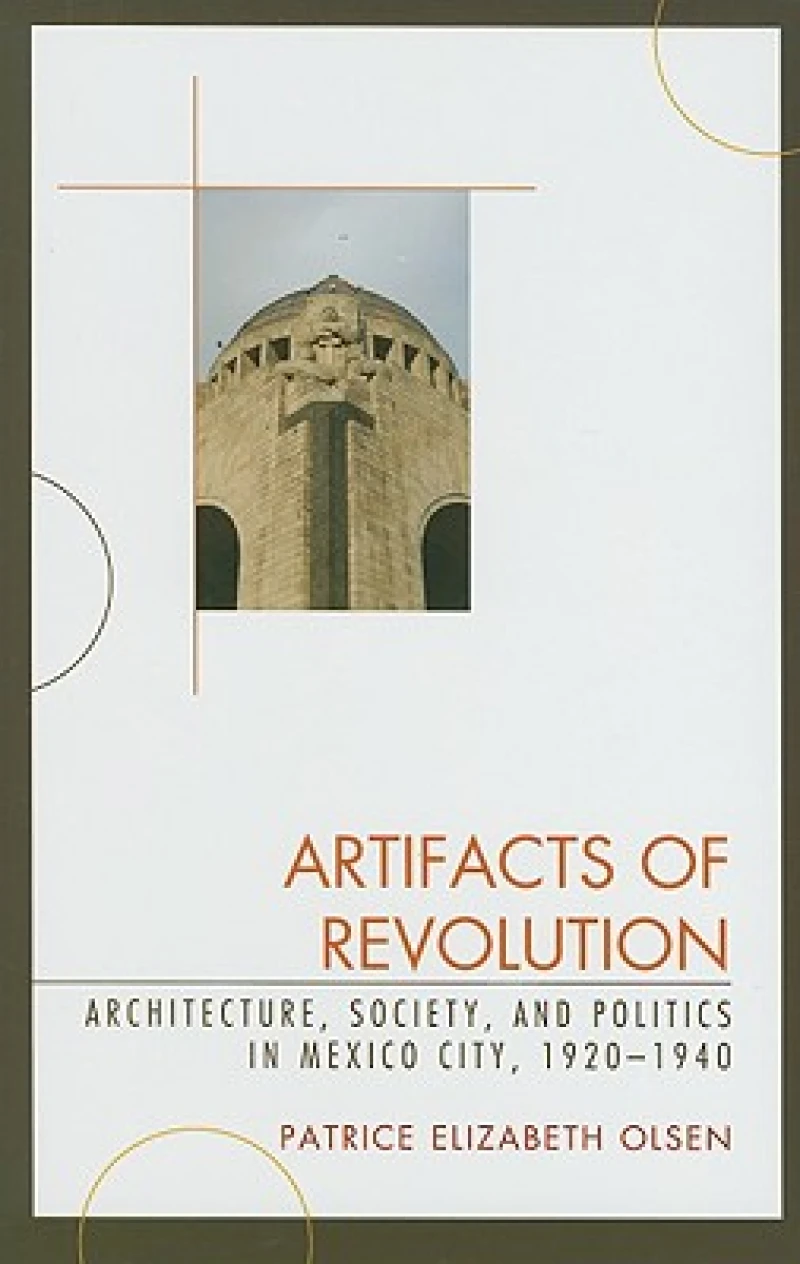
Artifacts of Revolution : Architecture, Society, and Politics in Mexico City, 1920–1940
Book Details
Format
Hardback or Cased Book
Book Series
Latin American Silhouettes
ISBN-10
0742554201
ISBN-13
9780742554207
Publisher
Bloomsbury Publishing Plc
Imprint
Rowman & Littlefield Publishers
Country of Manufacture
GB
Country of Publication
GB
Publication Date
Sep 11th, 2008
Print length
300 Pages
Weight
567 grams
Dimensions
23.90 x 16.10 x 3.10 cms
Product Classification:
ArchitectureSocial & cultural history
Ksh 21,300.00
Manufactured on Demand
0 in stock
Delivery Location
Delivery fee: Select location
Secure
Quality
Fast
Considers the physical changes in Mexico City's built environment, using them as a means to evaluate the extent and direction of regime consolidation of successive governments from 1920 to 1940. This work offers a study of Mexican political history as well as Latin American urban, social, and cultural history; cultural nationalism; and more.
This innovative history argues that we can understand important facets of the Mexican Revolution by analyzing the architecture designed and built in Mexico City during the formative years from 1920 to 1940. These artifacts allow us to trace and understand the path of the consolidation of the Mexican Revolution. Each individual building or development, by providing indelible evidence of the process by which the revolution evolved into a government, offers important insights into Mexican history. Seen in aggregate, they reveal an ongoing urban process at work; seen as a "composition," they reveal changes over time in societal values and aspirations and in the direction of the revolution.This book focuses on structure, change, and process for this remarkable city "in the true image of the gigantic heaven." The changes described in Fuentes'' narrative are man-made, not wrought by impersonal or natural forces except on the rare occasions of earthquake and flood. Patrice Elizabeth Olsen views Mexico City as an artifact of those who created it—representing their ardor, humanity, and religion, as well as their politics. Individual chapters detail the expression of revolutionary values and aims in the physical form of Mexico City''s built environment between 1920 and 1940, examining direction and meaning in terms of who is given license to design and build structures in the capital city, and equally important, who is excluded. Through the reshaping of the capital the revolution was extended and institutionalized; physical traces of the process of negotiation that enabled the revolution to be "fixed" in the Mexican polity appear in the city''s skyline, parks, housing developments, and other new construction, as well as in modifications to existing colonial-era buildings. In this manner, the author argues, Mexico City''s urban form crystallized as a product of the revolution as well as a part of the revolutionary process, as it has been of other conquests throughout its history.
Get Artifacts of Revolution by at the best price and quality guaranteed only at Werezi Africa's largest book ecommerce store. The book was published by Bloomsbury Publishing Plc and it has pages.

