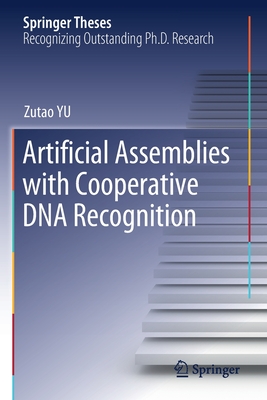
Book Details
Format
Hardback
Book Series
Springer Theses
ISBN-10
9811544220
ISBN-13
9789811544224
Edition
2020 ed.
Publisher
Springer Verlag, Singapore
Imprint
Springer Verlag, Singapore
Country of Manufacture
GB
Country of Publication
GB
Publication Date
May 10th, 2020
Print length
136 Pages
Product Classification:
BiochemistryBiotechnology
KSh 16,200.00
Currently unavailable
0 in stock
Delivery Location
Delivery fee: Select location
Secure
Quality
Fast
This book presents three types of synthetically cooperative DNA recognizing assemblies, in order to advance the development of programmable DNA-binding pyrrole–imidazole polyamides (PIPs). PIPs are characterized by their small molecular size, high binding affinity, programmability, sequence selectivity, and moderate cell permeability.
This book presents three types of synthetically cooperative DNA recognizing assemblies, in order to advance the development of programmable DNA-binding pyrrole–imidazole polyamides (PIPs). PIPs represent the best-characterized class of small molecule DNA binders that can be modified to bind with any predetermined DNA sequence and regulate gene expression patterns in a transgene-free and cost-effective manner. PIPs are characterized by their small molecular size, high binding affinity, programmability, sequence selectivity, and moderate cell permeability. In recent years, there have been numerous novel studies on the applications of these biological tools; this research is thoroughly reviewed in the first chapter. There are several critical issues, however, that impede the further broad study of PIPs, which greatly concern the author. For instance, the short PIP version has an excessively hi^10 bp; this significantly decreases cell permeability. Moreover, the conventional binding strategy for PIP design cannot apply to flexible DNA binding—for example, the DNA-binding mode of a transcription factor pair. In this book, the author describes the development of three kinds of cooperative DNA-binding systems that help resolve the current highly problematic issues concerning PIPs. These three systems offer a range of significant advantages, such as favorable sequence selectivity, long recognition sequence, higher binding affinity, and a flexible gap distance. Released at a critical juncture in the application of PIPs, this book will greatly facilitate their use as therapeutic drugs in the treatment of cancer and hereditary diseases, and in regenerative medicine.
Get Artificial Assemblies with Cooperative DNA Recognition by Zutao YU at the best price and quality guaranteed only at Werezi Africa's largest book ecommerce store. The book was published by Springer Verlag, Singapore and it has 136 pages.
Customers Who Bought This Also Bought

Genius of Trees
KSh 4,500.00

Genius of Trees
KSh 2,350.00

Chemical Signatures of the Brain
KSh 35,800.00

Chemoenzymatic Synthesis of Natural Products and Complex Small Molecules
KSh 37,600.00

Translational Chemical Ecology
KSh 22,500.00

Set: Natural Poisons and Venoms 1+2+3+4+5
KSh 52,900.00

Essays in Biochemistry, Volume 33 – Molecular Biology of the Brain
KSh 17,100.00

Comparative Physiology of Fasting, Starvation, and Food Limitation
KSh 32,400.00

Mango Malformation
KSh 23,400.00

Guanidino Compounds in Biology and Medicine
KSh 23,650.00

Metal Toxicity in Plants
KSh 23,400.00

Light Spectroscopy
KSh 10,450.00