
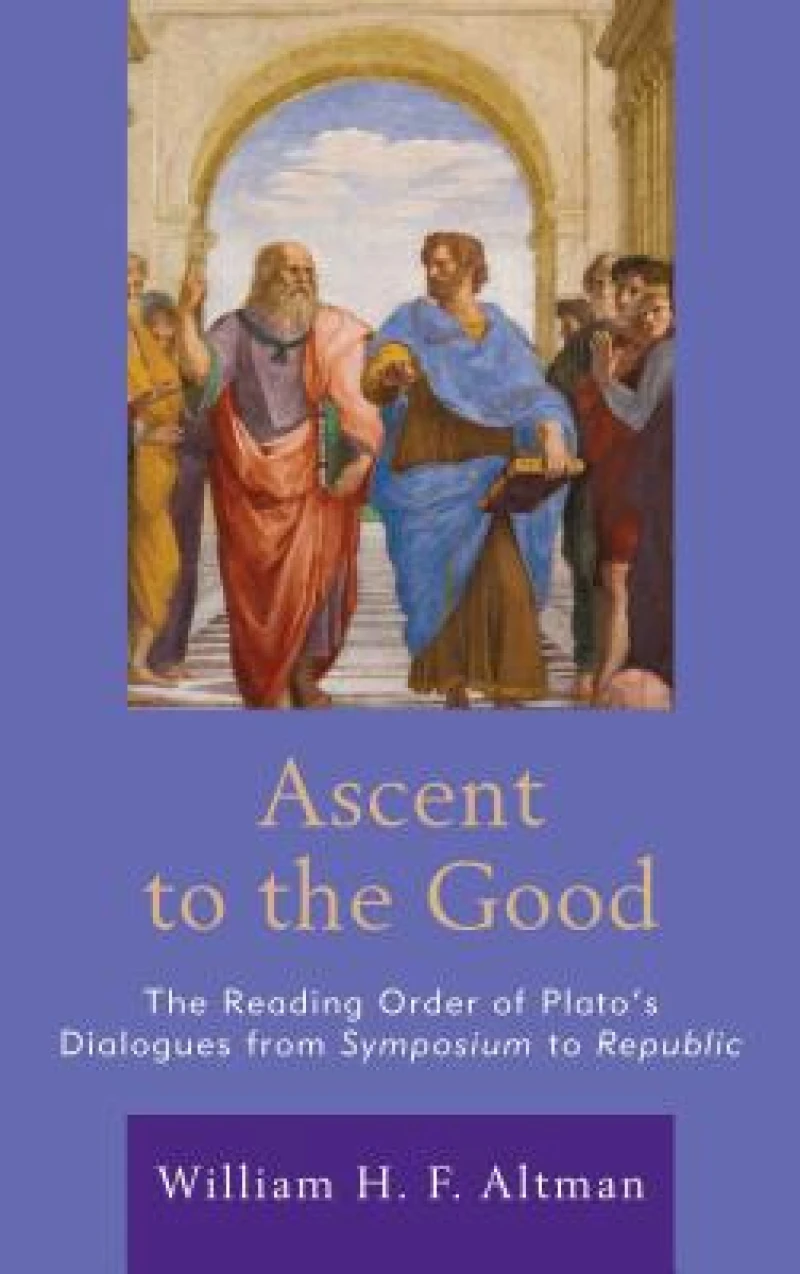
Ascent to the Good : The Reading Order of Plato’s Dialogues from Symposium to Republic
Book Details
Format
Hardback or Cased Book
ISBN-10
1498574610
ISBN-13
9781498574617
Publisher
Bloomsbury Publishing Plc
Imprint
Lexington Books
Country of Manufacture
GB
Country of Publication
GB
Publication Date
Nov 29th, 2018
Print length
660 Pages
Weight
1,120 grams
Dimensions
16.10 x 23.60 x 4.80 cms
Ksh 33,250.00
Manufactured on Demand
0 in stock
Delivery Location
Delivery fee: Select location
Secure
Quality
Fast
This study reconsiders Plato’s “Socratic” dialogues—Charmides, Laches, Lysis, Euthydemus, Gorgias, and Meno—as parts of an integrated curriculum. By privileging reading order over order of composition, a Platonic pedagogy teaching that the Idea of the Good is a greater object of philosophical concern than what benefits the self is spotlighted.
At the crisis of his Republic, Plato asks us to imagine what could possibly motivate a philosopher to return to the Cave voluntarily for the benefit of others and at the expense of her own personal happiness. This book shows how Plato has prepared us, his students, to recognize that the sun-like Idea of the Good is an infinitely greater object of serious philosophical concern than what is merely good for me, and thus why neither Plato nor his Socrates are eudaemonists, as Aristotle unquestionably was. With the transcendent Idea of Beauty having been made manifest through Socrates and Diotima, the dialogues between Symposium and Republic—Lysis, Euthydemus, Laches, Charmides, Gorgias, Theages, Meno, and Cleitophon— prepare the reader to make the final leap into Platonism, a soul-stirring idealism that presupposes the student’s inborn awareness that there is nothing just, noble, or beautiful about maximizing one’s own good. While perfectly capable of making the majority of his readers believe that he endorses the harmless claim that it is advantageous to be just and thus that we will always fare well by doing well, Plato trains his best students to recognize the deliberate fallacies and shortcuts that underwrite these claims, and thus to look beyond their own happiness by the time they reach the Allegory of the Cave, the culmination of a carefully prepared Ascent to the Good.
Get Ascent to the Good by at the best price and quality guaranteed only at Werezi Africa's largest book ecommerce store. The book was published by Bloomsbury Publishing Plc and it has pages.

