
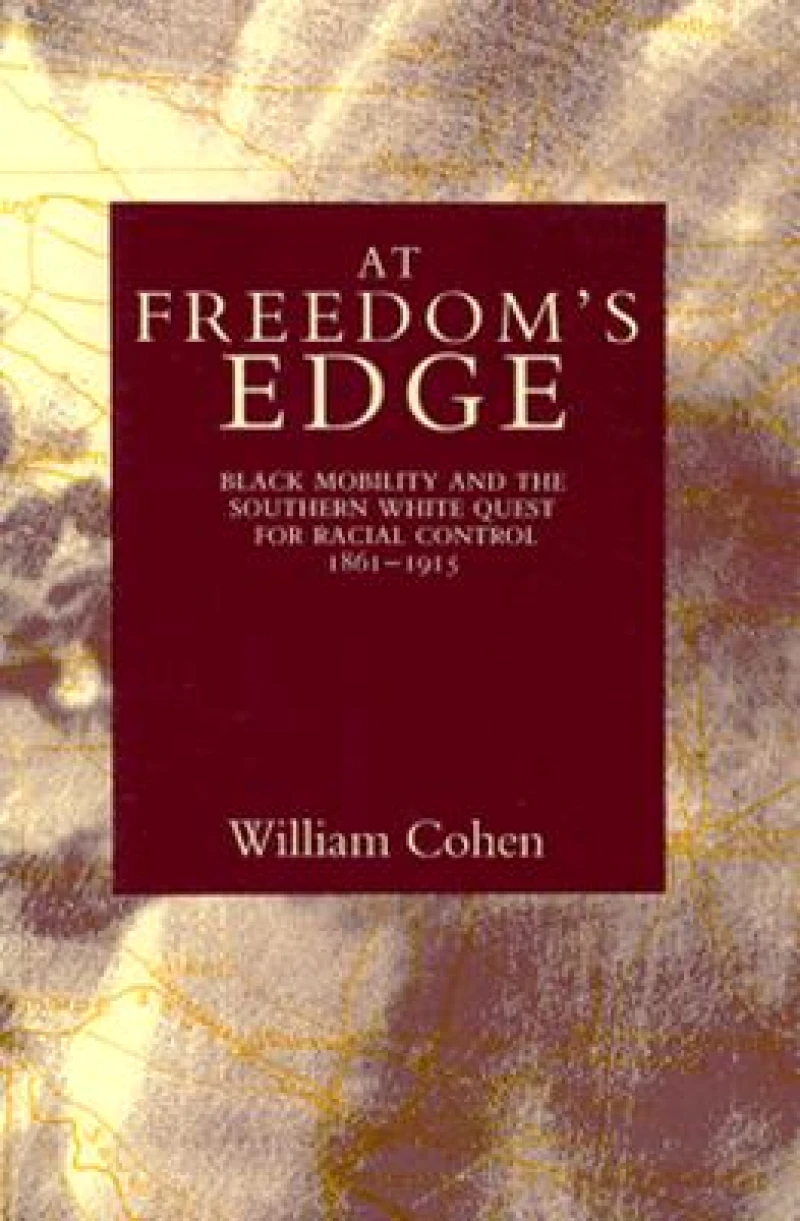
At Freedom''s Edge : Black Mobility and the Southern White Quest for Racial Control, 1861-1915
Book Details
Format
Paperback / Softback
ISBN-10
0807116521
ISBN-13
9780807116524
Publisher
Louisiana State University Press
Imprint
Louisiana State University Press
Country of Manufacture
GB
Country of Publication
GB
Publication Date
Mar 1st, 1991
Print length
360 Pages
Weight
490 grams
Dimensions
22.90 x 15.20 x 1.90 cms
Product Classification:
Ethnic studies / EthnicityBlack & Asian studies
Ksh 6,550.00
Werezi Extended Catalogue
0 in stock
Delivery Location
Delivery fee: Select location
Secure
Quality
Fast
Offers a comprehensive history of black mobility from the Civil War to World War I. William Cohen treats mobility as a central component of black freedom, crucial in the emergence of a free labour system, and equally crucial as an obstacle to the persistent southern white effort to reassert hegemony over blacks in all areas of life.
Even after the Civil War, blacks despaired of being treated as equals in a white man's world. They were deprived of many of the most basic rights of citizenship, and were often cheated and exploited. As a result they clung tenaciously to that most important of new rights, the right to move.
At Freedom's Edge is William Cohen's comprehensive history of black mobility from the Civil War to World War I. Cohen treats mobility as a central component of black freedom, crucial in the emergence of a free labor system, and equally crucial as an obstacle to the persistent southern white effort to reassert hegemony over blacks in all areas of life. This study has a rigorously southern focus. Most historians of black migration concentrate on telling how the migrants adjusted to northern life, but Cohen provides detailed accounts of internal southern movement and efforts to leave the South. He also examines the relative absence, during this period, of significant migration to the North.
Cohen presents a thorough treatment of the efforts of the Freedmen's Bureau to restructure the southern labor system, showing how heavily this organisation was influenced by questions involving black mobility. He also gives the fullest picture yet of the postwar emergence of the occupation of the labor agent. Among the migration episodes he considers are the Liberia movement, the Kansas exodus, the movement of blacks from Georgia and the Carolinas to Arkansas and Mississippi, and the migration to Oklahoma.
The post-Reconstruction era was marked by a concerted white thrust to destroy black freedom. Cohen shows that while whites succeeded in establishing almost total dominion in the political and social realms, they failed when they tried to erect a system of involuntary servitude that would seriously limit black movement. Cohen argues that the difference here arose from the fact that whites were largely united on matters such as suffrage and segregation but were divided on the desirability of immobilising the black labor force. Those who depended on black labor sought legal formulas aimed at stopping black movement. They met resistance, however, from those who did not share their economic interests. This study, then, is almost as much a legal history of white efforts to interdict black movement as it is a history of black migration.
At Freedom's Edge is a probing study of the black search for freedom within freedom.
At Freedom's Edge is William Cohen's comprehensive history of black mobility from the Civil War to World War I. Cohen treats mobility as a central component of black freedom, crucial in the emergence of a free labor system, and equally crucial as an obstacle to the persistent southern white effort to reassert hegemony over blacks in all areas of life. This study has a rigorously southern focus. Most historians of black migration concentrate on telling how the migrants adjusted to northern life, but Cohen provides detailed accounts of internal southern movement and efforts to leave the South. He also examines the relative absence, during this period, of significant migration to the North.
Cohen presents a thorough treatment of the efforts of the Freedmen's Bureau to restructure the southern labor system, showing how heavily this organisation was influenced by questions involving black mobility. He also gives the fullest picture yet of the postwar emergence of the occupation of the labor agent. Among the migration episodes he considers are the Liberia movement, the Kansas exodus, the movement of blacks from Georgia and the Carolinas to Arkansas and Mississippi, and the migration to Oklahoma.
The post-Reconstruction era was marked by a concerted white thrust to destroy black freedom. Cohen shows that while whites succeeded in establishing almost total dominion in the political and social realms, they failed when they tried to erect a system of involuntary servitude that would seriously limit black movement. Cohen argues that the difference here arose from the fact that whites were largely united on matters such as suffrage and segregation but were divided on the desirability of immobilising the black labor force. Those who depended on black labor sought legal formulas aimed at stopping black movement. They met resistance, however, from those who did not share their economic interests. This study, then, is almost as much a legal history of white efforts to interdict black movement as it is a history of black migration.
At Freedom's Edge is a probing study of the black search for freedom within freedom.
Get At Freedom''s Edge by at the best price and quality guaranteed only at Werezi Africa's largest book ecommerce store. The book was published by Louisiana State University Press and it has pages.

