
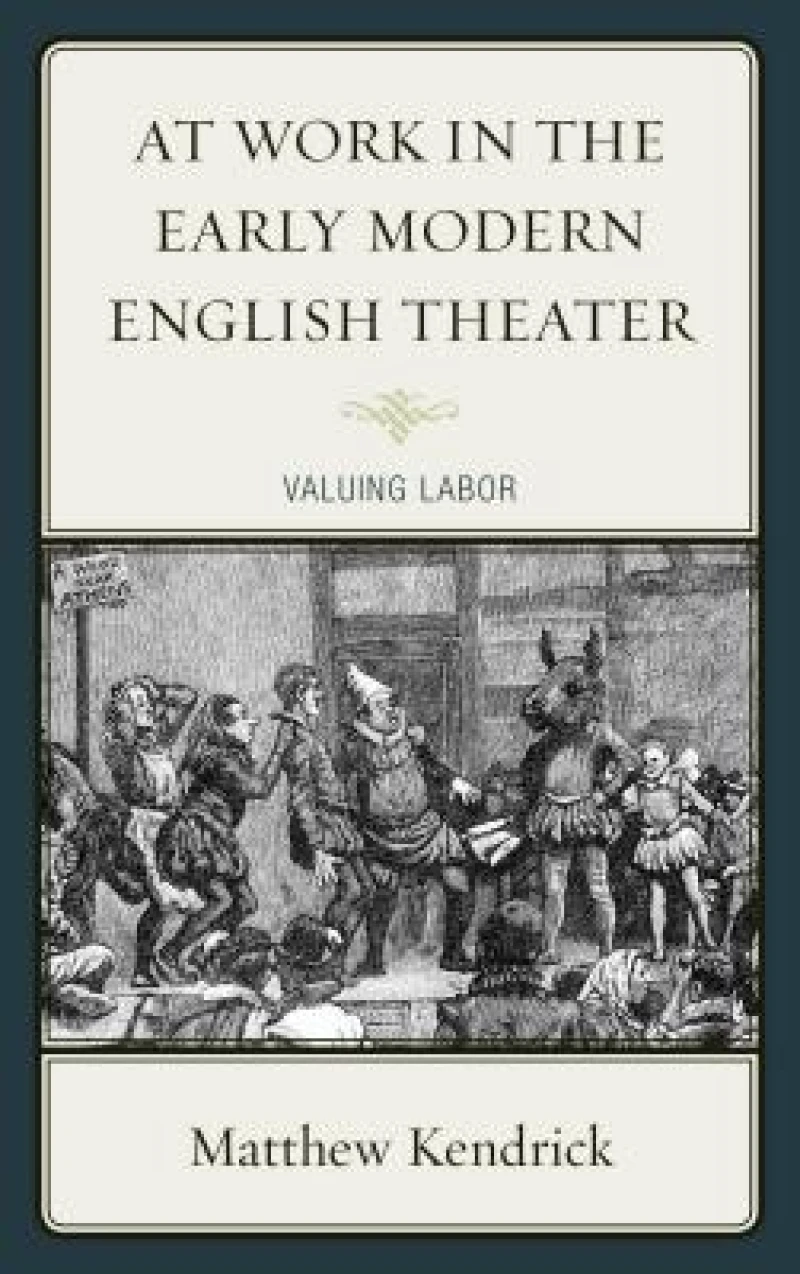
At Work in the Early Modern English Theater : Valuing Labor
Book Details
Format
Hardback or Cased Book
ISBN-10
1611478243
ISBN-13
9781611478242
Publisher
Fairleigh Dickinson University Press
Imprint
Fairleigh Dickinson University Press
Country of Manufacture
GB
Country of Publication
GB
Publication Date
Jun 11th, 2015
Print length
206 Pages
Weight
442 grams
Dimensions
16.20 x 23.60 x 2.00 cms
Product Classification:
Theatre studiesShakespeare studies & criticismSocial & cultural history
Ksh 16,450.00
Werezi Extended Catalogue
0 in stock
Delivery Location
Delivery fee: Select location
Secure
Quality
Fast
This book examines the drama of Shakespeare and his contemporaries from the perspective of the period’s radically changing labor relations and the nascent emergence of the English working class. The book offers a new way to approach the period by situating drama at the intersection of early modern theater history and labor history.
At Work in the Early Modern English Theater: Valuing Labor explores the economics of the theater by examining how drama seeks to make sense of changing conceptions of labor. With the growth of commerce and market relations in sixteenth- and seventeenth-century England came the corresponding degradation and exploitation of workers, many of whom made their frustrations known through petitions and pamphlets. Poverty affected all sectors of society in early modern England and many laborers, even London citizens from more prosperous trades, could expect to experience periods of impoverishment. This group of precarious laborers included actors and playwrights, many of whom had direct connections to London’s more established trades and occupations.Scholars have argued that dispossessed laborers turned to other forms of labor in lieu of their traditional livelihoods, including brigandage, piracy, begging, and cozening. To this list of alternative communities and applications of labor in the early modern period, Matthew Kendrick’s scholarship adds the London theaters. Each chapter is guided by the central premise that anxiety over the objectification and dispossession of labor in its various forms is enacted on stage, and that drama helps to formulate, by merit of the theater’s socioeconomic identity, an emerging laboring subjectivity engendered by the violent development of capitalism. As the nexus of a declining feudal social structure and an emerging capitalist regime of commodity production, a location in which dispossessed labor intersected with traditions of skilled labor and the unwieldy consumerist energies of the marketplace, the space of the theater was uniquely situated to channel and give dramatic form to the growing antagonisms and tensions that shaped labor. The stage offers a space in which to negotiate the value and meaning of labor in an increasingly exploitative society.
Get At Work in the Early Modern English Theater by at the best price and quality guaranteed only at Werezi Africa's largest book ecommerce store. The book was published by Fairleigh Dickinson University Press and it has pages.

