

Athenian Democracy
Book Details
Format
Paperback / softback
Book Series
Edinburgh Readings on the Ancient World
ISBN-10
074861687X
ISBN-13
9780748616879
Publisher
Edinburgh University Press
Imprint
Edinburgh University Press
Country of Manufacture
GB
Country of Publication
GB
Publication Date
Mar 15th, 2004
Print length
304 Pages
Weight
594 grams
Dimensions
15.70 x 23.50 x 2.00 cms
KSh 6,100.00
Temporarily out of stock, due soon
0 in stock
Delivery Location
Delivery fee: Select location
Secure
Quality
Fast
P. J. Rhodes’s reader focuses on the political institutions, political activity, history, and nature of Athenian democracy and introduces some of the best British, American, German and French scholarship on its origins, theory and practice.
Athens’ democracy developed during the sixth and fifth centuries and continued into the fourth; Athens’ defeat by Macedon in 322 began a series of alternations between democracy and oligarchy. The democracy was inseparably bound up with the ideals of liberty and equality, the rule of law, and the direct government of the people by the people. Liberty meant above all freedom of speech, the right to be heard in the public assembly and the right to speak one’s mind in private. Equality meant the equal right of the male citizens (perhaps 60,000 in the fifth century, 30,000 in the fourth) to participate in the government of the state and the administration of the law. Disapproved of as mob rule until the nineteenth century, the institutions of Athenian democracy have become an inspiration for modern democratic politics and political philosophy. P. J. Rhodes’s reader focuses on the political institutions, political activity, history, and nature of Athenian democracy and introduces some of the best British, American, German and French scholarship on its origins, theory and practice. Part I is devoted to political institutions: citizenship, the assembly, the law-courts, and capital punishment. Part II explores aspects of political activity: the demagogues and their relationship with the assembly, the manoeuvrings of the politicians, competitive festivals, and the separation of public from private life. Part III looks at three crucial points in the development of the democracy: the reforms of Solon, Cleisthenes and Ephialtes. Part IV considers what it was in Greek life that led to the development of democracy. Some of the authors adopt broad-brush approaches to major questions; others analyse a particular body of evidence in detail. Use is made of archaeology, comparison with other societies, the location of festivals in their civic context, and the need to penetrate behind what the classical Athenians made of their past.
Get Athenian Democracy by P. J. Rhodes at the best price and quality guaranteed only at Werezi Africa's largest book ecommerce store. The book was published by Edinburgh University Press and it has 304 pages.
Customers Who Bought This Also Bought

Age of Revolutions
KSh 2,350.00

Eichmann in Jerusalem
KSh 2,350.00

Trouble With Being Born
KSh 2,000.00

Hiroshima
KSh 2,000.00

Freedom
KSh 6,300.00

Holocaust
KSh 2,700.00
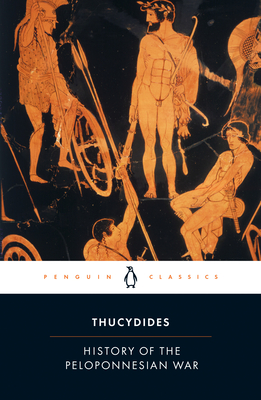
The History of the Peloponnesian War
KSh 2,700.00
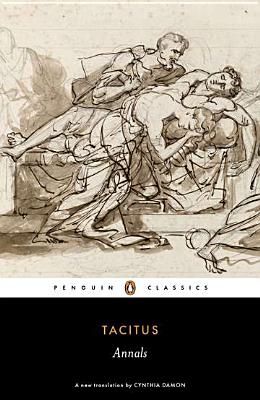
Annals
KSh 2,350.00
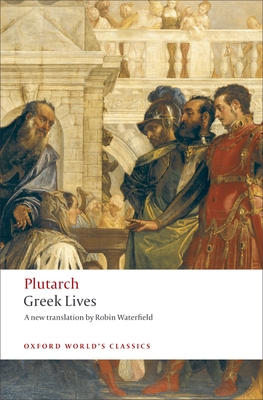
Greek Lives
KSh 2,150.00

Sleepwalkers
KSh 3,400.00

Napoleon The Great
KSh 3,600.00

Diary of a Young Girl
KSh 1,800.00
