
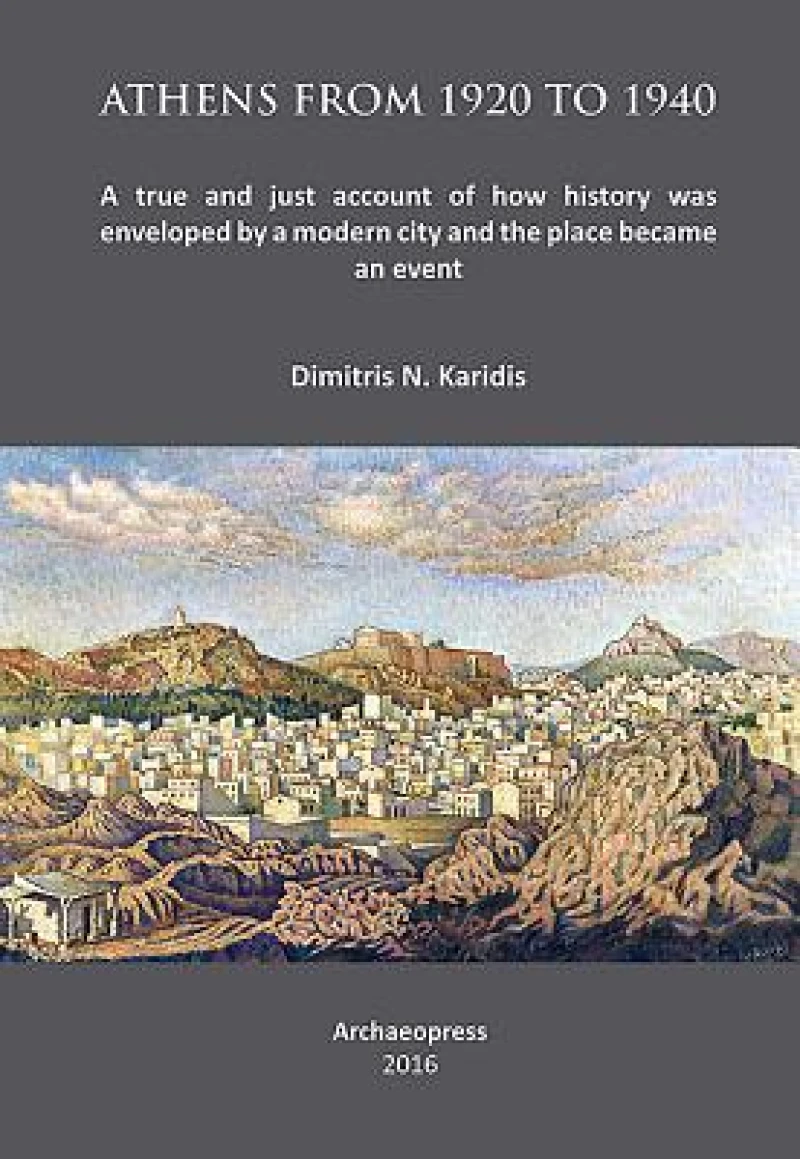
Athens from 1920 to 1940 : A true and just account of how History was enveloped by a modern City and the Place became an Event
Book Details
Format
Paperback / Softback
ISBN-10
1784913111
ISBN-13
9781784913113
Publisher
Archaeopress
Imprint
Archaeopress Archaeology
Country of Manufacture
GB
Country of Publication
GB
Publication Date
Mar 31st, 2016
Print length
218 Pages
Weight
816 grams
Dimensions
21.10 x 29.70 x 1.60 cms
Ksh 6,850.00
Werezi Extended Catalogue
Delivery in 14 days
1 copies in stock
Delivery Location
Delivery fee: Select location
Delivery in 14 days
Secure
Quality
Fast
During the short interwar period of the early 20th century, Athens entered into a process of meteoric urban transformation which gave her a unique place among European capital cities of the time.
During the short interwar period of the early 20th century, Athens entered into a process of meteoric urban transformation which gave her a unique place among European capital cities of the time. The implementation of a settlement programme for hundreds of thousands of refugees, following the 1922 Smyrna catastrophe, effected social and economic metamorphoses, which, in their early steps, were not devoid of patterns of social and spatial segregation. During the 1930s, notwithstanding manifold adversities, the capital city encountered modernity, but she did so on her own terms. On the ideological level, the place acquired a world-wide reputation for two reasons. First, by the ambitious venture of unearthing antiquities in the ancient agora and revealing the glory of ancient Greece, even if a whole neighbourhood standing on the spot, which for centuries had teemed with social exchange and commercial transactions, had to be erased for that purpose. Second, by imprinting her name on the ‘Charter of Athens’, the document concluding the results of the 4th Congress of Modern Architecture which she hosted, intrinsically linking her with the avant-garde architectural theory and practice of the time. Furthermore, state/governmental involvement in the production of the built environment, occasionally supporting the private sector and landowners in particular in their speculative intentions, provided Athens with the infrastructure she demanded for exercising her role as the capital city of Greece. The Marathon Dam, the underground railway, the steam-powered electric plants, and many other projects, implied advances through which the average man and woman in the street could rejoice that modernization had taken deep roots within Athenian daily life. Yet, it seems Athens walked alongside modernism not within it. Very much like Narcissus, the handsome young man from Boeotia, it might be that Athens looked at her beautiful face mirrored as if in the still water of a lake; overwhelmed by a strong feeling of exaltation and delight, she stood there until she died.
Get Athens from 1920 to 1940 by at the best price and quality guaranteed only at Werezi Africa's largest book ecommerce store. The book was published by Archaeopress and it has pages.

