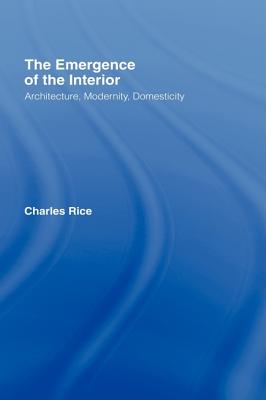
Atrium
by
Charles Rice
Book Details
Format
Hardback
ISBN-10
0262048337
ISBN-13
9780262048330
Publisher
MIT Press Ltd
Imprint
MIT Press
Country of Manufacture
GB
Country of Publication
GB
Publication Date
Oct 17th, 2023
Print length
216 Pages
Weight
656 grams
Dimensions
41.70 x 27.50 x 2.10 cms
Product Classification:
ArchitectureTheory of architecture
KSh 7,400.00
Werezi Extended Catalogue
Delivery in 4 days
1 copies in stock
Delivery Location
Delivery fee: Select location
Delivery in 4 days
Secure
Quality
Fast
How the rise of the large-scale atrium space in the 1970s and ’80s changed the way buildings could be designed, constructed, regulated, and occupied. In the 1970s, a void opened at the heart of architecture. In hotels, offices, public buildings, and commercial centers, the atrium emerged globally to challenge the modernist legacies of form and function, altering the pattern and experience of cities. While often appearing at vast scale and to striking effect, the atrium also became omnipresent and mundane. In this lively critique, Charles Rice charts the atrium’s appearance in the 1970s and its development through the 1980s, as it accompanied profound shifts in the discipline and practice of architecture. During this period, architectural practice especially in the United States and United Kingdom was changing rapidly, due in part to the manifold effects of deregulation. All aspects of the way buildings were designed, developed, regulated, built, managed, and occupied were being reshaped. A practice guided by the progressive tenets of modernism was being turned into a professional service fully integrated within neoliberal social and economic imperatives. As Rice shows, the atrium gives this story a distinct spatial and material figure, one that offers an inside view of architecture in transformation.
How the rise of the large-scale atrium space in the 1970s and ’80s changed the way buildings could be designed, constructed, regulated, and occupied.
In the 1970s, a void opened at the heart of architecture. In hotels, offices, public buildings, and commercial centers, the atrium emerged globally to challenge the modernist legacies of form and function, altering the pattern and experience of cities. While often appearing at vast scale and to striking effect, the atrium also became omnipresent and mundane. In this lively critique, Charles Rice charts the atrium’s appearance in the 1970s and its development through the 1980s, as it accompanied profound shifts in the discipline and practice of architecture.
During this period, architectural practice especially in the United States and United Kingdom was changing rapidly, due in part to the manifold effects of deregulation. All aspects of the way buildings were designed, developed, regulated, built, managed, and occupied were being reshaped. A practice guided by the progressive tenets of modernism was being turned into a professional service fully integrated within neoliberal social and economic imperatives. As Rice shows, the atrium gives this story a distinct spatial and material figure, one that offers an inside view of architecture in transformation.
In the 1970s, a void opened at the heart of architecture. In hotels, offices, public buildings, and commercial centers, the atrium emerged globally to challenge the modernist legacies of form and function, altering the pattern and experience of cities. While often appearing at vast scale and to striking effect, the atrium also became omnipresent and mundane. In this lively critique, Charles Rice charts the atrium’s appearance in the 1970s and its development through the 1980s, as it accompanied profound shifts in the discipline and practice of architecture.
During this period, architectural practice especially in the United States and United Kingdom was changing rapidly, due in part to the manifold effects of deregulation. All aspects of the way buildings were designed, developed, regulated, built, managed, and occupied were being reshaped. A practice guided by the progressive tenets of modernism was being turned into a professional service fully integrated within neoliberal social and economic imperatives. As Rice shows, the atrium gives this story a distinct spatial and material figure, one that offers an inside view of architecture in transformation.
Get Atrium by Charles Rice at the best price and quality guaranteed only at Werezi Africa's largest book ecommerce store. The book was published by MIT Press Ltd and it has 216 pages.
Customers Who Bought This Also Bought

Architecture
KSh 7,550.00

Architecture: The Whole Story
KSh 5,150.00

Architectural Graphics
KSh 8,650.00

The Dorm Room Guide
KSh 2,900.00

The Scandal of the Kingdom Workbook
KSh 2,700.00

The Cairo of Naguib Mahfouz
KSh 4,100.00

Room 606
KSh 10,800.00

Éléments et théorie de l''architecture. Tome 3
KSh 6,050.00

Charles Rennie Mackintosh
KSh 1,950.00
Wren
KSh 1,950.00
Latin American Architecture
KSh 8,650.00

If Buildings Could Speak, What Would They Say?
KSh 3,600.00