
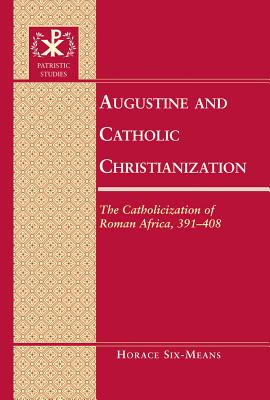
Augustine and Catholic Christianization : The Catholicization of Roman Africa, 391-408
New
Book Details
Format
Hardback
Book Series
Patristic Studies
ISBN-10
1433108046
ISBN-13
9781433108044
Edition
New
Publisher
Peter Lang Publishing Inc
Imprint
Peter Lang Publishing Inc
Country of Manufacture
US
Country of Publication
GB
Publication Date
Jul 31st, 2011
Print length
214 Pages
Weight
434 grams
Dimensions
15.70 x 23.00 x 1.70 cms
Product Classification:
CE period up to c 1500Social & cultural historyMedieval European archaeologyThe Early ChurchAncient religions & mythologiesSocial and cultural historyArchaeology by period / regionChristianityIndigenous peoples in the Americas: religions, belief systems, cultural worldviews and spiritual beliefs
KSh 12,100.00
Currently unavailable
0 in stock
Delivery Location
Delivery fee: Select location
Secure
Quality
Fast
Augustine and Catholic Christianization
A religious reformation occurred in the Roman Empire of the fourth and fifth centuries which scholars often call Christianization. Examining evidence relevant to Roman Africa of this period, this book sharpens understanding of this religious revolution. Focusing on the activities of Augustine and his colleagues from Augustine''s ordination as a priest in 391, to the fall of the Emperor Honorius'' master of soldiers, Stilicho, in 408, it proposes Catholicization as a term to more precisely characterize the process of change observed. Augustine and Catholic Christianization argues that at the end of the fourth and beginning of the fifth century Augustine emerged as the key manager in the campaign to Catholicize Roman Africa by virtue of a comprehensive strategy to persuade or suppress rivals, which notably included Donatists, Arians, Manichees, and various kinds of polytheism. Select sermons from 403 and 404 reveal that Augustine''s rhetoric was multivalent. It addressed the populus and the elite, Christians and non-Christians, Catholics, and Donatists.
Key sources examined are selected laws of the Theodosian Code, the Canons of the African Council of Catholic Bishops, Augustine''s Dolbeau sermons (discovered in 1990), Contra Cresconium, as well as other sermons, letters, and treatises of Augustine. This book clarifies our perception of Augustine and Christianity in the socio-religious landscape of Late Roman Africa in at least three ways. First, it combines theological investigation of the sources and development of Augustine''s ecclesiology with sociohistorical tracing of the process of Catholicization. Second, an account of the evolution of Augustine''s self-understanding as a bishop is given along with the development of his strategy for Catholicization. Third, Augustine is identified as resembling modern political spin-doctors in that he was a brilliant spokesperson, but he did not work alone; he was a team player. In brief, Augustine influenced and was influenced by his fellow bishops within Catholic circles.
Key sources examined are selected laws of the Theodosian Code, the Canons of the African Council of Catholic Bishops, Augustine''s Dolbeau sermons (discovered in 1990), Contra Cresconium, as well as other sermons, letters, and treatises of Augustine. This book clarifies our perception of Augustine and Christianity in the socio-religious landscape of Late Roman Africa in at least three ways. First, it combines theological investigation of the sources and development of Augustine''s ecclesiology with sociohistorical tracing of the process of Catholicization. Second, an account of the evolution of Augustine''s self-understanding as a bishop is given along with the development of his strategy for Catholicization. Third, Augustine is identified as resembling modern political spin-doctors in that he was a brilliant spokesperson, but he did not work alone; he was a team player. In brief, Augustine influenced and was influenced by his fellow bishops within Catholic circles.
Get Augustine and Catholic Christianization by Horace E. Six-Means at the best price and quality guaranteed only at Werezi Africa's largest book ecommerce store. The book was published by Peter Lang Publishing Inc and it has 214 pages.
Customers Who Bought This Also Bought
The Finest Hotel in Kabul
KSh 2,150.00

Black Wave
KSh 2,700.00

Migrations
KSh 5,450.00
Art of War / The Book of Lord Shang
KSh 1,100.00

Nexus
KSh 2,350.00

World According to Colour
KSh 2,700.00
Crusade for Justice – The Autobiography of Ida B. Wells, Second Edition
KSh 4,050.00
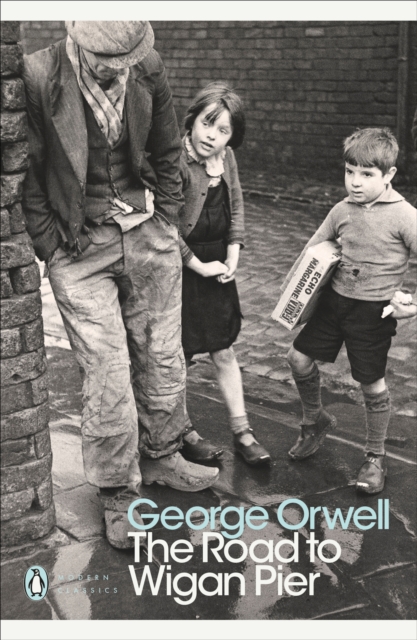
Modern Classics Road To Wigan Pier
KSh 1,800.00
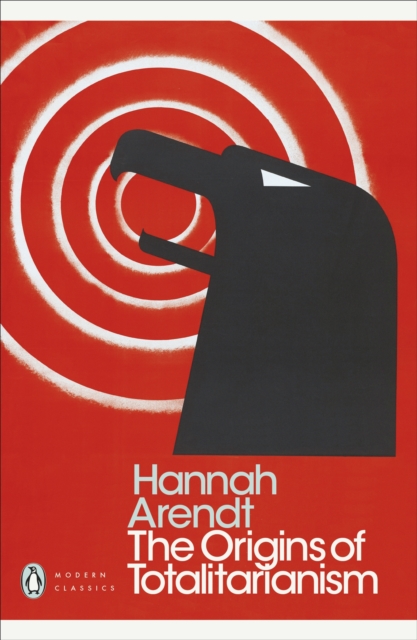
The Origins of Totalitarianism
KSh 2,700.00
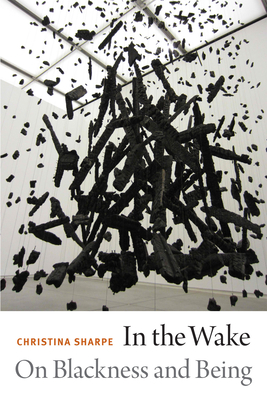
In the Wake
KSh 3,600.00
Question of Palestine
KSh 2,700.00

Palestine
KSh 2,400.00
