
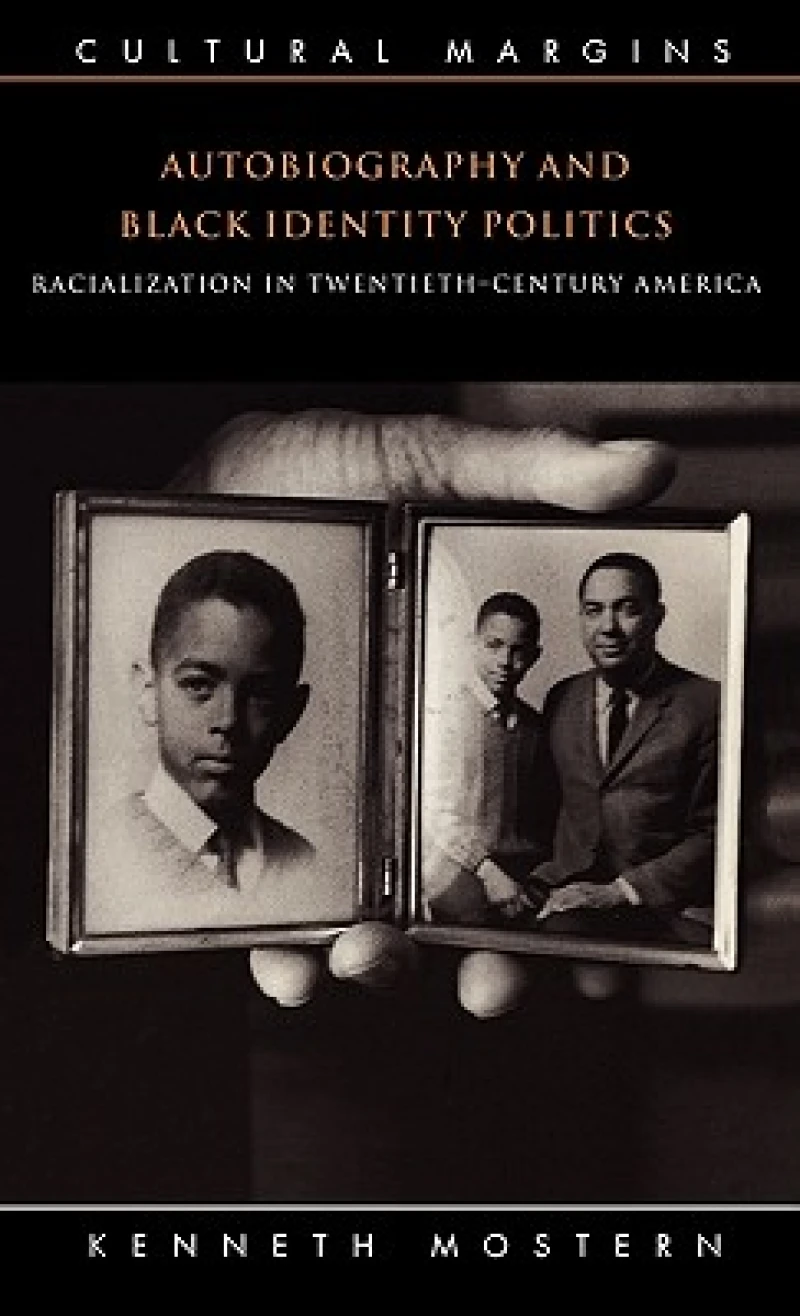
Autobiography and Black Identity Politics : Racialization in Twentieth-Century America
Book Details
Format
Hardback or Cased Book
Book Series
Cultural Margins
ISBN-10
0521641144
ISBN-13
9780521641142
Publisher
Cambridge University Press
Imprint
Cambridge University Press
Country of Manufacture
GB
Country of Publication
GB
Publication Date
Jun 17th, 1999
Print length
294 Pages
Weight
440 grams
Dimensions
21.60 x 14.00 x 2.10 cms
Ksh 17,100.00
Manufactured on Demand
0 in stock
Delivery Location
Delivery fee: Select location
Secure
Quality
Fast
Why has autobiography been central to African American political speech throughout the twentieth century? Kenneth Mostern illustrates the relationship between narrative and racial categories in the work of writers such as W. E. B. Du Bois, Zora Neale Hurston, Malcom X, Martin Luther King, Paul Robeson, Angela Davis and bell hooks.
Why has autobiography been central to African American political speech throughout the twentieth century? What is it about the racialization process that persistently places African Americans in the position of speaking from personal experience? In Autobiography and Black Identity Politics: Racialization in Twentieth-Century America, Kenneth Mostern illustrates the relationship between narrative and racial categories such as 'colored', 'Negro', 'black' or 'African American' in the work of writers such as W. E. B. Du Bois, Zora Neale Hurston, Malcom X, Martin Luther King, Paul Robeson, Angela Davis and bell hooks. Mostern shows how these autobiographical narratives attempt to construct and transform the political meanings of blackness. The relationship between a black masculine identity that emerged during the 1960s, and the counter-movement of black feminism since the 1970s, is also discussed. This wide-ranging study will interest all those working in African American studies, cultural studies and literary theory.
Get Autobiography and Black Identity Politics by at the best price and quality guaranteed only at Werezi Africa's largest book ecommerce store. The book was published by Cambridge University Press and it has pages.

