
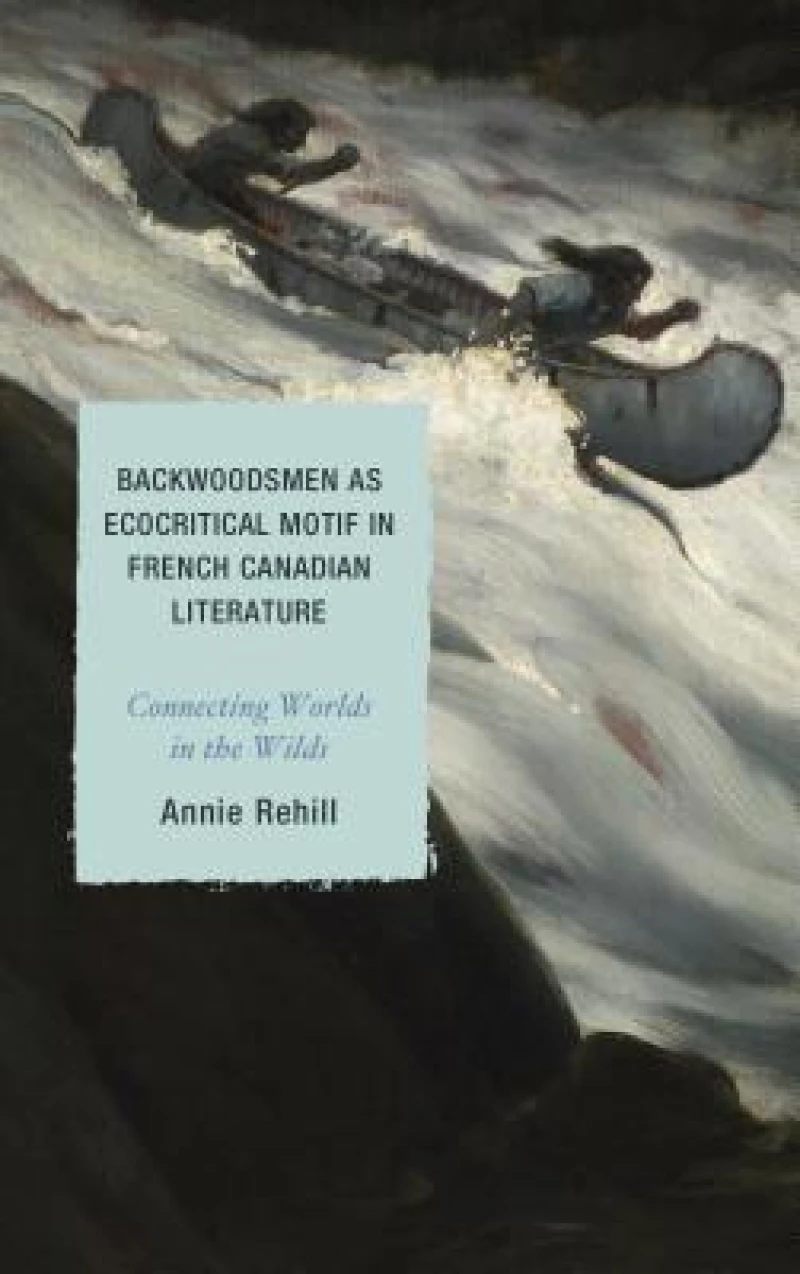
Backwoodsmen as Ecocritical Motif in French Canadian Literature : Connecting Worlds in the Wilds
by
Anne Rehill
Book Details
Format
Hardback or Cased Book
ISBN-10
1498531105
ISBN-13
9781498531108
Publisher
Bloomsbury Publishing Plc
Imprint
Lexington Books
Country of Manufacture
GB
Country of Publication
GB
Publication Date
Aug 30th, 2016
Print length
228 Pages
Weight
492 grams
Dimensions
16.10 x 23.70 x 2.50 cms
Product Classification:
Literary theoryLiterary studies: general
Ksh 14,700.00
Manufactured on Demand
0 in stock
Delivery Location
Delivery fee: Select location
Secure
Quality
Fast
In New France and early Canada, young men who ventured into the forest to hunt and trade with Amerindians (coureurs de bois, “runners of the woods”), later traveling in big teams of canoes (voyageurs), were known for their independence. Often described as half-wild themselves, they linked the European and Indian societies, eventually helping to form a new culture with elements of both. From an ecocritical perspective they represent both negative and positive aspects of the human historical trajectory because, in addition to participating in the environmentally abusive fur trade, they also symbolize the way forward through intercultural connections and business relationships. The four novels analyzed here—Joseph-Charles Taché’s Forestiers et voyageurs: Moeurs et légendes canadiennes (1863); Louis Hémon’s Maria Chapdelaine (1916); Léo-Paul Desrosiers’ Les Engagés du Grand Portage (1938); and Antonine Maillet’s Pélagie-la-Charrette (1979)—portray the backwoodsmen operating in a collaborative mode within the realistic context of the need to make money. They entered folklore through the 19th century literary efforts of Taché and others to construct a distinct French Canadian national identity, then in an unstable and continually disrupted process of formation. Their entry into literature necessarily brought their Amerindian business and personal partners, thus making intercultural connections a foundation of the national identity that Taché and others strove to construct and also mirror. As figures in literature, they embody changing ideas of the self and of the cultures and ethnicities that they connect, both physically and in an abstract sense. Because constructions of self-identity result in behavior, studying this dynamic contributes to ecocritical efforts to better understand human behavior toward both ourselves and our environment. The woodsmen and their Amerindian partners occupy the intriguing position of contributing to both damage and greater acceptance of the cultural Other, the latter of which holds the promise of collaboration and joint searches for sustainable solutions. Thus coureurs de bois and voyageurs, far from perfect models, can continue to serve as guides today.
In New France and early Canada, young men who ventured into the forest to hunt and trade with Amerindians (coureurs de bois, “runners of the woods”), later traveling in big teams of canoes (voyageurs), were known for their independence. Often described as half-wild themselves, they linked the European and Indian societies, eventually helping to form a new culture with elements of both. From an ecocritical perspective they represent both negative and positive aspects of the human historical trajectory because, in addition to participating in the environmentally abusive fur trade, they also symbolize the way forward through intercultural connections and business relationships. The four novels analyzed here—Joseph-Charles Taché’s Forestiers et voyageurs: Moeurs et légendes canadiennes (1863); Louis Hémon’s Maria Chapdelaine (1916); Léo-Paul Desrosiers’ Les Engagés du Grand Portage (1938); and Antonine Maillet’s Pélagie-la-Charrette (1979)—portray the backwoodsmen operating in a collaborative mode within the realistic context of the need to make money. They entered folklore through the 19th century literary efforts of Taché and others to construct a distinct French Canadian national identity, then in an unstable and continually disrupted process of formation. Their entry into literature necessarily brought their Amerindian business and personal partners, thus making intercultural connections a foundation of the national identity that Taché and others strove to construct and also mirror. As figures in literature, they embody changing ideas of the self and of the cultures and ethnicities that they connect, both physically and in an abstract sense. Because constructions of self-identity result in behavior, studying this dynamic contributes to ecocritical efforts to better understand human behavior toward both ourselves and our environment. The woodsmen and their Amerindian partners occupy the intriguing position of contributing to both damage and greater acceptance of the cultural Other, the latter of which holds the promise of collaboration and joint searches for sustainable solutions. Thus coureurs de bois and voyageurs, far from perfect models, can continue to serve as guides today.
Get Backwoodsmen as Ecocritical Motif in French Canadian Literature by at the best price and quality guaranteed only at Werezi Africa's largest book ecommerce store. The book was published by Bloomsbury Publishing Plc and it has pages.

