
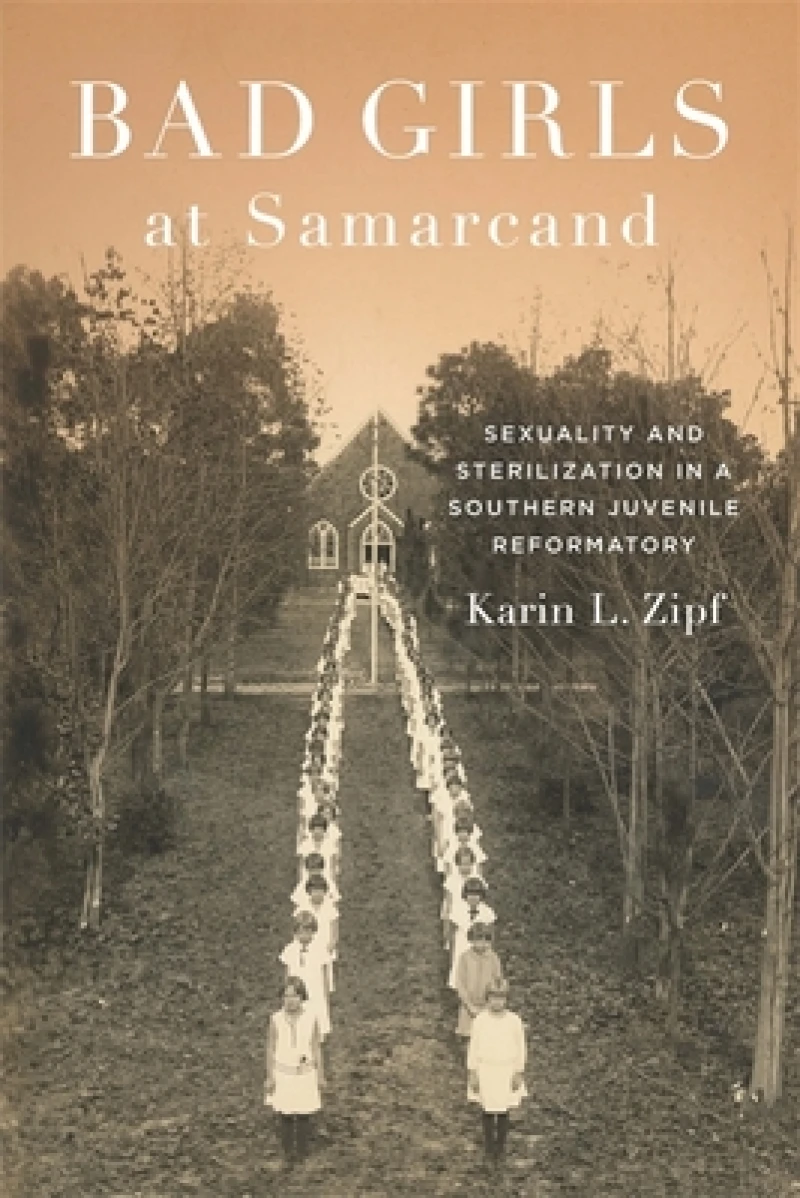
Bad Girls at Samarcand : Sexuality and Sterilization in a Southern Juvenile Reformatory
Book Details
Format
Hardback or Cased Book
ISBN-10
0807162493
ISBN-13
9780807162491
Publisher
Louisiana State University Press
Imprint
Louisiana State University Press
Country of Manufacture
US
Country of Publication
GB
Publication Date
Apr 4th, 2016
Print length
280 Pages
Weight
558 grams
Dimensions
23.60 x 15.10 x 2.70 cms
Ksh 6,800.00
Temporarily out of stock, due soon
0 in stock
Delivery Location
Delivery fee: Select location
Secure
Quality
Fast
Of the many consequences advanced by the rise of the eugenics movement in the early twentieth century, North Carolina forcibly sterilized more than 2,000 women and girls in between 1929 and 1950. Karin Zipf dissects a dark episode in North Carolina's eugenics campaign through a study of the State Home and Industrial School in Eagle Springs.
Of the many consequences advanced by the rise of the eugenics movement in the early twentieth century, North Carolina forcibly sterilized more than 2,000 women and girls in between 1929 and 1950. This extreme measure reflects how pseudoscience justified widespread gender, race, and class discrimination in the Jim Crow South. In Bad Girls at Samarcand Karin L. Zipf dissects a dark episode in North Carolina's eugenics campaign through a detailed study of the State Home and Industrial School in Eagle Springs, referred to as Samarcand Manor, and the school's infamous 1931 arson case. The people and events surrounding both the institution and the court case sparked a public debate about the expectations of white womanhood, the nature of contemporary science and medicine, and the role of the juvenile justice system that resonated throughout the succeeding decades. Designed to reform and educate unwed poor white girls who were suspected of deviant behavior or victims of sexual abuse, Samarcand Manor allowed for strict disciplinary measures -- including corporal punishment -- in an attempt to instill Victorian ideals of female purity. The harsh treatment fostered a hostile environment and tensions boiled over when several girls set Samarcand on fire, destroying two residence halls. Zipf argues that the subsequent arson trial, which carried the possibility of the death penalty, represented an important turning point in the public characterizations of poor white women; aided by the lobbying efforts of eugenics advocates, the trial helped usher in dramatic policy changes, including the forced sterilization of female juvenile delinquents. In addition to the interplay between gender ideals and the eugenics movement, Zipf also investigates the girls who were housed at Samarcand and those specifically charged in the 1931 trial. She explores their negotiation of Jazz Age stereotypes, their strategies of resistance, and their relationship with defense attorney Nell Battle Lewis during the trial. The resultant policy changes -- intelligence testing, sterilization, and parole -- are also explored, providing further insight into why these young women preferred prison to reformatories.
A fascinating story that grapples with gender bias, sexuality, science, and the justice system all within the context of the Great Depression--era South, Bad Girls at Samarcand makes a compelling contribution to multiple fields of study.
A fascinating story that grapples with gender bias, sexuality, science, and the justice system all within the context of the Great Depression--era South, Bad Girls at Samarcand makes a compelling contribution to multiple fields of study.
Get Bad Girls at Samarcand by at the best price and quality guaranteed only at Werezi Africa's largest book ecommerce store. The book was published by Louisiana State University Press and it has pages.

