
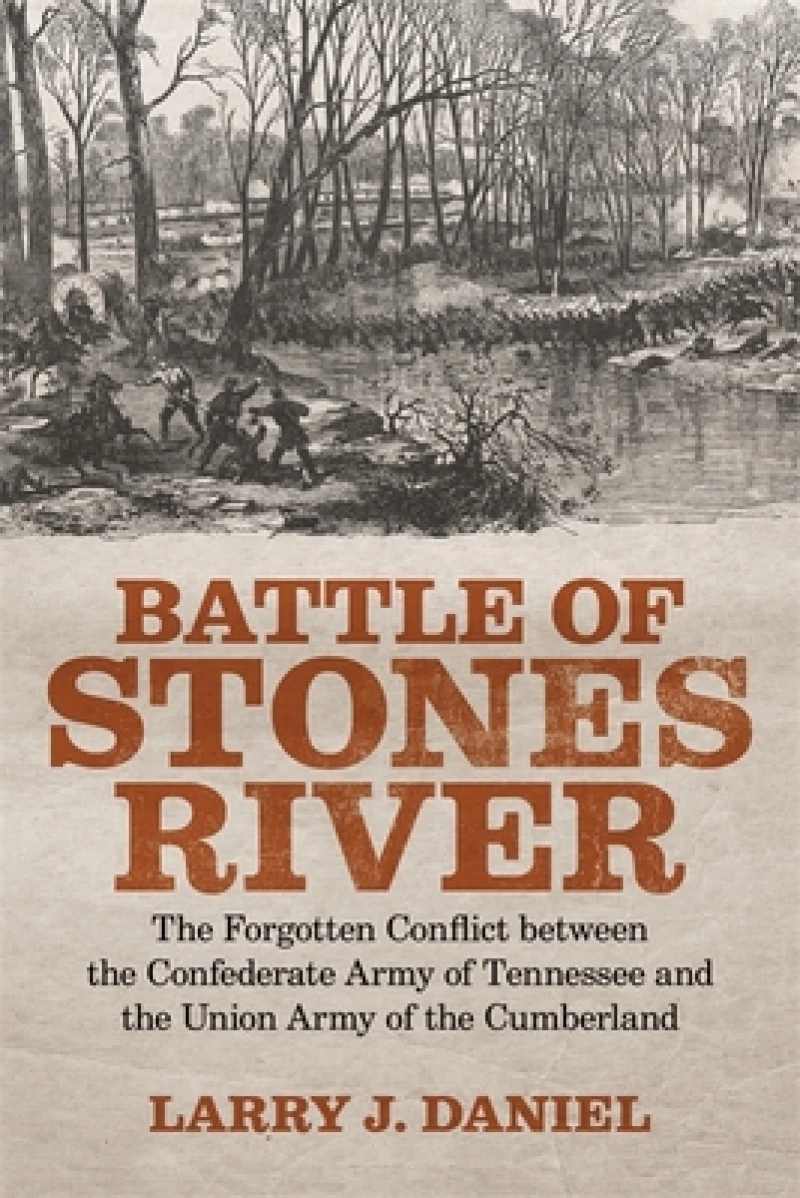
Battle of Stones River : The Forgotten Conflict Between the Confederate Army of Tennessee and the Union Army of the Cumberland
Book Details
Format
Paperback / Softback
ISBN-10
0807175080
ISBN-13
9780807175088
Publisher
Louisiana State University Press
Imprint
Louisiana State University Press
Country of Manufacture
US
Country of Publication
GB
Publication Date
Jul 1st, 2020
Print length
344 Pages
Weight
458 grams
Dimensions
22.80 x 15.20 x 1.80 cms
Ksh 6,450.00
Werezi Extended Catalogue
0 in stock
Delivery Location
Delivery fee: Select location
Secure
Quality
Fast
Three days of savage and bloody fighting between Confederate and Union troops at Stones River in Middle Tennessee ended with nearly 25,000 casualties but no clear victor. Using previously neglected sources, Larry Daniel rescues this important campaign from obscurity.
Three days of savage and bloody fighting between Confederate and Union troops at Stones River in Middle Tennessee ended with nearly 25,000 casualties but no clear victor. The staggering number of killed or wounded equaled the losses suffered in the well-known Battle of Shiloh. Using previously neglected sources, Larry J. Daniel rescues this important campaign from obscurity. The Battle of Stones River, fought between December 31, 1862, and January 2, 1863, was a tactical draw but proved to be a strategic northern victory. According to Daniel, Union defeats in late 1862 -- both at Chickasaw Bayou in Mississippi and at Fredericksburg, Virginia -- transformed the clash in Tennessee into a much-needed morale booster for the North.
Daniel's study of the battle's two antagonists, William S. Rosecrans for the Union Army of the Cumberland and Braxton Bragg for the Confederate Army of Tennessee, presents contrasts in leadership and a series of missteps. Union soldiers liked Rosecrans's personable nature, whereas Bragg acquired a reputation as antisocial and suspicious. Rosecrans had won his previous battle at Corinth, and Bragg had failed at the recent Kentucky Campaign. But despite Rosecrans's apparent advantage, both commanders made serious mistakes. With only a few hundred yards separating the lines, Rosecrans allowed Confederates to surprise and route his right ring. Eventually, Union pressure forced Bragg to launch a division-size attack, a disastrous move. Neither side could claim victory on the battlefield.
In the aftermath of the bloody conflict, Union commanders and northern newspapers portrayed the stalemate as a victory, bolstering confidence in the Lincoln administration and dimming the prospects for the "peace wing" of the northern Democratic Party. In the South, the deadlock led to continued bickering in the Confederate western high command and scorn for Braxton Bragg.
Daniel's study of the battle's two antagonists, William S. Rosecrans for the Union Army of the Cumberland and Braxton Bragg for the Confederate Army of Tennessee, presents contrasts in leadership and a series of missteps. Union soldiers liked Rosecrans's personable nature, whereas Bragg acquired a reputation as antisocial and suspicious. Rosecrans had won his previous battle at Corinth, and Bragg had failed at the recent Kentucky Campaign. But despite Rosecrans's apparent advantage, both commanders made serious mistakes. With only a few hundred yards separating the lines, Rosecrans allowed Confederates to surprise and route his right ring. Eventually, Union pressure forced Bragg to launch a division-size attack, a disastrous move. Neither side could claim victory on the battlefield.
In the aftermath of the bloody conflict, Union commanders and northern newspapers portrayed the stalemate as a victory, bolstering confidence in the Lincoln administration and dimming the prospects for the "peace wing" of the northern Democratic Party. In the South, the deadlock led to continued bickering in the Confederate western high command and scorn for Braxton Bragg.
Get Battle of Stones River by at the best price and quality guaranteed only at Werezi Africa's largest book ecommerce store. The book was published by Louisiana State University Press and it has pages.

