
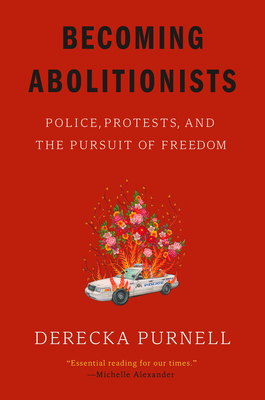
Becoming Abolitionists : Police, Protests, and the Pursuit of Freedom
Book Details
Format
Paperback / softback
ISBN-10
1662601662
ISBN-13
9781662601668
Publisher
Not Stated
Country of Manufacture
GB
Country of Publication
GB
Publication Date
Jan 1st, 1900
Weight
380 grams
Dimensions
15.30 x 22.80 x 2.80 cms
KSh 3,250.00
Temporarily out of stock, due soon
0 in stock
Delivery Location
Delivery fee: Select location
Secure
Quality
Fast
One of the New York Times'' 6 New Paperbacks to Read
Now in paperback and with new material, a 2021 Kirkus Best Book of the year in both Nonfiction and Current Events, the book Naomi Klein called: “a triumph of political imagination and a tremendous gift to all movements struggling towards liberation.”
For more than a century, activists in the United States have tried to reform the police. Millions of people continue to protest police violence because these "solutions" do not match the problem: the police cannot be reformed.
In her critically acclaimed first book Becoming Abolitionists, Purnell draws from her experiences as a lawyer, writer, and organizer initially skeptical about police abolition. She saw too much sexual violence and buried too many friends to consider getting rid of police in her hometown of St. Louis, let alone the nation. But the police were a placebo. Calling them felt like something, and something feels like everything when the other option seems like nothing.
Purnell details how multi-racial social movements rooted in rebellion, risk-taking, and revolutionary love pushed her and a generation of activists toward abolition. The book travels across geography and time, and offers lessons that activists have learned from Ferguson to South Africa, from Reconstruction to contemporary protests against police shootings.
Here, Purnell invites readers to envision new systems that work to address the root causes of violence. Becoming Abolitionists shows that abolition is not solely about getting rid of police, but a commitment to create and support different answers to the problem of harm in society, and, most excitingly, an opportunity to reduce and eliminate harm in the first place.
Now in paperback and with new material, a 2021 Kirkus Best Book of the year in both Nonfiction and Current Events, the book Naomi Klein called: “a triumph of political imagination and a tremendous gift to all movements struggling towards liberation.”
For more than a century, activists in the United States have tried to reform the police. Millions of people continue to protest police violence because these "solutions" do not match the problem: the police cannot be reformed.
In her critically acclaimed first book Becoming Abolitionists, Purnell draws from her experiences as a lawyer, writer, and organizer initially skeptical about police abolition. She saw too much sexual violence and buried too many friends to consider getting rid of police in her hometown of St. Louis, let alone the nation. But the police were a placebo. Calling them felt like something, and something feels like everything when the other option seems like nothing.
Purnell details how multi-racial social movements rooted in rebellion, risk-taking, and revolutionary love pushed her and a generation of activists toward abolition. The book travels across geography and time, and offers lessons that activists have learned from Ferguson to South Africa, from Reconstruction to contemporary protests against police shootings.
Here, Purnell invites readers to envision new systems that work to address the root causes of violence. Becoming Abolitionists shows that abolition is not solely about getting rid of police, but a commitment to create and support different answers to the problem of harm in society, and, most excitingly, an opportunity to reduce and eliminate harm in the first place.
Get Becoming Abolitionists at the best price and quality guaranteed only at Werezi Africa's largest book ecommerce store. The book was published by Not Stated.
