
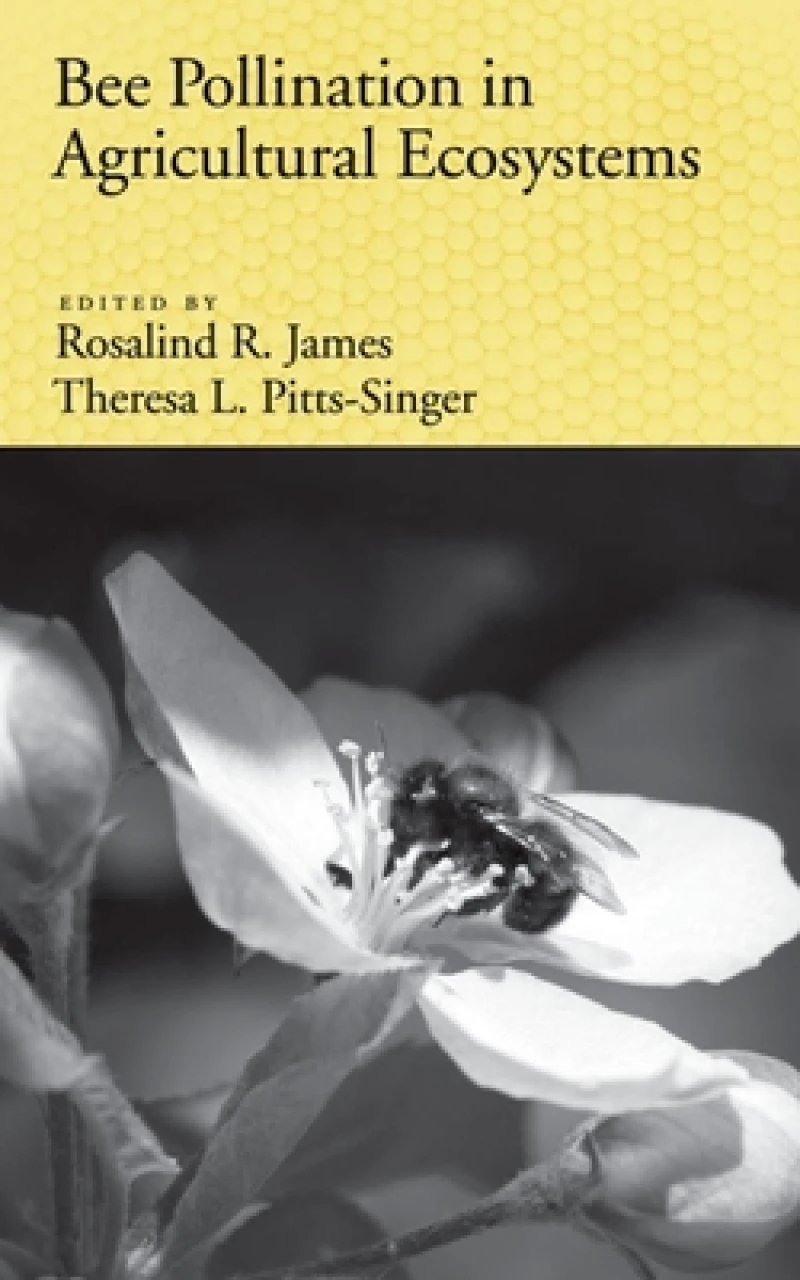
Bee Pollination in Agricultural Eco-systems
Book Details
Format
Hardback or Cased Book
ISBN-10
0195316959
ISBN-13
9780195316957
Publisher
Oxford University Press Inc
Imprint
Oxford University Press Inc
Country of Manufacture
GB
Country of Publication
GB
Publication Date
Aug 28th, 2008
Print length
248 Pages
Weight
454 grams
Dimensions
15.70 x 23.60 x 1.50 cms
Product Classification:
EvolutionPlant physiologyPlant reproduction & propagationAnimal behaviour
Ksh 19,350.00
Manufactured on Demand
0 in stock
Delivery Location
Delivery fee: Select location
Secure
Quality
Fast
This book discusses the interplay among bees, agriculture and the environment. Both managed and wild bees are critical for successful pollination of numerous fruit, vegetable, oilseed and legume seed crops and are considered here. So is treatment of how bees also impact the agro-ecosystem in ways beyond simple pollination, such as by transporting pollen from genetically modified plants and by enhancing biological control strategies. The principles and examples are international. The concept is in line with current thinking of pollination as an important ecological process, and an understanding of agriculture as disturbance ecology.
For many agricultural crops, bees play a vital role as pollinators, and this book discusses the interplay among bees, agriculture and the environment. Although honey bees are well recognized as pollinators, managed bumble bees and solitary bees are also critical for the successful pollination of certain crops, while wild bees provide a free service. As bees liberally pass pollen from one plant to the next, they also impact the broader ecosystem, and not always to the benefit of humankind. Bees can enhance the unintentional spread of genes from genetically engineered plants, and may increase the spread of invasive weeds. Conversely, genetically engineered plants can impact pollinators, and invasive weeds can supply new sources of food for these insects. Bees'' flower-visiting activities also can be exploited to help spread biological control agents that control crop pests, and they are important for native plant reproduction. Managing bees for pollination is complex and factors that must take into consideration are treated here including bee natural history, physiology, pathology, and behavior. Furthermore, transporting bees from native ranges to new areas for pollination services can be controversial, and needs to be done only after assuring that it will not disrupt various ecosystems. Even though bees are small, unobtrusive creatures, they play large roles in the ecosystem. The connection between bees and humankind also is symbolic of a broader interconnection between humans and the natural world.
Get Bee Pollination in Agricultural Eco-systems by at the best price and quality guaranteed only at Werezi Africa's largest book ecommerce store. The book was published by Oxford University Press Inc and it has pages.

