
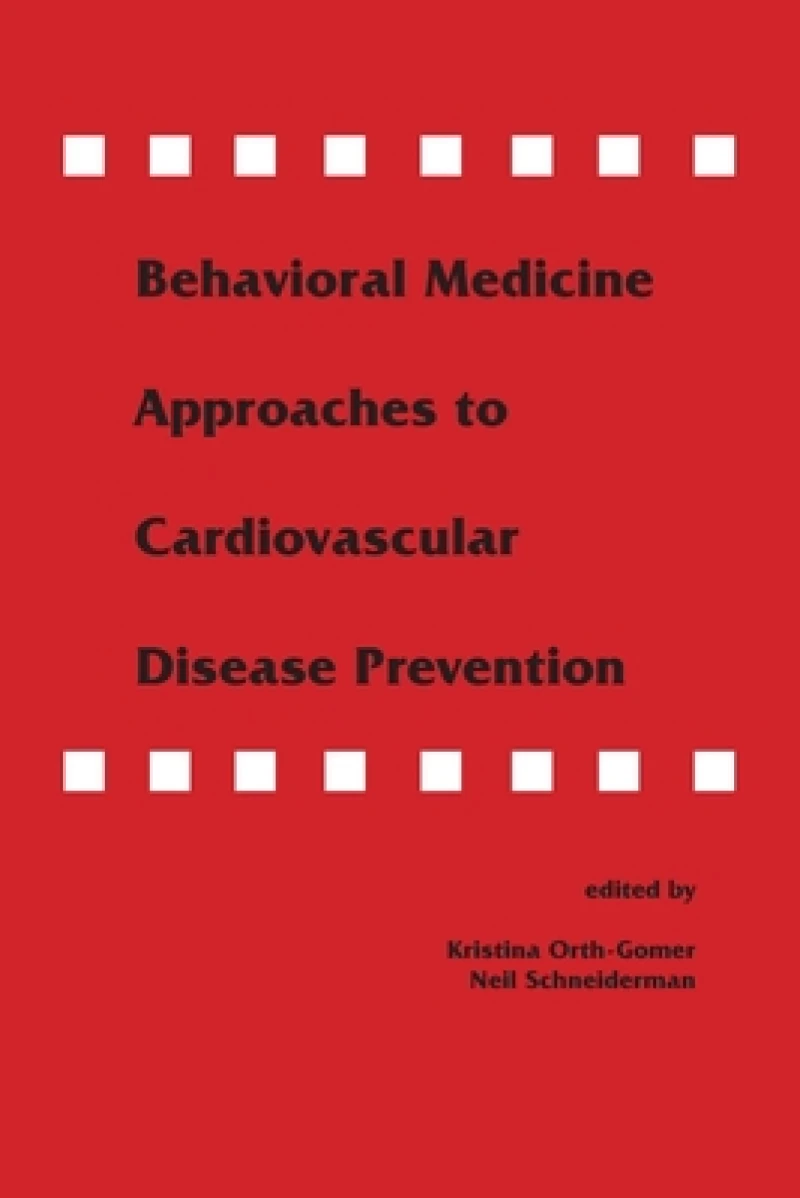
Behavioral Medicine Approaches to Cardiovascular Disease Prevention
Book Details
Format
Paperback / Softback
ISBN-10
1138964514
ISBN-13
9781138964518
Publisher
Taylor & Francis Ltd
Imprint
Psychology Press Ltd
Country of Manufacture
GB
Country of Publication
GB
Publication Date
Aug 26th, 2016
Print length
336 Pages
Weight
453 grams
Product Classification:
PsychologyHealth psychology
Ksh 10,100.00
Werezi Extended Catalogue
0 in stock
Delivery Location
Delivery fee: Select location
Secure
Quality
Fast
Cardiovascular disease (CVD) is the number one killer of men and women in industrialized countries. In older age groups, CVD is also the most important cause for hospitalization, and, in many countries, it is the basis of early retirement from work. Thus, CVD is associated with enormous costs for care and loss of productivity, as well as for disabilities, pensions, etc. All this has motivated clinicians and scientists to develop and implement new methodologies and technologies to better care for patients who are hospitalized for heart disease.
Efforts to improve care in the acute phases of coronary heart disease (CHD) have been successful. During the last decade, the immediate mortality risk of a patient admitted to coronary care for a suspected myocardial infarction or other acute coronary syndrome has decreased to less than 10%. Despite these achievements, CVD continues to represent a major threat to the health of middle-aged and elderly men and women.
This volume addresses myriad aspects of CHD prevention, including biobehavioral and psychosocial factors, behavioral epidemiology, behavioral intervention models, and policy. The first section of the text provides an introduction to CVD prevention and behavioral medicine. The second section introduces two theoretically different approaches to preventive action, high-risk and population-based strategies. The third section describes and discusses the important questions of how behavioral sciences can be conceptually integrated into traditional, medically based, preventive efforts. The fourth section presents both population and high-risk behavioral intervention approaches.
In summary, this volume examines the social environment and its potentials for preventive actions, reviews the psychosocial and biobehavioral mechanisms involved in these effects, and describes concrete and practical implementations of behavioral medicine knowledge as they have been applied to CHD prevention.
Efforts to improve care in the acute phases of coronary heart disease (CHD) have been successful. During the last decade, the immediate mortality risk of a patient admitted to coronary care for a suspected myocardial infarction or other acute coronary syndrome has decreased to less than 10%. Despite these achievements, CVD continues to represent a major threat to the health of middle-aged and elderly men and women.
This volume addresses myriad aspects of CHD prevention, including biobehavioral and psychosocial factors, behavioral epidemiology, behavioral intervention models, and policy. The first section of the text provides an introduction to CVD prevention and behavioral medicine. The second section introduces two theoretically different approaches to preventive action, high-risk and population-based strategies. The third section describes and discusses the important questions of how behavioral sciences can be conceptually integrated into traditional, medically based, preventive efforts. The fourth section presents both population and high-risk behavioral intervention approaches.
In summary, this volume examines the social environment and its potentials for preventive actions, reviews the psychosocial and biobehavioral mechanisms involved in these effects, and describes concrete and practical implementations of behavioral medicine knowledge as they have been applied to CHD prevention.
Get Behavioral Medicine Approaches to Cardiovascular Disease Prevention by at the best price and quality guaranteed only at Werezi Africa's largest book ecommerce store. The book was published by Taylor & Francis Ltd and it has pages.

