
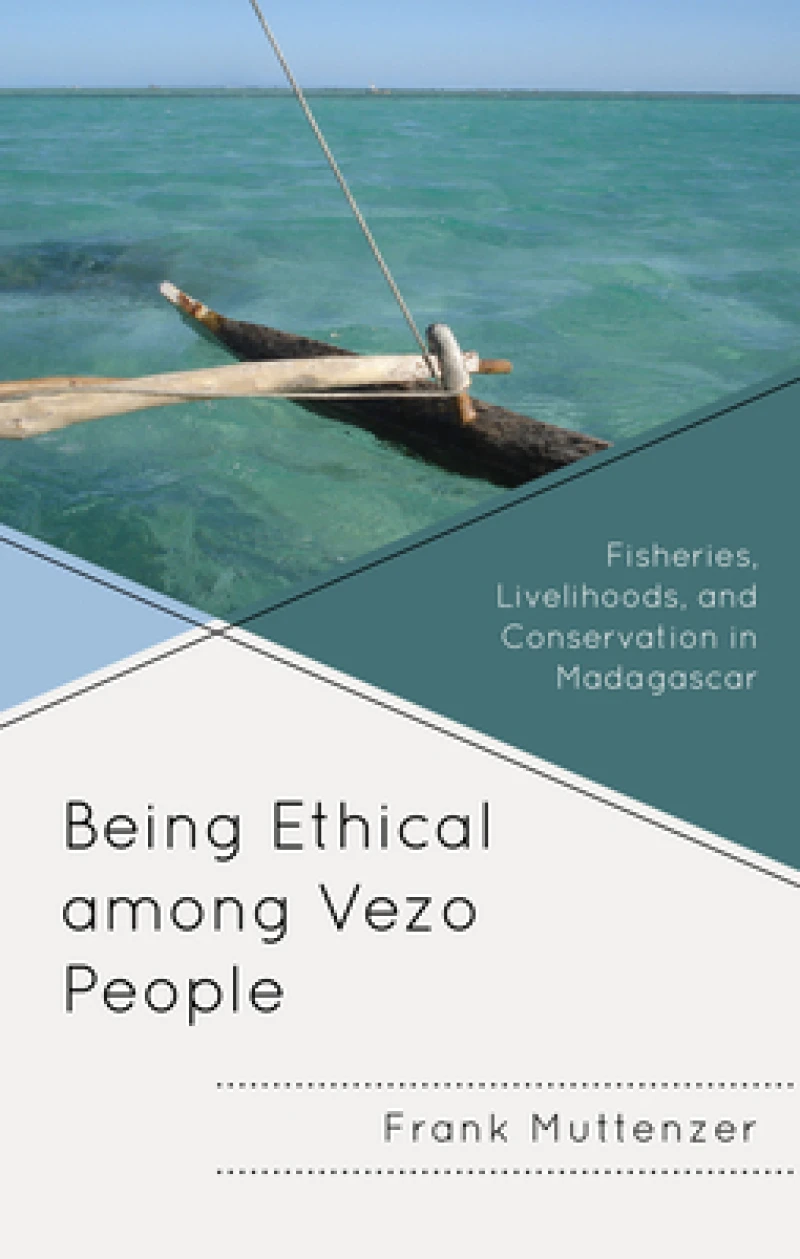
Being Ethical among Vezo People : Fisheries, Livelihoods, and Conservation in Madagascar
Book Details
Format
Hardback or Cased Book
ISBN-10
1498593291
ISBN-13
9781498593298
Publisher
Bloomsbury Publishing Plc
Imprint
Lexington Books
Country of Manufacture
US
Country of Publication
GB
Publication Date
May 28th, 2020
Print length
254 Pages
Weight
518 grams
Dimensions
15.90 x 23.50 x 2.10 cms
Product Classification:
Social & cultural anthropology, ethnographyThe environment
Ksh 16,600.00
Manufactured on Demand
Delivery in 29 days
Delivery Location
Delivery fee: Select location
Delivery in 29 days
Secure
Quality
Fast
In Being Ethical among Vezo People, Frank Muttenzer analyzes environmental change in reef ecosystems of southwest Madagascar and the impacts of globalized fishery markets on Vezo people’s material well-being. Muttenzer describes fishers’ perceptions of the physical environment in the context of changing livelihood and ritual practices.
Being Ethical among Vezo People analyzes environmental change in reef ecosystems of southwest Madagascar and the impacts of global fishery markets on Vezo people’s material well-being. The ethnography describes fishers’ changing perceptions of the physical environment in the context of livelihood and ritual practices and discusses their shared understandings of how Vezo persons should live.
Community marine protected areas now restrict access to the unenclosed reef commons. Each village is responsible for managing its octopus fishery with a temporal closure. Frank Muttenzer argues that the participants’ apparent willingness to improve livelihoods does not commit them to a conservationist ethos. Vezo people know that fish, octopus and sea cucumbers became scarce after they started selling these products to seafood processing and exporting companies. To cope with resource depletion they migrate to distant resource rich marine frontiers, target fast growing species, and perform rituals that purport to achieve material well-being. But they doubt conservationists’ opinion that reef ecosystems can be managed for sustainable yield.
The richly documented, elegantly theorized, and fresh ethnographic outlook on the Vezo addresses current issues in marine ecology and conservation, small-scale fisheries, and the semiotics of rural livelihoods and human well-being, particularly its expression in ritual. It will be of strong interest to environmental scientists, Madagascar specialists and anthropology generalists alike; particularly those who are interested in what the modes of engagement with the environment of foraging peoples can teach us about the human condition at large, and the nature-culture debates in particular.
Community marine protected areas now restrict access to the unenclosed reef commons. Each village is responsible for managing its octopus fishery with a temporal closure. Frank Muttenzer argues that the participants’ apparent willingness to improve livelihoods does not commit them to a conservationist ethos. Vezo people know that fish, octopus and sea cucumbers became scarce after they started selling these products to seafood processing and exporting companies. To cope with resource depletion they migrate to distant resource rich marine frontiers, target fast growing species, and perform rituals that purport to achieve material well-being. But they doubt conservationists’ opinion that reef ecosystems can be managed for sustainable yield.
The richly documented, elegantly theorized, and fresh ethnographic outlook on the Vezo addresses current issues in marine ecology and conservation, small-scale fisheries, and the semiotics of rural livelihoods and human well-being, particularly its expression in ritual. It will be of strong interest to environmental scientists, Madagascar specialists and anthropology generalists alike; particularly those who are interested in what the modes of engagement with the environment of foraging peoples can teach us about the human condition at large, and the nature-culture debates in particular.
Get Being Ethical among Vezo People by at the best price and quality guaranteed only at Werezi Africa's largest book ecommerce store. The book was published by Bloomsbury Publishing Plc and it has pages.

