
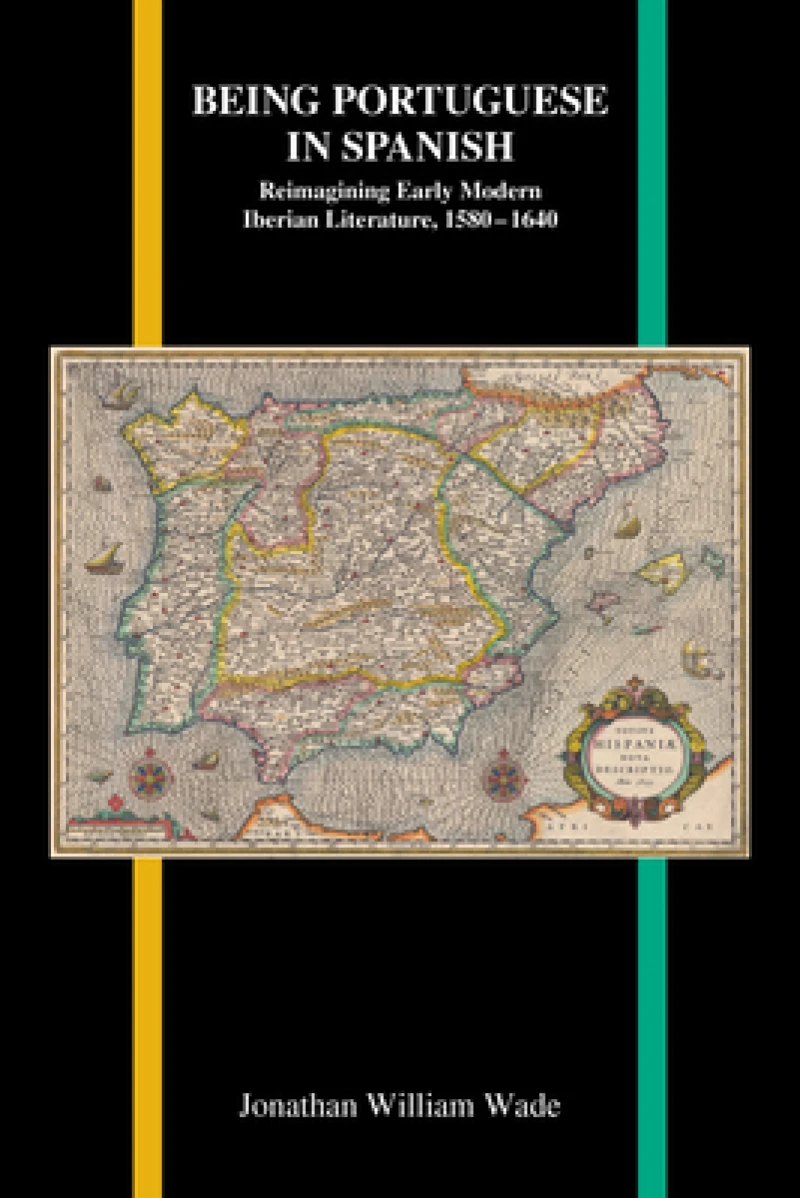
Being Portuguese in Spanish : Reimagining Early Modern Iberian Literature, 1580-1640
Book Details
Format
Paperback / Softback
Book Series
Purdue Studies in Romance Literatures
ISBN-10
1557538832
ISBN-13
9781557538833
Publisher
Purdue University Press
Imprint
Purdue University Press
Country of Manufacture
US
Country of Publication
GB
Publication Date
Apr 15th, 2020
Print length
248 Pages
Weight
407 grams
Dimensions
22.60 x 14.90 x 1.70 cms
Product Classification:
Literary studies: generalLiterary studies: c 1500 to c 1800European historyEuropean history
Ksh 6,300.00
Werezi Extended Catalogue
0 in stock
Delivery Location
Delivery fee: Select location
Secure
Quality
Fast
Whereas all texts produced in Iberia during the early modern period reflect the distinct social, political, and cultural realities sweeping across the peninsula to some degree, Portuguese literature written in Spanish offers a unique vantage point from which to see these converging landscapes.
Among the many consequences of Spain's annexation of Portugal from 1580 to 1640 was an increase in the number of Portuguese authors writing in Spanish. One can trace this practice as far back as the medieval period, although it was through Gil Vicente, Jorge de Montemayor, and others that Spanish-language texts entered the mainstream of literary expression in Portugal. Proficiency in both languages gave Portuguese authors increased mobility throughout the empire. For those with literary aspirations, Spanish offered more opportunities to publish and greater readership, which may be why it is nearly impossible to find a Portuguese author who did not participate in this trend during the dual monarchy.
Over the centuries these authors and their works have been erroneously defined in terms of economic opportunism, questions of language loyalty, and other reductive categories. Within this large group, however, is a subcategory of authors who used their writings in Spanish to imagine, explore, and celebrate their Portuguese heritage. Manuel de Faria e Sousa, Ângela de Azevedo, Jacinto Cordeiro, António de Sousa de Macedo, and Violante do Céu, among many others, offer a uniform yet complex answer to what it means to be from Portugal, constructing and claiming their Portuguese identity from within a Castilianized existence. Whereas all texts produced in Iberia during the early modern period reflect the distinct social, political, and cultural realities sweeping across the peninsula to some degree, Portuguese literature written in Spanish offers a unique vantage point from which to see these converging landscapes. Being Portuguese in Spanish explores the cultural cross-pollination that defined the era and reappraises a body of works that uniquely addresses the intersection of language, literature, politics, and identity.
Over the centuries these authors and their works have been erroneously defined in terms of economic opportunism, questions of language loyalty, and other reductive categories. Within this large group, however, is a subcategory of authors who used their writings in Spanish to imagine, explore, and celebrate their Portuguese heritage. Manuel de Faria e Sousa, Ângela de Azevedo, Jacinto Cordeiro, António de Sousa de Macedo, and Violante do Céu, among many others, offer a uniform yet complex answer to what it means to be from Portugal, constructing and claiming their Portuguese identity from within a Castilianized existence. Whereas all texts produced in Iberia during the early modern period reflect the distinct social, political, and cultural realities sweeping across the peninsula to some degree, Portuguese literature written in Spanish offers a unique vantage point from which to see these converging landscapes. Being Portuguese in Spanish explores the cultural cross-pollination that defined the era and reappraises a body of works that uniquely addresses the intersection of language, literature, politics, and identity.
Get Being Portuguese in Spanish by at the best price and quality guaranteed only at Werezi Africa's largest book ecommerce store. The book was published by Purdue University Press and it has pages.

