
Search

Categories

    • categories-img Jacket, Women
    • categories-img Woolend Jacket
    • categories-img Western denim
    • categories-img Mini Dresss
    • categories-img Jacket, Women
    • categories-img Woolend Jacket
    • categories-img Western denim
    • categories-img Mini Dresss
    • categories-img Jacket, Women
    • categories-img Woolend Jacket
    • categories-img Western denim
    • categories-img Mini Dresss
    • categories-img Jacket, Women
    • categories-img Woolend Jacket
    • categories-img Western denim
    • categories-img Mini Dresss
    • categories-img Jacket, Women
    • categories-img Woolend Jacket
    • categories-img Western denim
    • categories-img Mini Dresss

Filter By Price

$
-
$

Dietary Needs

Top Rated Product

product-img product-img

Modern Chair

$165.00
product-img product-img

Plastic Chair

$165.00
product-img product-img

Design Rooms

$165.00

Brands

  • Wooden
  • Chair
  • Modern
  • Fabric
  • Shoulder
  • Winter
  • Accessories
  • Dress

Welcome and thank you for visiting us. For any query call us on 0799 626 359 or Email [email protected]

Offcanvas Menu Open

Shopping Cart

Africa largest book store

Sub Total:

Search for any Title

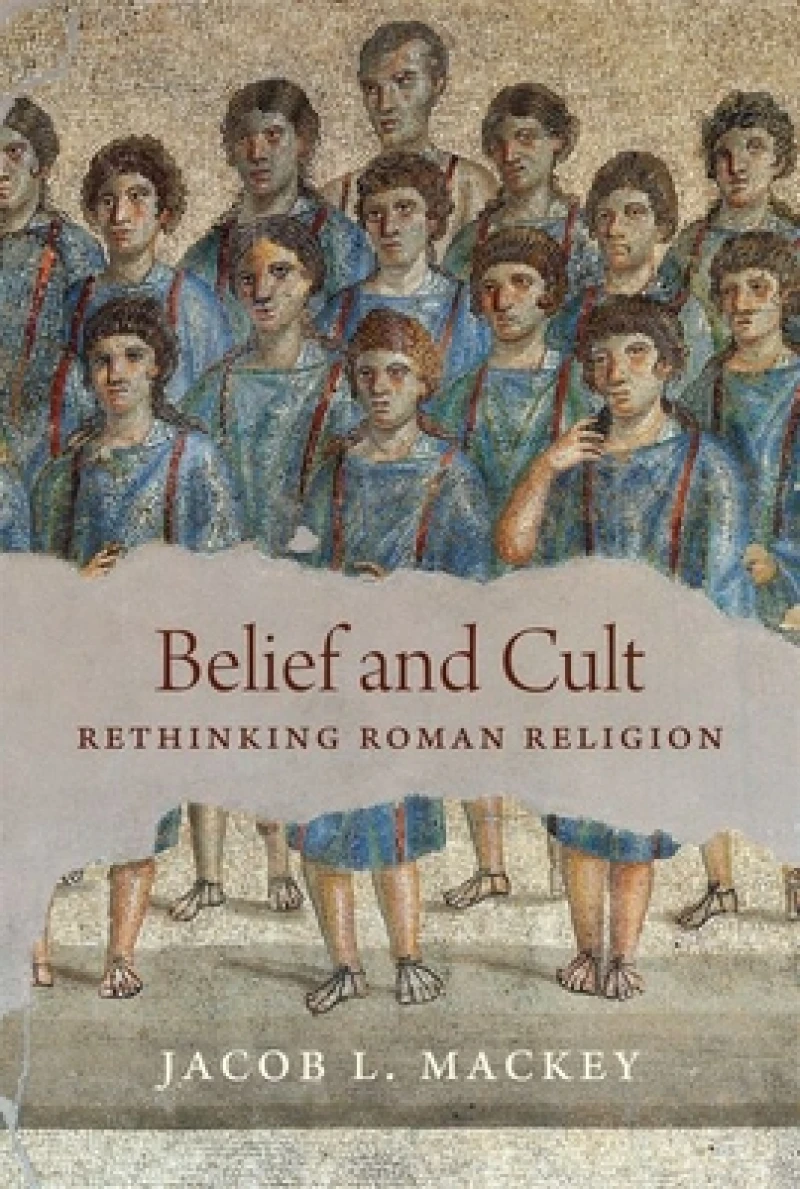
Belief and Cult : Rethinking Roman Religion

By: (Author) Jacob L. Mackey

Werezi Extended Catalogue
Delivery in 14 days

Ksh 7,200.00

Format: Hardback or Cased Book

ISBN-10: 0691165084

ISBN-13: 9780691165080

Publisher: Princeton University Press

Imprint: Princeton University Press

Country of Manufacture: US

Country of Publication: GB

Publication Date: Aug 2nd, 2022

Print length: 496 Pages

Weight: 862 grams

Dimensions (height x width x thickness): 16.50 x 24.40 x 3.90 cms

Choose your Location

Shipping & Delivery

Door Delivery

Delivery fee

Delivery in 14 days

  • Description

  • Reviews

A groundbreaking reinterpretation that draws on cognitive theory to show that belief wasn’t absent from—but rather was at the heart of—Roman religionBelief and Cult argues that belief isn’t uniquely Christian but was central to ancient Roman religion. Drawing on cognitive theory, Jacob Mackey shows that despite having nothing to do with salvation or faith, belief underlay every aspect of Roman religious practices—emotions, individual and collective cult action, ritual norms, social reality, and social power. In doing so, he also offers a thorough argument for the importance of belief to other non-Christian religions. At the individual level, the book argues, belief played an indispensable role in the genesis of cult action and religious emotion. However, belief also had a collective dimension. The cognitive theory of Shared Intentionality shows how beliefs may be shared among individuals, accounting for the existence of written, unwritten, or even unspoken ritual norms. Shared beliefs permitted the choreography of collective cult action and gave cult acts their social meanings. The book also elucidates the role of shared belief in creating and maintaining Roman social reality. Shared belief allowed the Romans to endow agents, actions, and artifacts with socio-religious status and power. In a deep sense, no man could count as an augur and no act of animal slaughter as a successful offering to the gods, unless Romans collectively shared appropriate beliefs about these things. Closely examining augury, prayer, the religious enculturation of children, and the Romans’ own theories of cognition and cult, Belief and Cult promises to revolutionize the understanding of Roman religion by demonstrating that none of its features makes sense without Roman belief.

A groundbreaking reinterpretation that draws on cognitive theory to show that belief wasn’t absent from—but rather was at the heart of—Roman religion

Belief and Cult argues that belief isn’t uniquely Christian but was central to ancient Roman religion. Drawing on cognitive theory, Jacob Mackey shows that despite having nothing to do with salvation or faith, belief underlay every aspect of Roman religious practices—emotions, individual and collective cult action, ritual norms, social reality, and social power. In doing so, he also offers a thorough argument for the importance of belief to other non-Christian religions.

At the individual level, the book argues, belief played an indispensable role in the genesis of cult action and religious emotion. However, belief also had a collective dimension. The cognitive theory of Shared Intentionality shows how beliefs may be shared among individuals, accounting for the existence of written, unwritten, or even unspoken ritual norms. Shared beliefs permitted the choreography of collective cult action and gave cult acts their social meanings. The book also elucidates the role of shared belief in creating and maintaining Roman social reality. Shared belief allowed the Romans to endow agents, actions, and artifacts with socio-religious status and power. In a deep sense, no man could count as an augur and no act of animal slaughter as a successful offering to the gods, unless Romans collectively shared appropriate beliefs about these things.

Closely examining augury, prayer, the religious enculturation of children, and the Romans’ own theories of cognition and cult, Belief and Cult promises to revolutionize the understanding of Roman religion by demonstrating that none of its features makes sense without Roman belief.


Get Belief and Cult by at the best price and quality guranteed only at Werezi Africa largest book ecommerce store. The book was published by Princeton University Press and it has pages. Enjoy Shopping Best Offers & Deals on books Online from Werezi - Receive at your doorstep - Fast Delivery - Secure mode of Payment

Customer Reviews

Based on 0 reviews

Mind, Body, & Spirit
