
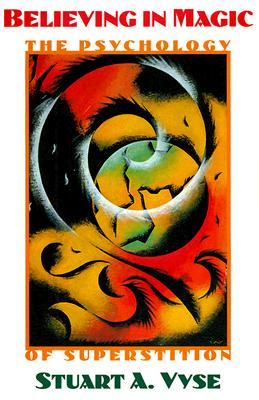
Believing in Magic : The Psychology of Superstition
Book Details
Format
Hardback
ISBN-10
0195078829
ISBN-13
9780195078824
Publisher
Oxford University Press Inc
Imprint
Oxford University Press Inc
Country of Manufacture
US
Country of Publication
GB
Publication Date
Sep 4th, 1997
Print length
272 Pages
Weight
533 grams
Dimensions
24.10 x 16.40 x 2.40 cms
KSh 12,600.00
Currently unavailable
0 in stock
Delivery Location
Delivery fee: Select location
Secure
Quality
Fast
Why do many people, who are quite sensible about other aspects of their lives, respond to uncertainty with superstitious beliefs or actions? This work examines current behavioural research and shows that everyday superstitions are the result of several well-understood psychological processes.
We all live in a world of uncertainty -- in some cases, the most critical events in our lives are completely unpredictable and utterly unexpected. Many people respond to this uncertainty with superstitious beliefs or actions-- from carrying good luck charms to knocking on wood or crossing fingers. But even though our understanding or the natural world tells us that these signs and gestures cannot possibly affect the events at which they are directed, superstition is still extremely common, if not universal, among people of all occupations and every educational and income level. Why is superstitious behaviour so prevalent? How is this behaviour established and maintained? Is there a superstitious personality? These are just some of the questions addressed by Stuart Vyse in Believing in Magic. To answer these questions, Vyse examines current behavioural research and show us that every day superstitions are the natural result of several well-understood psychological processes. Written in a style that is both entertaining and informative, this book demonstrates how complex--even paradoxical--human behaviour can be understood through scientific investigation. It addresses the personality features associated with superstition and the roles of operant conditioning, reasoning errors, and social influence in the development of superstitious beliefs and actions. In addition, children;s superstitions and the relationship of superstition to psychopathology are discussed. Although superstition is a normal part of human behaviour, Vyse agrues that we must provide alternative methods of coping with life;s uncertainties by teaching decision analysis, promoting science education, and challenging students to critically evaluate the sources of their beliefs.
Get Believing in Magic by Stuart A. Vyse at the best price and quality guaranteed only at Werezi Africa's largest book ecommerce store. The book was published by Oxford University Press Inc and it has 272 pages.
Customers Who Bought This Also Bought
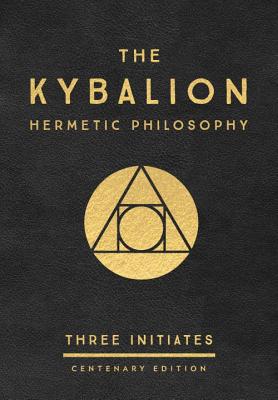
The Kybalion: Centenary Edition
KSh 2,500.00

The Kybalion
KSh 2,000.00

The Kybalion (Condensed Classics)
KSh 1,450.00

The Kybalion
KSh 3,750.00

Physics and Psychics
KSh 20,900.00

Lexicon Lamiarum
KSh 9,950.00

Surrealism and Operative Alchemy
KSh 6,300.00

A New Orleans Voudou Priestess
KSh 4,100.00

Things I Took from the Dark
KSh 3,950.00

Darkness in Bloom
KSh 4,500.00

Quareia Initiate
KSh 10,650.00

Dream Illuminati
KSh 5,600.00
