

Belonging across Borders : Transnational Practices in the Nineteenth and Twentieth Centuries
Book Details
Format
Hardback
ISBN-10
0192867490
ISBN-13
9780192867490
Publisher
Oxford University Press
Imprint
Oxford University Press
Country of Manufacture
GB
Country of Publication
GB
Publication Date
Oct 24th, 2022
Print length
360 Pages
Weight
706 grams
Dimensions
22.30 x 14.70 x 3.00 cms
Product Classification:
General & world history20th century history: c 1900 to c 2000Social & cultural history
KSh 15,950.00
Currently unavailable
0 in stock
Delivery Location
Delivery fee: Select location
Secure
Quality
Fast
Belonging Across Borders argues that borders were not just made by the nation state; they also influenced social inclusion and exclusion. Focusing on practices between empires, nations, and regions and on historical subjects, it re-evaluates historical sources and explores both territorial and social boundaries.
Borders and belonging are of immense importance as borders are being (re)defined, strengthened, or weakened all around the globe. Brexit, the proposed wall between the USA and Mexico, the India-Pakistan border-the drawing of social and spatial boundaries is at the heart of many current debates, as is the question of what it means to ''belong'' somewhere. Unlike the main body of literature, Belonging Across Borders argues that processes which occurred before and beyond the nation state also influence inclusion and exclusion. Focusing on practices and historical subjects, it re-evaluates historical sources and goes beyond the existing research to look at the interplay between different reference points (empire, nation, and region) and at individuals, exploring borders as both territorial and social boundaries. This approach is in line with recent calls to expand border studies by adding a historical perspective and using new methodologies and theories. Geographers and anthropologists have been studying this topic for decades and have produced a range of inspiring research. However, a more historical perspective is also needed: first, to emphasize the existence of different types of borders, bordering, and border actors through historical case studies; second, to underscore the historical specificity of border practices; and third, to highlight their dependence on historical contexts. Belonging Across Borders breaks new ground by applying the concept of belonging to historical studies on borders, empires, nations, and regions. It also links borders and belonging to individual historical actors and their practices, not just to institutions or social groups.
Get Belonging across Borders by Falko Schnicke at the best price and quality guaranteed only at Werezi Africa's largest book ecommerce store. The book was published by Oxford University Press and it has 360 pages.
Customers Who Bought This Also Bought
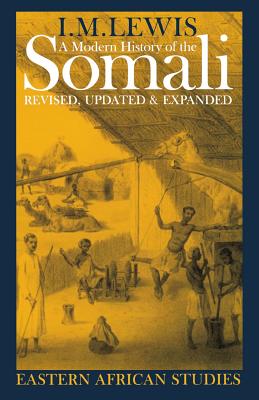
A Modern History of the Somali
KSh 5,300.00

Sapiens
KSh 2,350.00

Rise Fall Great Powers
KSh 3,050.00

Legacy of Violence
KSh 3,150.00

Chip War
KSh 2,000.00
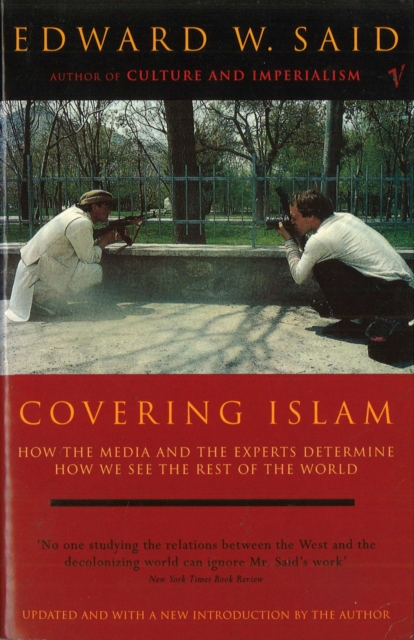
Covering Islam
KSh 2,350.00

They Came Before Columbus
KSh 3,400.00

Hiroshima
KSh 2,000.00

Guns, Germs and Steel
KSh 2,400.00

Silk Roads
KSh 3,050.00

Empire
KSh 2,700.00

Strategy
KSh 4,350.00