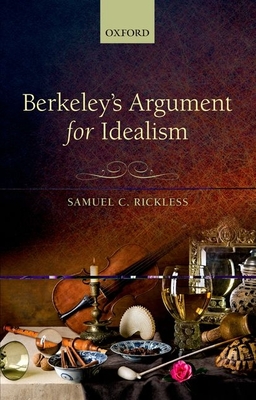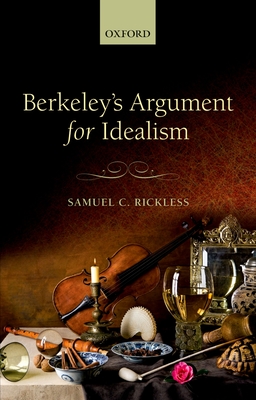
Berkeley's Argument for Idealism
Book Details
Format
Paperback / softback
ISBN-10
0198777582
ISBN-13
9780198777588
Publisher
Oxford University Press
Imprint
Oxford University Press
Country of Manufacture
GB
Country of Publication
GB
Publication Date
Sep 1st, 2016
Print length
222 Pages
Weight
288 grams
Dimensions
14.00 x 21.60 x 1.60 cms
KSh 6,950.00
Currently unavailable
0 in stock
Delivery Location
Delivery fee: Select location
Secure
Quality
Fast
In the early 18th century George Berkeley made the astonishing claim that physical objects such as tables and chairs are nothing but collections of ideas. Samuel Rickless presents a new account of Berkeley's controversial argument, and suggests it is the philosopher's greatest legacy: not only is it valid, but it may well be sound.
Samuel C. Rickless presents a novel interpretation of the thought of George Berkeley. In A Treatise Concerning the Principles of Human Knowledge (1710) and Three Dialogues Between Hylas and Philonous (1713), Berkeley argues for the astonishing view that physical objects (such as tables and chairs) are nothing but collections of ideas (idealism); that there is no such thing as material substance (immaterialism); that abstract ideas are impossible (anti-abstractionism); and that an idea can be like nothing but an idea (the likeness principle). It is a matter of great controversy what Berkeley''s argument for idealism is and whether it succeeds. Most scholars believe that the argument is based on immaterialism, anti-abstractionism, or the likeness principle. In Berkeley''s Argument for Idealism, Rickless argues that Berkeley distinguishes between two kinds of abstraction, ''singling'' abstraction and ''generalizing'' abstraction; that his argument for idealism depends on the impossibility of singling abstraction but not on the impossibility of generalizing abstraction; and that the argument depends neither on immaterialism nor the likeness principle. According to Rickless, the heart of the argument for idealism rests on the distinction between mediate and immediate perception, and in particular on the thesis that everything that is perceived by means of the senses is immediately perceived. After analyzing the argument, Rickless concludes that it is valid and may well be sound. This is Berkeley''s most enduring philosophical legacy.
Get Berkeley's Argument for Idealism by Samuel C. Rickless at the best price and quality guaranteed only at Werezi Africa's largest book ecommerce store. The book was published by Oxford University Press and it has 222 pages.
Customers Who Bought This Also Bought

Why I Am so Clever
KSh 700.00

A Treatise of Human Nature
KSh 2,700.00
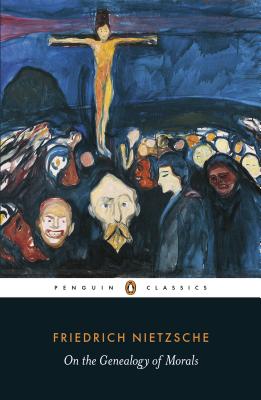
On the Genealogy of Morals
KSh 2,000.00
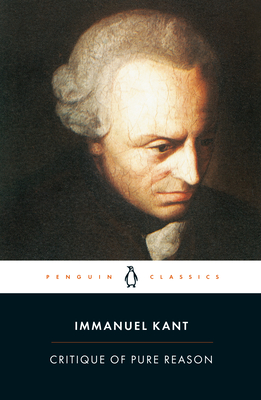
Critique of Pure Reason
KSh 3,400.00
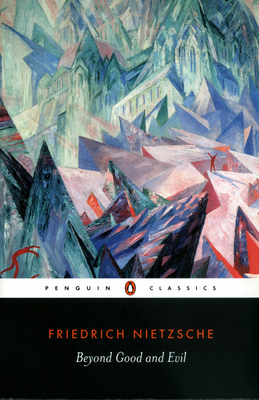
Beyond Good and Evil
KSh 2,000.00

Either/Or
KSh 2,700.00

Great Ideas Fear and Trembling
KSh 1,450.00
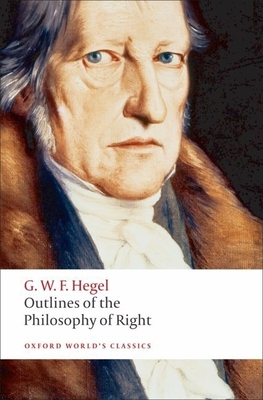
Outlines of the Philosophy of Right
KSh 2,500.00
Critique of Judgement
KSh 2,700.00

Prolegomena to Any Future Metaphysics
KSh 2,700.00

Kant – A Revolution in Thinking
KSh 4,500.00
An Answer to the Question: ''What is Enlightenment?''
KSh 1,450.00