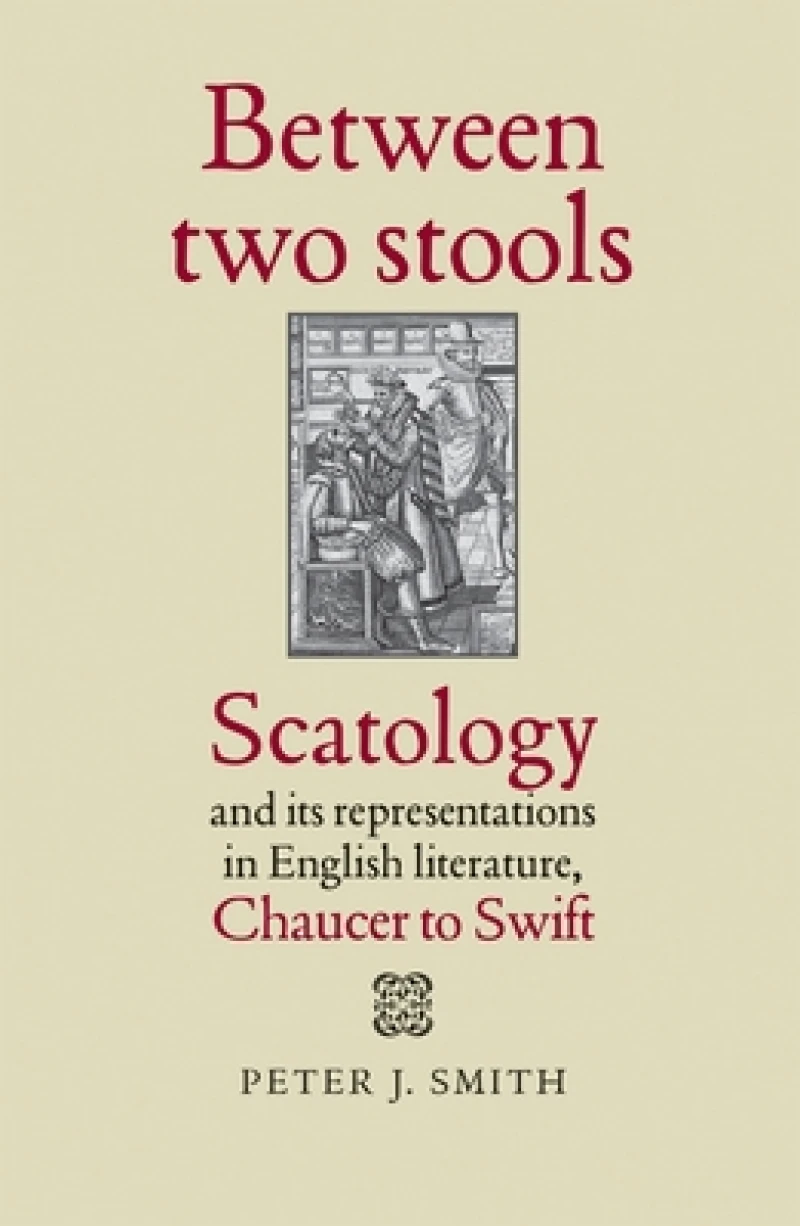
Between Two Stools : Scatology and its Representations in English Literature, Chaucer to Swift
Book Details
Format
Hardback or Cased Book
ISBN-10
0719087945
ISBN-13
9780719087943
Publisher
Manchester University Press
Imprint
Manchester University Press
Country of Manufacture
GB
Country of Publication
GB
Publication Date
Aug 1st, 2012
Print length
304 Pages
Weight
510 grams
Dimensions
22.20 x 14.70 x 2.80 cms
Product Classification:
Literary studies: classical, early & medievalLiterary studies: c 1500 to c 1800
Ksh 15,300.00
Werezi Extended Catalogue
Delivery in 28 days
Delivery Location
Delivery fee: Select location
Delivery in 28 days
Secure
Quality
Fast
An engaging and lively tour through the scatological, the flatulent and the cloacal in English literature over four centuries. Will appeal to cultural historians, and English literature scholars and students.
Between two stools investigates the representation of scatology - humorous, carnivalesque, satirical, damning and otherwise - in English literature from the middle ages to the eighteenth century. While a number of recent publications have attempted to analyse the employment of scatology in literature, culture or the arts, they remain, to date, rare examples of a preparedness to discuss such material. This study is the first to consider the topic over such a long historical period, allowing a thorough and original exploration of its foundations and traditions.
Smith contends that the ''two stools'' stand for two broadly distinctive attitudes towards scatology. The first is a carnivalesque, merry, even hearty disposition, typified by the writings of Chaucer and Shakespeare. The second is self-disgust, an attitude characterised by withering misanthropy and hypochondria. He locates this shift in sensibility in the crisis of the English Civil War and the aftermath of the Restoration. Smith demonstrates how the combination of high and low cultures manifests the capacity to run canonical and carnivalesque together so that sanctioned and civilised artefacts and scatological humour frequently co-exist in the works under discussion, evidence of an earlier culture''s aptitude (now lost) to occupy a position between two stools.
Of interest to cultural and literary historians, this ground-breaking study testifies to the arrival of scatology as an academic subject, at the same time recognising that it remains if not outside, then at least at the margins of conventional scholarship.
Smith contends that the ''two stools'' stand for two broadly distinctive attitudes towards scatology. The first is a carnivalesque, merry, even hearty disposition, typified by the writings of Chaucer and Shakespeare. The second is self-disgust, an attitude characterised by withering misanthropy and hypochondria. He locates this shift in sensibility in the crisis of the English Civil War and the aftermath of the Restoration. Smith demonstrates how the combination of high and low cultures manifests the capacity to run canonical and carnivalesque together so that sanctioned and civilised artefacts and scatological humour frequently co-exist in the works under discussion, evidence of an earlier culture''s aptitude (now lost) to occupy a position between two stools.
Of interest to cultural and literary historians, this ground-breaking study testifies to the arrival of scatology as an academic subject, at the same time recognising that it remains if not outside, then at least at the margins of conventional scholarship.
Get Between Two Stools by at the best price and quality guaranteed only at Werezi Africa's largest book ecommerce store. The book was published by Manchester University Press and it has pages.