
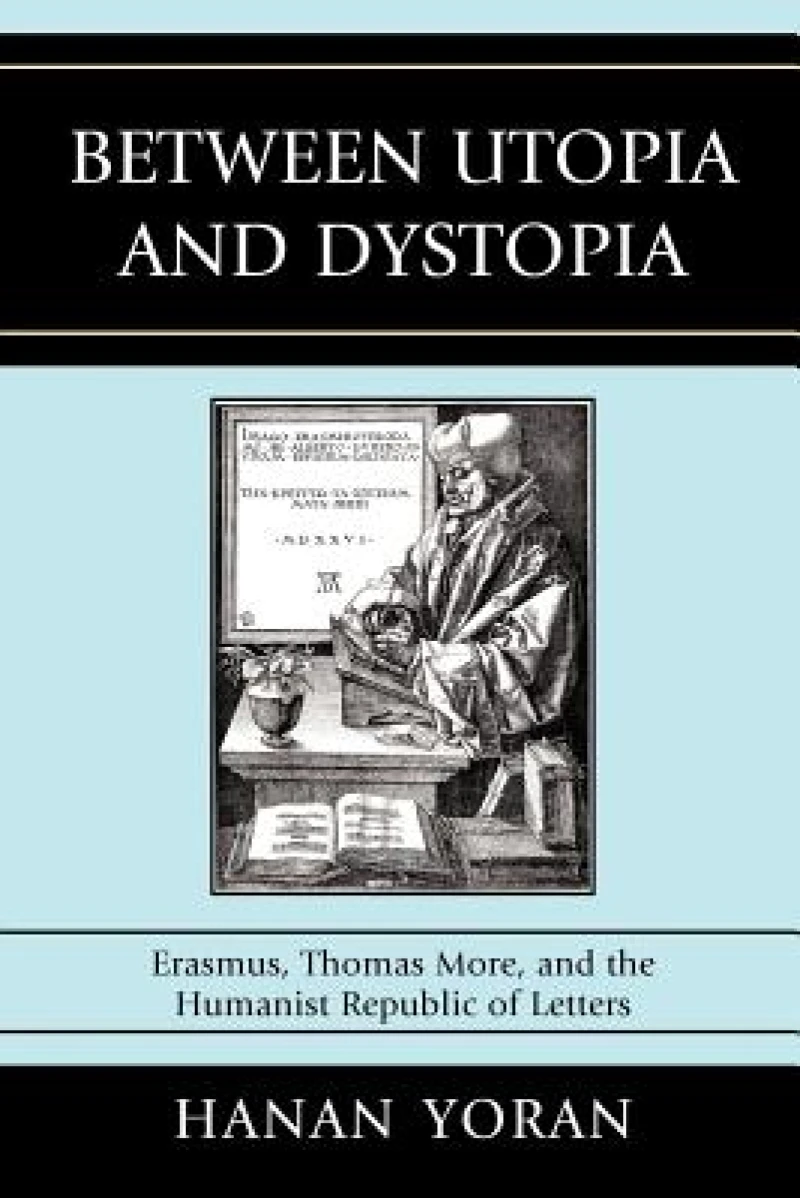
Between Utopia and Dystopia : Erasmus, Thomas More, and the Humanist Republic of Letters
by
Hanan Yoran
Book Details
Format
Paperback / Softback
ISBN-10
0739136488
ISBN-13
9780739136485
Publisher
Bloomsbury Publishing Plc
Imprint
Lexington Books
Country of Manufacture
GB
Country of Publication
GB
Publication Date
Sep 1st, 2011
Print length
264 Pages
Weight
410 grams
Dimensions
22.80 x 15.40 x 1.60 cms
Product Classification:
Literature: history & criticismLiterature: history and criticismGeneral & world historyEuropean historyEarly modern history: c 1450/1500 to c 1700PhilosophySocial & political philosophyHumanist & secular alternatives to religionHistoryGeneral and world historyEuropean historyPhilosophyHumanist philosophySocial and political philosophy
Ksh 9,000.00
Manufactured on Demand
0 in stock
Delivery Location
Delivery fee: Select location
Secure
Quality
Fast
The figure of the intellectual looms large in modern history, and yet his or her social place has always been full of ambiguity and ironies. Between Utopia and Dystopia is a study of the movement that created the identity of the universal intellectual: Erasmian humanism.
Focusing on the writings of Erasmus and Thomas More, Hanan Yoran argues that, in contrast to other groups of humanists, Erasmus and the circle gathered around him generated the social space—the Erasmian Republic of Letters—that allowed them a considerable measure of independence. The identity of the autonomous intellectual enabled the Erasmian humanists to criticize established customs and institutions and to elaborate a reform program for Christendom. At the same time, however, the very notion of the universal intellectual presented a problem for the discourse of Erasmian humanism itself. It distanced the Erasmian humanists from concrete public activity and, as such, clashed with their commitment to the ideal of an active life. Furthermore, citizenship in the Republic of Letters threatened to lock the Erasmian humanists into a disembodied intellectual sphere, thus undermining their convictions concerning intellectual activity and the production of knowledge.
Between Utopia and Dystopia will be of interest to scholars and students interested in Renaissance humanism, early modern intellectual and cultural history, and political thought. It also has much to contribute to debates over the identity, social place, and historical role of intellectuals.
Focusing on the writings of Erasmus and Thomas More, Hanan Yoran argues that, in contrast to other groups of humanists, Erasmus and the circle gathered around him generated the social space—the Erasmian Republic of Letters—that allowed them a considerable measure of independence. The identity of the autonomous intellectual enabled the Erasmian humanists to criticize established customs and institutions and to elaborate a reform program for Christendom. At the same time, however, the very notion of the universal intellectual presented a problem for the discourse of Erasmian humanism itself. It distanced the Erasmian humanists from concrete public activity and, as such, clashed with their commitment to the ideal of an active life. Furthermore, citizenship in the Republic of Letters threatened to lock the Erasmian humanists into a disembodied intellectual sphere, thus undermining their convictions concerning intellectual activity and the production of knowledge.
Between Utopia and Dystopia will be of interest to scholars and students interested in Renaissance humanism, early modern intellectual and cultural history, and political thought. It also has much to contribute to debates over the identity, social place, and historical role of intellectuals.
Get Between Utopia and Dystopia by at the best price and quality guaranteed only at Werezi Africa's largest book ecommerce store. The book was published by Bloomsbury Publishing Plc and it has pages.

