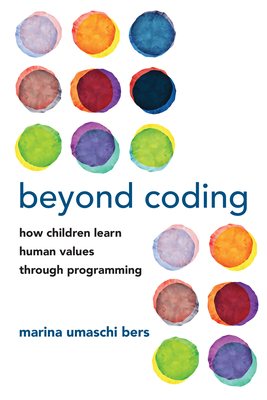
Beyond Coding : How Children Learn Human Values through Programming
Book Details
Format
Paperback / softback
ISBN-10
026254332X
ISBN-13
9780262543323
Publisher
MIT Press Ltd
Imprint
MIT Press
Country of Manufacture
GB
Country of Publication
GB
Publication Date
Mar 22nd, 2022
Print length
248 Pages
Weight
296 grams
Dimensions
15.30 x 22.90 x 2.40 cms
Product Classification:
Psychology
KSh 4,300.00
Werezi Extended Catalogue
Delivery in 4 days
2 copies in stock
Delivery Location
Delivery fee: Select location
Delivery in 4 days
Secure
Quality
Fast
Why children should be taught coding not as a technical skill but as a new literacy—a way to express themselves and engage with the world.
Today, schools are introducing STEM education and robotics to children in ever-lower grades. In Beyond Coding, Marina Umaschi Bers lays out a pedagogical roadmap for teaching code that encompasses the cultivation of character along with technical knowledge and skills. Presenting code as a universal language, she shows how children discover new ways of thinking, relating, and behaving through creative coding activities. Today’s children will undoubtedly have the technical knowledge to change the world. But cultivating strength of character, socioeconomic maturity, and a moral compass alongside that knowledge, says Bers, is crucial.
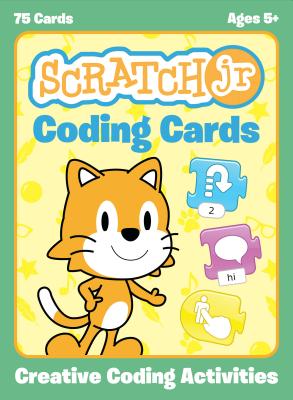
Bers, a leading proponent of teaching computational thinking and coding as early as preschool and kindergarten, presents examples of children and teachers using the Scratch Jr. and Kibo robotics platforms to make explicit some of the positive values implicit in the process of learning computer science. If we are to do right by our children, our approach to coding must incorporate the elements of a moral education: the use of narrative to explore identity and values, the development of logical thinking to think critically and solve technical and ethical problems, and experiences in the community to enable personal relationships. Through learning the language of programming, says Bers, it is possible for diverse cultural and religious groups to find points of connection, put assumptions and stereotypes behind them, and work together toward a common goal.
Today, schools are introducing STEM education and robotics to children in ever-lower grades. In Beyond Coding, Marina Umaschi Bers lays out a pedagogical roadmap for teaching code that encompasses the cultivation of character along with technical knowledge and skills. Presenting code as a universal language, she shows how children discover new ways of thinking, relating, and behaving through creative coding activities. Today’s children will undoubtedly have the technical knowledge to change the world. But cultivating strength of character, socioeconomic maturity, and a moral compass alongside that knowledge, says Bers, is crucial.
Bers, a leading proponent of teaching computational thinking and coding as early as preschool and kindergarten, presents examples of children and teachers using the Scratch Jr. and Kibo robotics platforms to make explicit some of the positive values implicit in the process of learning computer science. If we are to do right by our children, our approach to coding must incorporate the elements of a moral education: the use of narrative to explore identity and values, the development of logical thinking to think critically and solve technical and ethical problems, and experiences in the community to enable personal relationships. Through learning the language of programming, says Bers, it is possible for diverse cultural and religious groups to find points of connection, put assumptions and stereotypes behind them, and work together toward a common goal.
Get Beyond Coding by Marina Umaschi Bers at the best price and quality guaranteed only at Werezi Africa's largest book ecommerce store. The book was published by MIT Press Ltd and it has 248 pages.
Customers Who Bought This Also Bought

This Too Shall Pass
KSh 2,000.00

Maybe You Should Talk to Someone
KSh 2,000.00

David and Goliath
KSh 2,350.00

Corruptible
KSh 2,350.00

Damaged but Not Destroyed
KSh 4,850.00

Antifragile
KSh 2,700.00
Late Bloomers
KSh 2,700.00

Mind Fixers – Psychiatry`s Troubled Search for the Biology of Mental Illness
KSh 2,900.00

The Life Of The Mind
KSh 3,950.00

Why You Act the Way You Do
KSh 1,600.00

Lost Girls
KSh 2,000.00

Dark Psychology and Manipulation
KSh 3,550.00