

Beyond Empiricism : On Criteria for Educational Research
Book Details
Format
Paperback / softback
Book Series
Studia Paedagogica
ISBN-10
9058673251
ISBN-13
9789058673251
Publisher
Leuven University Press
Imprint
Leuven University Press
Country of Manufacture
GB
Country of Publication
GB
Publication Date
Nov 6th, 2003
Print length
270 Pages
Weight
482 grams
Dimensions
23.90 x 15.80 x 1.70 cms
Product Classification:
Philosophy & theory of educationPhilosophy and theory of education
KSh 4,850.00
Werezi Extended Catalogue
Delivery in 12 days
1 copies in stock
Delivery Location
Delivery fee: Select location
Delivery in 12 days
Secure
Quality
Fast
This book discusses educational research as a social discourse, as a discursive practice, in relation to epistemological issues, and in the light of questions of ethics. A number of historians and sociologists of educational sciences have demonstrated that the preference in the social and behavioral sciences for what was seen as a superior quantitative approach rested not just on developments within these disciplines but also and equally on external changes associated with the social context in general and with the dominance, in particular, of meritocratic values with the rise of the neo-liberal society. At the same time some of the work of certain philosophers of education over the last two decades has exposed the naivety of thinking dominated by the naive means-end schema. To a greater and greater extent, the idea of an applied science in which educational intervention is a simple consequence of understanding is being abandoned in favor of a theory of development that is realized in the intervention itself. In line with this, one sees an evolution in which the innovative role of pedagogical research can be emphasized again. Thus, "utopian" perspectives acquire a new legitimacy: the integration of empirical and philosophical research, of quantitative and quantitative methods forces itself anew upon us.
Get Beyond Empiricism by Marc Depaepe at the best price and quality guaranteed only at Werezi Africa's largest book ecommerce store. The book was published by Leuven University Press and it has 270 pages.
Customers Who Bought This Also Bought
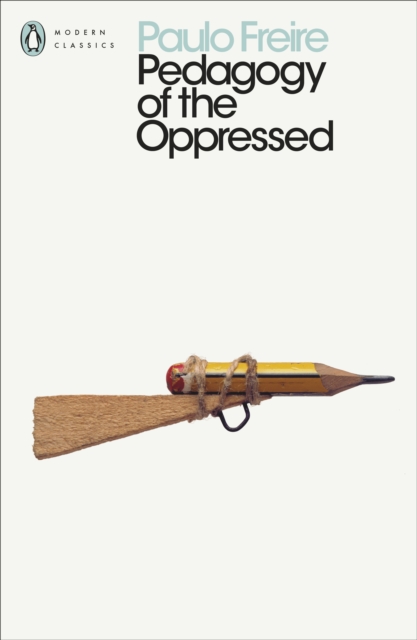
Pedagogy of the Oppressed
KSh 2,000.00
Xrepublic
KSh 850.00
Xrepublic
KSh 1,450.00
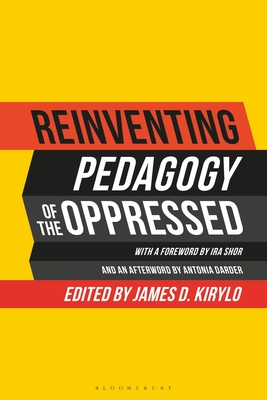
Reinventing Pedagogy of the Oppressed
KSh 4,850.00
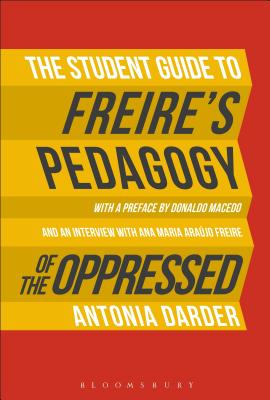
Student Guide to Freire''s ''Pedagogy of the Oppressed''
KSh 3,150.00
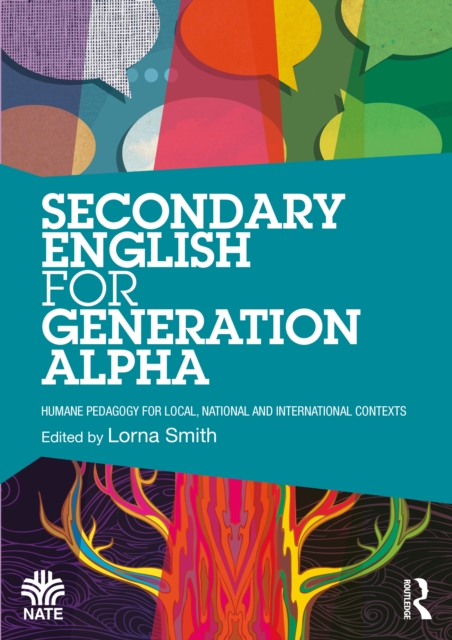
Secondary English for Generation Alpha
KSh 7,900.00

Crazy Faith Workbook
KSh 2,500.00
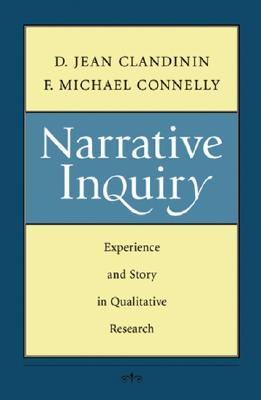
Narrative Inquiry – Experience and Story in Qualitative Research
KSh 4,850.00
Manipulating Practices
KSh 7,900.00

Emile, Ou de l'Education (3e Ed) (Ed.1882)
KSh 2,150.00

Education and the Social Order
KSh 27,550.00
Fanon and Education
KSh 5,250.00
