
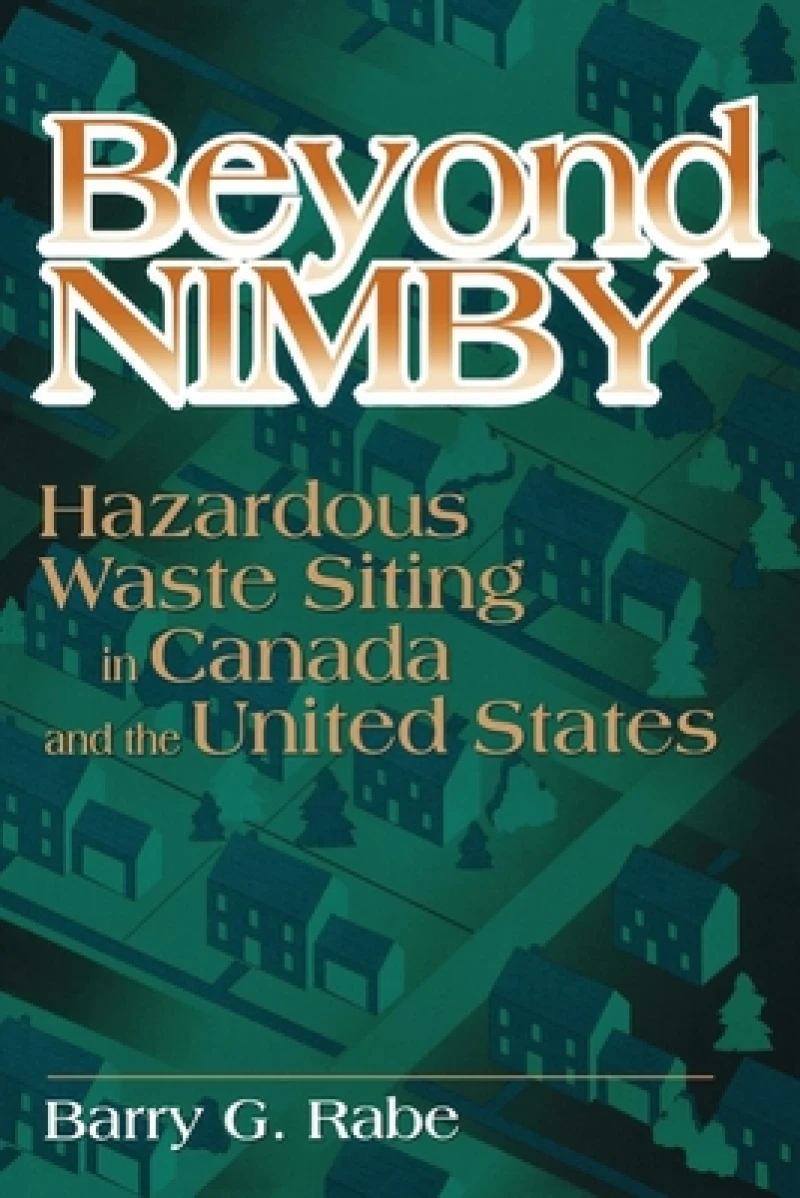
Beyond NIMBY : Hazardous Waste Siting in Canada and the United States
by
Barry Rabe
Book Details
Format
Paperback / Softback
ISBN-10
0815773072
ISBN-13
9780815773078
Publisher
Bloomsbury Publishing Plc
Imprint
Brookings Institution
Country of Manufacture
US
Country of Publication
GB
Publication Date
Oct 1st, 1994
Print length
226 Pages
Weight
336 grams
Dimensions
22.80 x 15.10 x 1.70 cms
Product Classification:
Central / national / federal government policiesCentral government policiesWaste management
Ksh 3,600.00
Manufactured on Demand
Delivery in 14 days
1 copies in stock
Delivery Location
Delivery fee: Select location
Delivery in 14 days
Secure
Quality
Fast
The virtual inability to open new hazardous waste management facilities in Canada and the United States stems directly from a form of community opposition so common and vehement that it is commonly identified as a syndrome: Not In My Back Yard (or NIMBY). Beyond NIMBY examines positive alternatives to prevailing approaches to siting and the familiar NIMBY outcomes.
The virtual inability to open new hazardous waste management facilities in Canada and the United States stems directly from a form of community opposition so common and vehement that it is commonly identified as a syndrome: Not In My Back Yard (or NIMBY). Whether such facilities are proposed by governmental agencies or by private waste management firms, communities are usually shocked to learn that they have been selected to host these facilities and take collective action to thwart them. Such actions have blocked many poorly planned facilities and stimulated greater interest in preventive, waste reduction strategies. They have also, however, thwarted the adoption of new waste management technologies and created serious geographic inequities in the distribution of waste management responsibility across the two nations. Beyond NIMBY examines positive alternatives to prevailing approaches to siting and the familiar NIMBY outcomes. In particular, it shows that certain siting strategies in Canadian provinces and American states have created successful siting agreements, broad public support, and comprehensive systems of waste management and prevention. These strategies include continuous public involvement in waste policy deliberations, a commitment to pursue siting only among communities that volunteer after extended democratic dialogue, and extensive packages of economic compensation and assurances of safe, long-term facility management. Equally important are guarantees that any new facility will be only part of a broader waste strategy for a particular province, state, or region and will not be allowed to become a magnet for wastes from areas that have not taken serious steps to address their own waste problems. The book concludes with the suggestion that these strategies can be applied to other NIMBY-blocked proposals, such as siting for prisons, drug and alcohol treatment centers, and nursing homes. "Rabe''s book should contribute to the ongoing debate over hazardous waste facility siting. His lucid and convincing cases provide a meaningful starting point to push the level of debate beyond atheoretical anecdotes of success and failure."—Publius
Get Beyond NIMBY by at the best price and quality guaranteed only at Werezi Africa's largest book ecommerce store. The book was published by Bloomsbury Publishing Plc and it has pages.

