
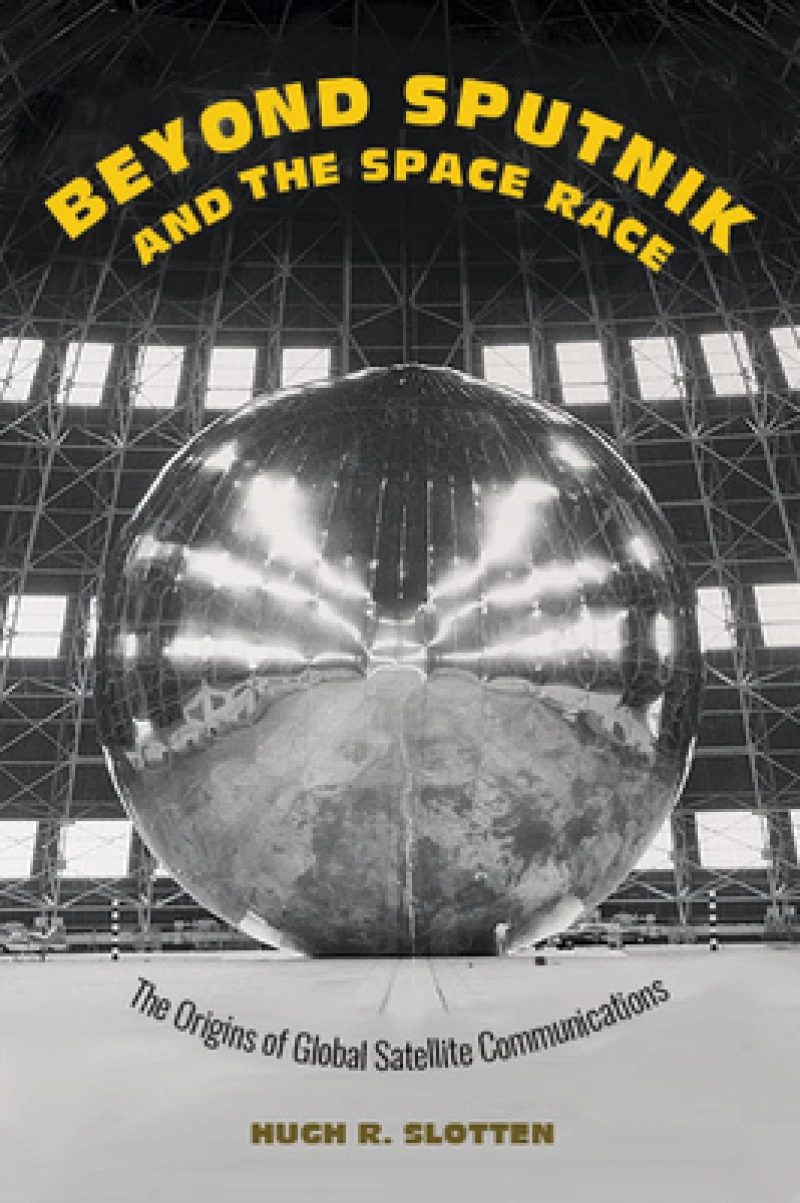
Beyond Sputnik and the Space Race : The Origins of Global Satellite Communications
Book Details
Format
Hardback or Cased Book
ISBN-10
1421441225
ISBN-13
9781421441221
Publisher
Johns Hopkins University Press
Imprint
Johns Hopkins University Press
Country of Manufacture
US
Country of Publication
GB
Publication Date
Apr 5th, 2022
Print length
256 Pages
Weight
560 grams
Dimensions
23.60 x 16.20 x 2.80 cms
Product Classification:
History of engineering & technologySatellite communication
Ksh 7,750.00
Temporarily out of stock, due soon
0 in stock
Delivery Location
Delivery fee: Select location
Secure
Quality
Fast
A fascinating account of how the United States established the first global satellite communications system to project geopolitical leadership during the Cold War. On July 20, 1969, the world watched, spellbound, as NASA astronaut Neil Armstrong stepped off the Apollo 11 lunar module to walk on the moon. NASA estimated that 20 percent of the planet's population—nearly 650 million people—watched the moon landing footage, which was made possible by the first global satellite communications system, the International Telecommunications Satellite Organization, or Intelsat. In Beyond Sputnik and the Space Race, Hugh R. Slotten analyzes the efforts of US officials, especially during the Kennedy administration, to establish this satellite communication system and open it to all countries of the world. Locked in competition with the Soviet Union for both military superiority and international prestige, President John F. Kennedy overturned the Eisenhower administration's policy of treating satellite communications as simply an extension of traditionally regulated telecommunications. Instead of allowing private communications companies to set up separate systems that would likely primarily serve major "developed" regions, the new administration decided to take the lead in establishing a single world system. Explaining how the East-West Cold War conflict became increasingly influenced by North-South tensions during this period, Slotten highlights the growing importance of non-aligned countries in Asia, Latin America, and Africa. He also underscores the importance of a political economy of "total Cold War" in which many crucial aspects of US society became tied to imperatives of national security and geopolitical prestige. Drawing on detailed archival records to examine the full range of decisionmakers involved in the Intelsat system, Beyond Sputnik and the Space Race spotlights mid- and lower-level agency staff usually ignored by historians. One of the few works to analyze the establishment of a major global infrastructure project, this book provides an outstanding analytical overview of the history of global electronic communications from the mid-nineteenth century to the present.
Get Beyond Sputnik and the Space Race by at the best price and quality guaranteed only at Werezi Africa's largest book ecommerce store. The book was published by Johns Hopkins University Press and it has pages.

