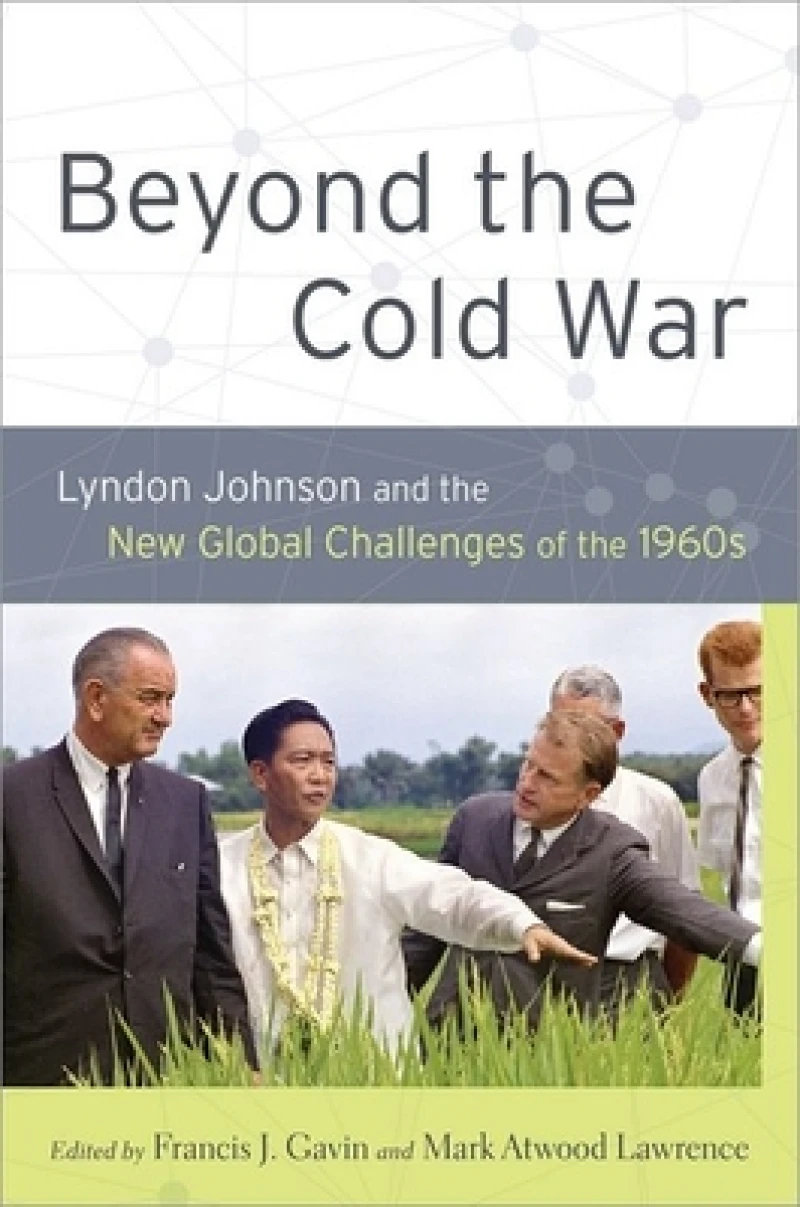
Beyond the Cold War : Lyndon Johnson and the New Global Challenges of the 1960s
Book Details
Format
Hardback or Cased Book
ISBN-10
0199790698
ISBN-13
9780199790692
Publisher
Oxford University Press Inc
Imprint
Oxford University Press Inc
Country of Manufacture
US
Country of Publication
GB
Publication Date
Jan 30th, 2014
Print length
316 Pages
Weight
692 grams
Dimensions
16.30 x 23.90 x 2.00 cms
Ksh 29,200.00
Manufactured on Demand
0 in stock
Delivery Location
Delivery fee: Select location
Secure
Quality
Fast
As globalization has deepened in recent years, historians have begun to see that many of the global challenges we face today first drew serious attention in the 1960s. This book examines how the Johnson presidency responded to these problems and draws out the lessons for today.
In writing about international affairs in the 1960s, historians have naturally focused on the Cold War. The decade featured perilous confrontations between the United States and the Soviet Union over Berlin and Cuba, the massive buildup of nuclear stockpiles, the escalation of war in Vietnam, and bitter East-West rivalry throughout the developing world.Only in recent years have scholars begun to realize that there is another history of international affairs in the 1960s. As the world historical force of globalization has quickened and deepened, historians have begun to see that many of the global challenges that we face today - inequality, terrorism, demographic instability, energy dependence, epidemic disease, massive increases in trade and monetary flows, to name just a few examples - asserted themselves powerfully during the decade. The administration of President Lyndon B. Johnson confronted tectonic shifts in the international environment and perhaps even the beginning of the post-Cold War world. While the ideologically infused struggle between the United States and the Soviet Union was indisputably crucial, new forces and new actors altered international relations in profound and lasting ways. This book asks how the Johnson administration responded to this changing landscape. To what extent did U.S. leaders understand the changes that we can now see clearly with the benefit of hindsight? How did they prioritize these issues alongside the geostrategic concerns that dominated their daily agendas and the headlines of the day? How successfully did Americans grapple with these long-range problems, with what implications for the future? What lessons lie in the efforts of Johnson and his aides to cope with a new and inchoate agenda of problems? This book reconsiders the 1960s and suggests a new research agenda predicated on the idea that the Cold War was not the only - or perhaps even the most important - feature of international life in the period after World War II.
Get Beyond the Cold War by at the best price and quality guaranteed only at Werezi Africa's largest book ecommerce store. The book was published by Oxford University Press Inc and it has pages.